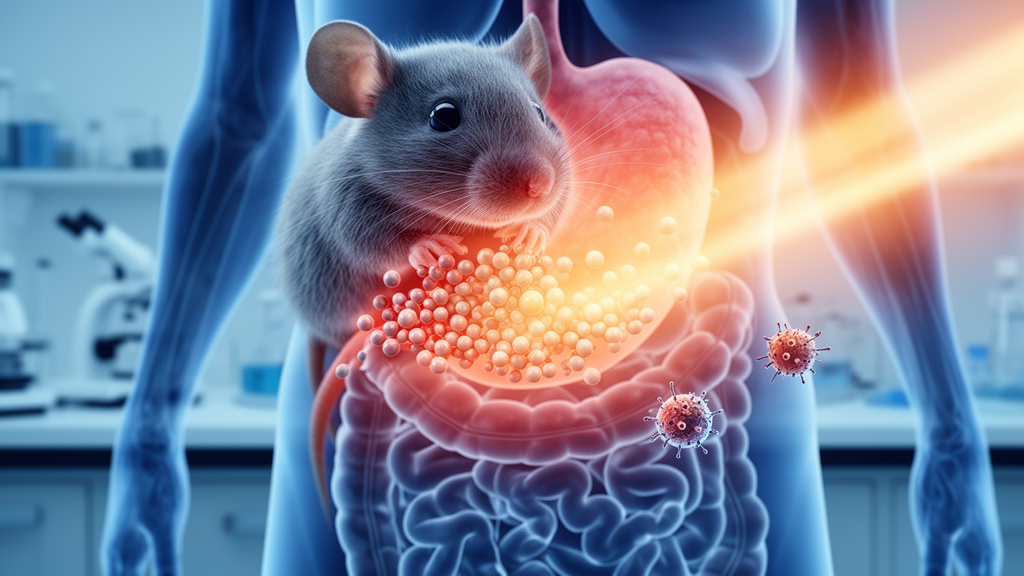
Researchers have developed a hyaluronic acid-modified nanoparticle that delivers taurine directly into gastric tumors while acting as a photothermal therapy agent, offering a combined approach to treating the disease through microenvironment regulation. The platform, described in Cancer Nanotechnology, pairs the amino acid taurine with polydopamine in a single nanoparticle designed to accumulate in tumor tissue and release its cargo in response to multiple triggers.
The design addresses a biological puzzle: taurine has context-dependent roles in gastric cancer. While exogenous taurine may promote tumor cell growth in laboratory dishes, increasing local taurine availability within the tumor microenvironment may instead support CD8-positive T-cell-associated antitumor immunity. The team therefore aimed to raise taurine concentrations specifically inside tumors rather than systemically. In the nanoparticle, polydopamine serves a dual function as both a carrier for taurine and a photothermal agent, while the hyaluronic acid coating was designed to improve tumor-associated accumulation.
In characterization experiments, the particles, designated H/T/PDA, showed good colloidal stability and released taurine in response to reactive oxygen species, pH changes, and near-infrared light. Under 808 nm laser irradiation, the nanoparticles converted light energy into heat efficiently, the property that underpins their photothermal function.
Laboratory tests demonstrated the two therapeutic arms of the platform. In vitro, the nanoparticles induced photothermal cytotoxicity against gastric cancer cells and promoted calreticulin exposure, a marker associated with immunogenic cell death. In experiments with primary CD8-positive T cells, taurine-containing formulations enhanced secretion of the immune signaling molecules interferon-gamma and interleukin-2. Co-culture experiments combining gastric cancer cells with CD8-positive T cells suggested a net antitumor effect in this immune-cell-containing system.
Mechanistic assays supported a role for SLC6A6, a taurine transporter, in taurine uptake, and showed increased local taurine availability after treatment with the nanoparticles.
The therapeutic potential was evaluated in MFC tumor-bearing 615 mice, a gastric cancer model. When the nanoparticle treatment was combined with near-infrared irradiation, it produced the strongest tumor suppression among the tested groups and was associated with increased levels of tumor cytokines, consistent with an activated immune environment within the treated tumors.
Preliminary biosafety evaluation showed no obvious hematological, biochemical, or major organ toxicity during the treatment period, an early indication that the platform may be tolerable, although the evaluation covered only the treatment window and further safety work would be required before any clinical translation.
The authors conclude that H/T/PDA may serve as a potential nanoplatform for integrating taurine replenishment, photothermal therapy, and immune-associated tumor microenvironment modulation. As the findings derive from cell culture and mouse model experiments, they represent early-stage preclinical research, and the reported effects remain to be established in human studies. The article was published as an open-access paper on 31 August 2026.
Subject of Research: A taurine-delivering polydopamine nanoparticle platform for combined photothermal and immune-based therapy of gastric cancer in preclinical models.
Article Title: Hyaluronic acid-modified taurine-polydopamine nanoparticles for combined photothermal-immunotherapy of gastric cancer through microenvironment regulation
Article References: Ji, H., Liu, H., Shen, W., Zhang, Y., Chen, X., Zhou, N., Song, G., Wang, Y., & Tian, Z. (2026). Hyaluronic acid-modified taurine-polydopamine nanoparticles for combined photothermal-immunotherapy of gastric cancer through microenvironment regulation. Cancer Nanotechnology. https://doi.org/10.1186/s12645-026-00425-7
Image Credits: AI Generated
DOI: 10.1186/s12645-026-00425-7
Keywords: gastric cancer, nanoparticles, taurine, polydopamine, photothermal therapy, immunotherapy, tumor microenvironment, hyaluronic acid, CD8 T cells, preclinical study, Cancer Nanotechnology, Hyaluronic
News Source: Nathaniel Bowman. (October 29, 2026). Taurine-loaded nanoparticles combine photothermal therapy and immune modulation against gastric cancer in mice. Scienmag.