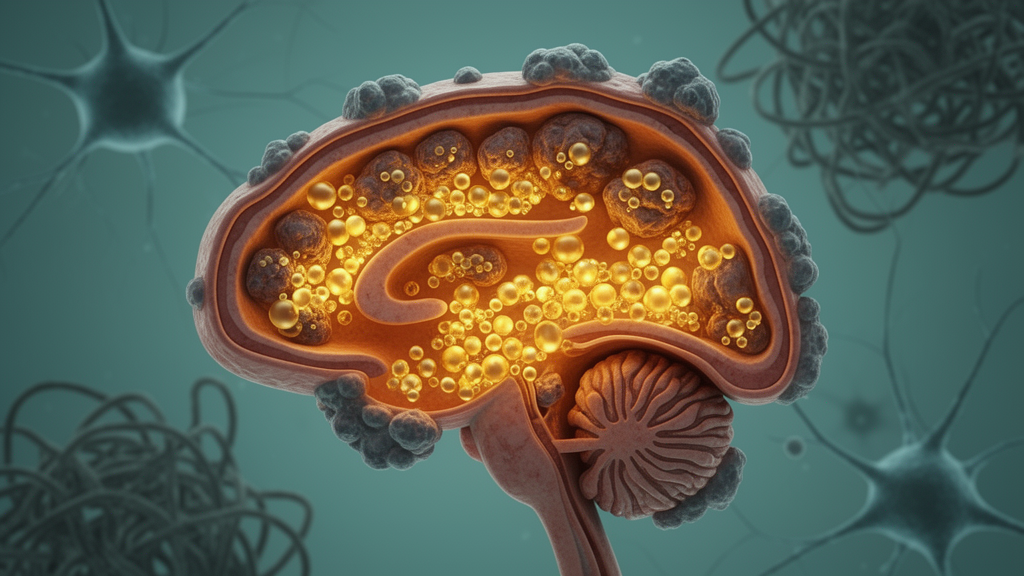
Alzheimer’s disease has long been framed as a story about amyloid plaques and tau tangles, but a new comprehensive review argues that another character deserves a leading role: the enzymes that govern how brain cells burn glucose. Published in Discover Neuroscience, the review synthesizes evidence that dysregulation of a small set of glycolytic and pyruvate-metabolizing enzymes—hexokinase, phosphofructokinase-1, pyruvate kinase, lactate dehydrogenase, and the pyruvate dehydrogenase complex—may sit at the heart of the cerebral glucose hypometabolism that has puzzled researchers for decades. The authors propose that these enzymes form a core neurochemical axis linking bioenergetic stress, neuroinflammation, and the disease’s classical protein pathologies.
The metabolic signature of Alzheimer’s is not subtle. Positron emission tomography studies using fluorodeoxyglucose reveal decreased glucose metabolism in the parietotemporal cortex and posterior cingulate decades before clinical symptoms appear, and this metabolic decline correlates closely with the severity of cognitive impairment. Such findings suggest that bioenergetic dysfunction is not merely a secondary consequence of neuronal loss but may actively participate in disease progression. The review builds on this established phenomenon, shifting attention from the observation of reduced glucose uptake toward the molecular mechanisms that govern it.
What makes the new synthesis distinctive is its cell-type perspective. The authors argue that cerebral hypometabolism should not be treated as a uniform, brain-wide phenomenon. Neurons, with their high energy demands, rely predominantly on mitochondrial oxidative phosphorylation and have limited intrinsic glycolytic capacity. Astrocytes, by contrast, metabolize glucose via glycolysis and export lactate through monocarboxylate transporters for neurons to oxidize—a process known as the astrocyte-neuron lactate shuttle. Microglia, the brain’s immune cells, normally depend on oxidative phosphorylation but shift toward high-rate glycolysis when stimulated, supporting the energy demands of inflammatory responses. Oligodendrocytes, meanwhile, maintain high glycolytic activity to fuel myelin lipid synthesis and antioxidant defense.
In the Alzheimer’s brain, each of these cell types appears to go its own metabolic way. Hexokinase 1, the enzyme that commits glucose to the glycolytic pathway, shows reduced expression and diminished mitochondrial association, which may impair energy coupling and increase neuronal vulnerability. Experimental studies link HK1 downregulation to inflammasome activation and elevated interleukin-1β production, creating a vicious cycle in which inflammatory signaling further suppresses HK1. In astrocytes, circadian regulators and SUMO-specific protease pathways converge to reduce HK1 expression, impairing lactate production and glutamate clearance. In oligodendrocytes, hyperactivation of the fission protein Drp1 inhibits HK1, contributing to glycolytic dysfunction and white matter damage.
Hexokinase 2 tells a different story. Its expression appears increased in activated microglia, particularly in regions surrounding amyloid-β plaques, where enhanced glycolysis may initially support phagocytosis and clearance of the protein. Yet excessive glycolytic activation can provoke disproportionate inflammatory responses, and when HK2 dissociates from the mitochondrial membrane it drives microglia toward a pro-inflammatory phenotype. The apolipoprotein E genotype adds another layer: the ApoE2 isoform sustains elevated levels of both HK isoforms with neuroprotective effects, whereas ApoE4 downregulates both, facilitating pathogenesis. The review’s authors also flag an open question—whether HK1 reduction is an early causal event or a secondary response to pathological stress remains unresolved.
Pyruvate kinase M2, which catalyzes the final step of glycolysis, illustrates the context-dependence that pervades the field. In neurons derived from Alzheimer’s patient fibroblasts, PKM2 expression increases through altered RNA splicing, and nuclear-translocated PKM2 interacts with transcription factors to activate pro-apoptotic genes and modify chromatin. Yet in the hippocampal neurons of APP/PS1 mice, PKM2 expression is decreased, tied to suppressed Wnt and PI3K/Akt signaling. The authors suggest these contrasting findings may reflect different model systems, disease phases, or genetic backgrounds rather than genuine contradiction. In microglia, PKM2 is consistently upregulated around plaques via the mTOR-HIF-1α axis, driving a feedback loop in which lactate induces histone lactylation, perpetuating glycolytic gene expression and inflammatory cytokine release.
Lactate itself emerges as a molecule with a split personality. Under physiological conditions it shuttles energy between astrocytes and neurons, supporting synaptic plasticity and memory formation—experimental work shows that blocking astrocytic lactate export impairs long-term memory, while exogenous lactate can partially reverse such impairment. In Alzheimer’s, the review describes a systemic imbalance: reactive glial cells upregulate lactate dehydrogenase A and increase lactate production, while neuronal capacity to oxidize lactate declines through impaired MCT2 transport, reduced LDHB function, and inhibited pyruvate dehydrogenase complex activity. Lactate then transforms from a physiological shuttle substrate into a pathological metabolic signal, promoting local acidification, oxidative stress, and inflammatory amplification.
Perhaps the most provocative section addresses causality and timing. The authors assemble evidence that metabolic reprogramming may precede canonical Alzheimer’s pathology: in APP/PS1 mice, lactate abnormalities in the hippocampus and cortex appear as early as three months of age, before dense-core amyloid plaques form. Elevated intracellular lactate can serve as a substrate for histone lactylation, an epigenetic mark that sustains a pro-inflammatory, highly glycolytic transcriptional state in microglia. Through the interferon-induced protein IFITM3, which enhances γ-secretase activity, this circuit may amplify amyloid-β production, while insulin resistance and AMPK dysregulation may promote early tau hyperphosphorylation. The authors are careful to note the limits: evidence for lactylation in Alzheimer’s derives primarily from in vitro and animal studies, human lactylomic data remain insufficient, and the lactate threshold for pathological lactylation is unknown.
On the therapeutic front, the review surveys a crowded preclinical pipeline but tempers expectations. Ketone ester supplementation improved bioenergetic status and preserved cognition in 3×TgAD mice by bypassing the glycolytic bottleneck, and ketogenic medium-chain triglycerides improved certain cognitive measures in patients with mild cognitive impairment. The hexokinase 2 inhibitor lonidamine reduced inflammatory cytokines and amyloid plaques in models, and nanoparticle formulations improved its brain delivery. PKM2 inhibitors such as Compound 3 K and shikonin disrupted the glycolysis-lactylation feedback loop in 5×FAD mice, and the LDH inhibitor IN-1 reduced brain lactate and histone lactylation marks. Exercise and electroacupuncture showed metabolic effects in early studies. Yet none of these enzyme-directed approaches has advanced to clinical trials, and selectivity, toxicity, and pharmacokinetic data are largely lacking.
The translational barriers the authors catalogue are sobering. Most candidate molecules cross the blood-brain barrier poorly; hexokinase 1 is essential in the heart, skeletal muscle, and kidneys, raising the specter of systemic toxicity; the same enzyme may be upregulated in microglia while downregulated in neurons, so a drug that calms glial inflammation could worsen neuronal energy deficits; and reliable biomarkers to identify patients with predominant metabolic dysfunction do not yet exist. Clinical trials of GLP-1 receptor agonists in patients with established cognitive impairment have not demonstrated clear disease-modifying efficacy, suggesting metabolic interventions may need to act earlier in the disease course. The review’s contribution is thus less a promise of imminent treatment than a reframing: if cerebral glucose hypometabolism originates from specific, cell-type-dependent enzyme dysregulation, then future therapies—and the biomarkers needed to guide them—will have to be as metabolically precise as the disease itself.
Subject of Research: Glycolytic and pyruvate metabolism enzyme dysregulation in Alzheimer's disease and its therapeutic potential
Article Title: Roles of glycolytic and pyruvate metabolism enzymes in Alzheimer’s disease glycometabolic reprogramming and their therapeutic potential
Article References: Chen, M., Zuo, C., Li, R., Zhang, J., Yao, Z., Li, L., & Cheng, L. (2026). Roles of glycolytic and pyruvate metabolism enzymes in Alzheimer’s disease glycometabolic reprogramming and their therapeutic potential. Discover Neuroscience, 21(1), Article 94. https://doi.org/10.1186/s13064-026-00314-0
Image Credits: AI Generated
DOI: 10.1186/s13064-026-00314-0
Keywords: Alzheimer's disease, glycolysis, glucose metabolism, hexokinase, PKM2, lactate, pyruvate dehydrogenase, neuroinflammation, histone lactylation, astrocyte-neuron lactate shuttle, microglia, metabolic reprogramming
News Source: Cassandra Pierce. (October 30, 2026). Glycolysis enzymes emerge as central players in Alzheimer’s brain energy failure. Scienmag.