Tumours that resist radiation and immunotherapy may owe part of that resilience to SMARCAL1, according to a new study. A study published in Nature Cell Biology on 30 October 2026 reports that SMARCAL1, a chromatin-remodelling protein, assembles into liquid-like droplets inside the cell nucleus, and that these condensates coordinate two separate survival programmes at once: faster DNA repair after radiation damage and a metabolic shift that exhausts anti-tumour T cells. The study, whose listed first authors are Can Can Zheng, Qi Xiao Cui and Jun Qi Li, and whose authors include Bin Li and Wen Wen Xu, also identifies digoxin as a drug that disrupts these condensates and sensitises tumours to both radiotherapy and anti-PD1 therapy in multiple models.
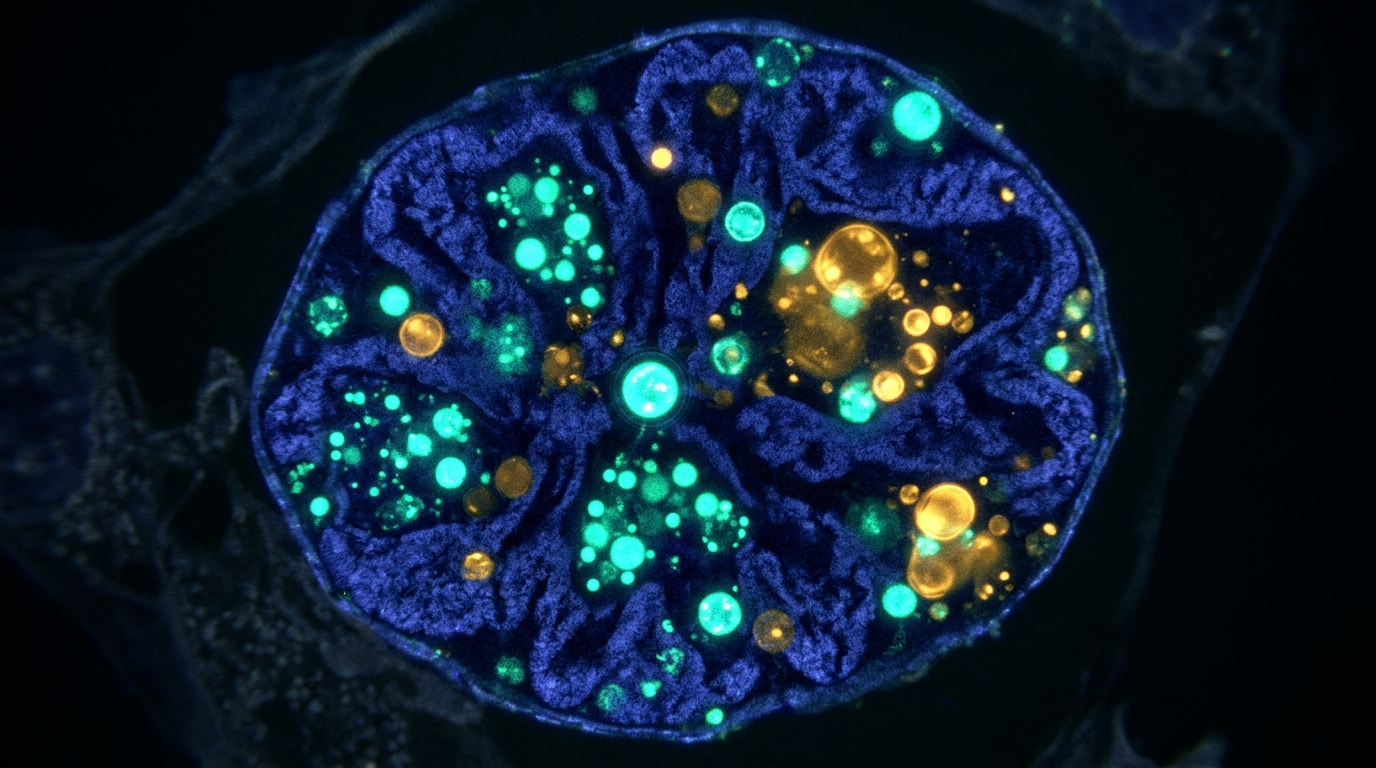
The central mechanism is liquid–liquid phase separation, which the study describes as a key mechanism governing cellular organization and function. In the study, SMARCAL1 formed nuclear condensates through this process, and the researchers found that these droplets enhance a chemical modification called histone H4 lactylation. Lactylation of histone H4, in turn, increases chromatin accessibility, according to the study. This SMARCAL1-driven epigenetic reprogramming has two downstream consequences described in the paper.
The first consequence concerns radiotherapy. Radiation inflicts DNA damage on cancer cells, and the study reports that SMARCAL1-driven epigenetic reprogramming facilitates the recruitment of DNA repair proteins, leading to radiotherapy resistance. Figure descriptions accompanying the article indicate that SMARCAL1 contributes to cancer radioresistance through regulation of DNA damage repair processes, and that it promotes repair specifically through the formation of liquid condensates in the nucleus. The study reports that SMARCAL1 promotes DNA repair through the formation of liquid condensates in the nucleus.
The second consequence is immunological. The researchers report that SMARCAL1 regulates the transcription of methionine adenosyltransferase, an enzyme central to the methionine cycle, thereby promoting vitamin B12-dependent methionine metabolism. The study reports that this metabolic activity induces T cell exhaustion and immune therapy tolerance. Figure summaries in the article describe SMARCAL1 controlling vitamin B12-dependent methionine metabolism to induce CD8+ T cell dysfunction, linking a nuclear chromatin protein to the metabolic state of the immune microenvironment through a transcriptional and metabolic chain of events.
Beyond mechanism, the study positions SMARCAL1 as a biomarker. The authors identify SMARCAL1 as a biomarker for predicting therapy response and patient stratification.
The therapeutic angle rests on digoxin, a pharmacological agent identified in the study as a disruptor of SMARCAL1 condensates. The researchers report that pharmacological disruption of these droplets sensitises tumours to both radiotherapy and anti-PD1 therapy in multiple models. Figure descriptions indicate that digoxin was identified as a potential inhibitor to overcome cancer radioresistance and that it restores impaired T cell function and reverses radioimmunoresistance. The study identifies digoxin as a pharmacological disruptor of SMARCAL1 condensates.
The study connects SMARCAL1 phase separation to both radiotherapy resistance and immunosuppression. The study reports that SMARCAL1-driven epigenetic reprogramming facilitates recruitment of DNA repair proteins and also regulates methionine adenosyltransferase transcription, promoting the methionine cycle and inducing T cell exhaustion and immune therapy tolerance. The study highlights the role of condensates centred on SMARCAL1 and histone H4 in governing DNA repair and immune microenvironment remodelling. The authors describe these findings as proposing an innovative strategy to overcome radioimmunoresistance.
Several caveats follow from the evidence presented. The claim that digoxin sensitises tumours applies to the multiple models tested, not yet to randomised patient outcomes. The biomarker utility of SMARCAL1 for predicting response and stratifying patients is presented as an identification within the study rather than a validated clinical test.
The study proposes pharmacological disruption of SMARCAL1 condensates as a strategy to sensitise tumours to radiotherapy and anti-PD1 therapy.
Subject of Research: How SMARCAL1 phase separation reprograms chromatin and methionine metabolism to promote tumour radioresistance and immunosuppression
Article Title: Phase separation of SMARCAL1 orchestrates epigenetic reprogramming and methionine metabolism to foster radioresistance and immunosuppression
Article References: Zheng, C. C., Cui, Q. X., Li, J. Q., Chen, J. X., He, L. W., Zhang, X., Liu, Z. C., Chen, T., Lyu, Y., Liang, C. J., Ma, S. D., Li, M. Y., Shi, X. Y., Jia, Y. X., Li, Z. G., Wang, X. J., Xu, W. W., & Li, B. (2026). Phase separation of SMARCAL1 orchestrates epigenetic reprogramming and methionine metabolism to foster radioresistance and immunosuppression. Nature Cell Biology. https://doi.org/10.1038/s41556-026-02099-0
Image Credits: AI Generated
DOI: 10.1038/s41556-026-02099-0
Keywords: SMARCAL1, liquid-liquid phase separation, histone lactylation, chromatin accessibility, methionine metabolism, radioresistance, T cell exhaustion, anti-PD1 therapy, digoxin, DNA damage repair, epigenetic reprogramming, immunotherapy
News Source: Drew Townsend. (November 5, 2026). SMARCAL1 condensates drive radioresistance and immunosuppression in tumours. Scienmag.