From optical communications and nanophotonics to sustainable cooling and climate-resilient agriculture, Professor Ioannis Papakonstantinou has built a research career around a central question: how can light be controlled and engineered to address real-world challenges? A new profile in the journal Light: Science & Applications now turns the spotlight on the scientist himself, tracing the ideas and experiences behind an unusually broad body of work in photonics.
Papakonstantinou is Professor of Photonics and Nanofabrication at University College London and heads the Photonic Innovations Lab. His research portfolio spans fundamental light–matter interactions, nanostructured and multifunctional surfaces, luminescent solar concentrators, optical communications and passive thermal management. What unites these fields, the profile explains, is a method as much as a theme: theoretical modelling, nanofabrication and experimental validation are combined at every stage, with a strong emphasis on translating photonic concepts into scalable technologies.
The interview, part of the journal’s Light People series, is written by Zhijie Xu with contributions from Siqiu Guo, and appears in volume 15 of the journal as an open-access editorial. It explores the scientific ideas and personal experiences that have shaped Papakonstantinou’s interdisciplinary career, moving between laboratory practice and the wider question of what photonics can deliver for society.
Among the topics discussed are luminescent solar concentrators, devices that guide light within a luminescent material and are being reimagined by his group for uses beyond energy harvesting, including optical communications and horticulture. The conversation also covers adaptive materials and passive radiative-cooling technologies, approaches that manage heat without consuming power, an area of growing interest as global temperatures rise and energy demands intensify.
The profile situates this technical breadth within a research philosophy grounded in fundamental physics but driven by applications in sustainability and society. Papakonstantinou’s work on nanostructured surfaces illustrates that approach: by engineering materials at scales comparable to the wavelength of light, researchers can control how those surfaces absorb, emit or redirect radiation, with consequences for everything from solar energy capture to thermal management in built environments.
Beyond the laboratory, the conversation turns to scientific risk, collaboration and research culture, subjects the journal describes as central to how interdisciplinary careers take shape. Papakonstantinou also offers his views on the role photonics may play in addressing some of the major technological and environmental challenges of the coming decades, from communications infrastructure to climate adaptation.
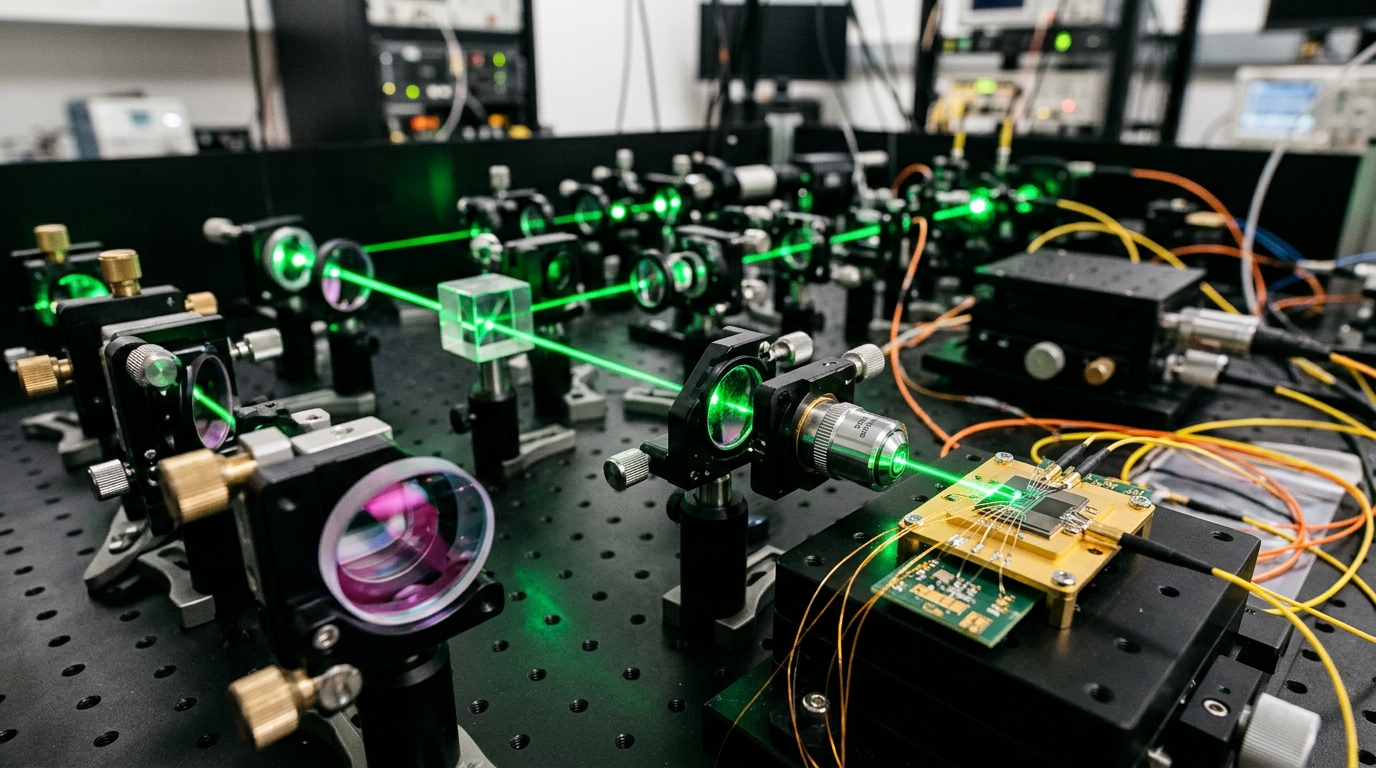
The article is accompanied by figures illustrating the range of his group’s activities, and the journal frames the piece as a portrait of a researcher whose career demonstrates how curiosity-driven physics and application-driven engineering can reinforce one another. For readers of the journal, the profile offers both a technical overview of active research areas in photonics and a personal account of the choices, collaborations and risks behind them.
Published as an editorial in Light: Science & Applications, the piece forms part of an ongoing series in which the journal features individual researchers in the light sciences. The full interview is freely available online, allowing readers to explore Papakonstantinou’s reflections on photonics, sustainability and the future of the field in his own words.
Subject of Research: An editorial profile of photonics researcher Professor Ioannis Papakonstantinou and his work on light-based technologies.
Article Title: Light people: Professor Ioannis Papakonstantinou
Article References: Xu, Z., & Guo, S. (2026). Light people: Professor Ioannis Papakonstantinou. Light: Science & Applications, 15(1), Article 395. https://doi.org/10.1038/s41377-026-02531-y
Image Credits: AI Generated
DOI: 10.1038/s41377-026-02531-y
Keywords: Ioannis Papakonstantinou, photonics, University College London, luminescent solar concentrators, optical communications, passive radiative cooling, nanofabrication, Light People, Light: Science & Applications, sustainability, research culture, Light
News Source: Katie Riggs. (November 5, 2026). Light People: Photonics Professor Puts Light to Work on Real-World Challenges. Scienmag.