Idiopathic Parkinson’s disease has long been treated as a disorder of the brain, defined by the loss of dopamine-producing neurons in the substantia nigra and the motor problems that follow. A new review published in the journal Discover Immunity argues that this neurocentric view is incomplete. The authors, Ankita Das, Vani Vivek and Palok Aich, synthesize evidence that Parkinson’s is better understood as a systemic illness marked by early gastrointestinal, immune and neuroendocrine disturbances, and they propose that SARS-CoV-2, the virus behind COVID-19, may interact with those same systems in ways that unmask or accelerate the disease in susceptible people.
The review, published on 8 November 2025, builds on the “body-first” hypothesis of Parkinson’s disease. In this model, non-motor symptoms such as gastrointestinal dysfunction, mood disturbances and sleep irregularities often precede motor deficits by years, suggesting that pathological changes may begin outside the central nervous system. According to the authors, alpha-synuclein pathology may start in the enteric nervous system or the olfactory bulb and propagate centrally via the vagus nerve, in line with Braak’s gut-to-brain hypothesis. Misfolded alpha-synuclein can travel along axons, be released into synaptic clefts and be absorbed by nearby neurons, where it triggers further clumping and production of the protein within the receiving cell.
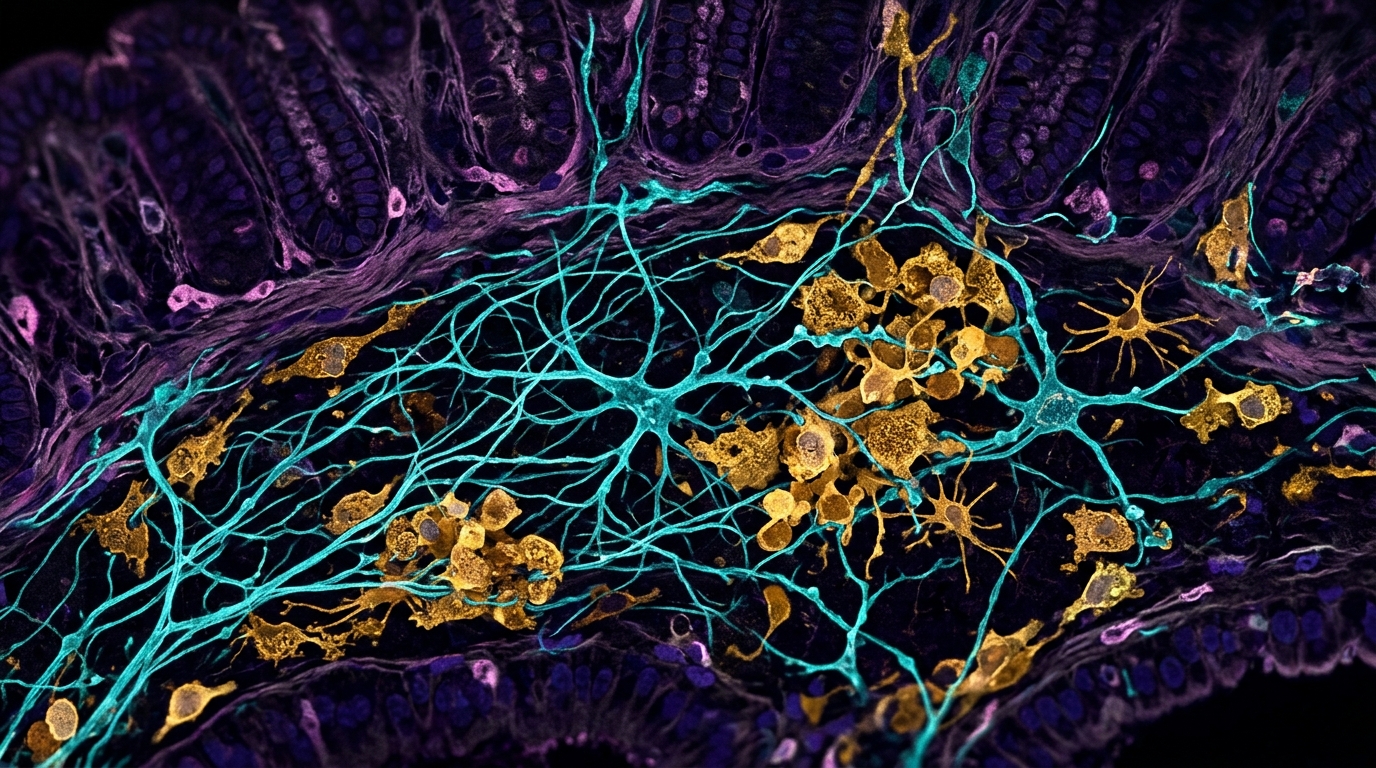
Central to this framework is the gut-immune-brain axis, a bidirectional communication network that regulates neuroimmune homeostasis. The review describes how gut dysbiosis, marked by a reduction in short-chain fatty acid-producing bacteria and an increase in pro-inflammatory microbes, can compromise intestinal barrier integrity and produce a “leaky gut.” This promotes chronic low-grade inflammation and misfolding of alpha-synuclein in the enteric nervous system. The authors also invoke a “multiple-hit” model, in which cumulative factors including gut dysbiosis, environmental toxin exposure such as pesticides, poor dietary patterns, chronic stress and sedentary lifestyle contribute to neurodegeneration even in the absence of genetic susceptibility.
At the microbial level, the review catalogs reproducible alterations in the gut microbiome of people with idiopathic Parkinson’s disease. Levels of Prevotella, a genus involved in mucin synthesis and maintenance of the gut epithelial barrier, are significantly reduced, which may contribute to increased intestinal permeability and systemic inflammation. Butyrate-producing genera such as Faecalibacterium, Roseburia, Blautia and Coprococcus are also reduced, potentially impairing colonic health and lowering short-chain fatty acid availability. In contrast, Escherichia-Shigella, members of the Proteobacteria phylum known for lipopolysaccharide production, are increased and may promote inflammation through endotoxin release. Akkermansia, a mucin-degrading genus, is enriched in the disease and may exacerbate barrier erosion, while even typically beneficial genera such as Lactobacillus and Enterococcus are elevated, a paradoxical increase attributed to dysbiosis and potential interference with levodopa metabolism via bacterial decarboxylase activity.
Immune dysregulation threads through these findings. The review highlights amplified signaling through Toll-like receptors TLR2 and TLR4, with one cited study reporting enhanced expression of these receptors in gut, blood and brain tissues, linking their signaling to gut barrier disturbances and a pro-aggregatory environment for alpha-synuclein in enteric neurons. Postmortem analyses reveal heightened TLR4/MyD88/NF-kB activity, elevated IL-1beta and microglial activation in the substantia nigra and frontal cortex, often accompanied by CD4-positive T-cell infiltration. Elevated pro-inflammatory cytokines including IL-6, TNF-alpha and IFN-gamma have been consistently observed in the blood, reflecting systemic immune activation. Decreased zonulin and occludin levels in gut epithelia, increased fecal zonulin/alpha1-antitrypsin and enhanced permeability in Parkinson’s cohorts support the barrier breakdown that precedes these events.
The authors then turn to COVID-19, arguing that SARS-CoV-2 perturbs the same axes. Clinical studies have detected SARS-CoV-2 RNA and proteins in fecal samples and gut mucosal biopsies of infected patients, with some findings indicating persistence for up to seven months after the acute phase without passive shedding. A meta-analysis of 16 studies found that during the acute phase of infection, pro-inflammatory genera such as Streptococcus, Enterococcus and Corynebacterium increased, while SCFA-producing genera including Faecalibacterium, Ruminococcus, Roseburia, Lachnospira, Megamonas, Megasphaera, Coprococcus, Dialister and Catenibacterium decreased. Notably, Faecalibacterium prausnitzii showed a significant reduction in COVID-19 cases. During recovery, some genera rebounded while Faecalibacterium, Ruminococcus, Roseburia and Coprococcus continued to decline.
The review also details how the virus weakens intestinal barrier function through the ACE2 receptor. ACE2 signaling, hindered by viral pathogens, weakens the activity of the amino acid transporter B0AT1, which is necessary for intestinal absorption of tryptophan. Depleted tryptophan reduces indole-3-aldehyde levels, a metabolite involved in production of the anti-inflammatory cytokine IL-22, whose reduced expression is associated with increased intestinal permeability. Reduced barrier integrity allows LPS-producing bacteria, endotoxins, pro-inflammatory cytokines and viral pathogens to enter systemic circulation, triggering further inflammatory responses. Elevated levels of cytokines such as IL-1, IL-1beta, IL-6, TNF-alpha, IL-8, IL-17, IL-18 and IL-23, along with IL-10 as an anti-inflammatory feedback response, have been reported in fecal samples of SARS-CoV-2 patients.
In the brain, the review describes converging mechanisms of viral damage. The S1 subunit of the SARS-CoV-2 spike protein binds to microglia, the brain’s resident immune cells, and activates them, initiating immune responses. The viral open reading frame-8 activates ATF6 and IRE1, disrupting endoplasmic reticulum homeostasis and generating unfolded protein response and ER stress, which if persistent leads to increased reactive oxygen species and activation of pro-apoptotic pathways such as NF-kB and CHOP, culminating in neuronal atrophy in dopaminergic and cortical regions. An experimental study showed active presence of SARS-CoV-2 in human brain microvascular endothelial cells with reduced expression of tight junction proteins, suggesting viral pathogen-induced blood-brain barrier disruption and possible infiltration into the brain.
The neuroendocrine dimension adds another layer. The review notes that plasma cortisol levels measured in idiopathic Parkinson’s patients were consistently much higher than those of age-matched controls and were associated with impulsive behaviors, and that in animal models of Parkinson’s such as MPTP and 6-OHDA, HPA axis activation has been observed to precede dopaminergic degeneration. In Long COVID, the pattern differs: during acute infection, gut dysbiosis and systemic inflammation lead to transient hyperactivation of the HPA axis and hypercortisolemia, but with prolonged immune activation, patients have shown a disrupted HPA axis with reduced cortisol and no compensatory rise in ACTH, suggesting central hypothalamic and pituitary suppression. A meta-analysis validated the prevalence of neuropsychiatric disorders in post-COVID cases as memory disorders 27.8 percent, depression 14.0 percent, anxiety 13.2 percent, migraine 13 percent, cognitive impairment 27.1 percent and concentration impairment 23.8 percent.
Perhaps the most striking parallel the authors draw is microbial. Comparing 21 studies relevant to idiopathic Parkinson’s disease and 15 relevant to post-acute COVID-19 syndrome, focusing exclusively on genus-level taxa, they found that Parabacteroides, Alistipes, Enterococcus, Erysipelatoclostridium and Proteus were found in higher abundance in both conditions, while Adlercreutzia, Dorea, Blautia, Coprococcus, Faecalibacterium and Ruminococcus were lower in both. Enterococcus, Erysipelatoclostridium and Proteus are opportunistic bacteria with strong pro-inflammatory roles, and Proteus is a neurotoxin usually used to induce Parkinson’s disease in mice. The analysis also reflects an overall decrease in the Firmicutes/Bacteroidota ratio, indicating a dysbiotic gut environment. The authors emphasize that the causal relationship between COVID-19 and Parkinson’s disease remains unclear, with current data largely limited to case reports and small observational cohorts, and that a recent meta-analysis estimates that 0.46 percent of COVID-19 survivors developed parkinsonian features within six months. They argue that COVID-19 may unmask latent, preclinical Parkinson’s disease rather than trigger it de novo, and they call for longitudinal neuroimmune surveillance, standardized biomarkers and controlled mechanistic studies to clarify whether the virus acts as a true environmental modifier of neurodegeneration.
Subject of Research: The gut-immune-brain axis and COVID-19 as compounding factors in idiopathic Parkinson's disease
Article Title: The compounding roles of gut-immune-brain axis and COVID19 in manifestation of idiopathic Parkinson’s disease
Article References: Das, A., Vivek, V., & Aich, P. (2025). The compounding roles of gut-immune-brain axis and COVID19 in manifestation of idiopathic Parkinson’s disease. Discover Immunity, 2(1), Article 9. https://doi.org/10.1007/s44368-025-00016-5
Image Credits: AI Generated
DOI: 10.1007/s44368-025-00016-5
Keywords: Parkinson's disease, COVID-19, SARS-CoV-2, gut microbiome, gut-immune-brain axis, alpha-synuclein, neuroinflammation, HPA axis, leaky gut, Long COVID, microglia, dysbiosis
News Source: Cassandra Pierce. (November 5, 2026). Gut, Immune and Brain Signals May Link COVID-19 to Parkinson’s Risk. Scienmag.