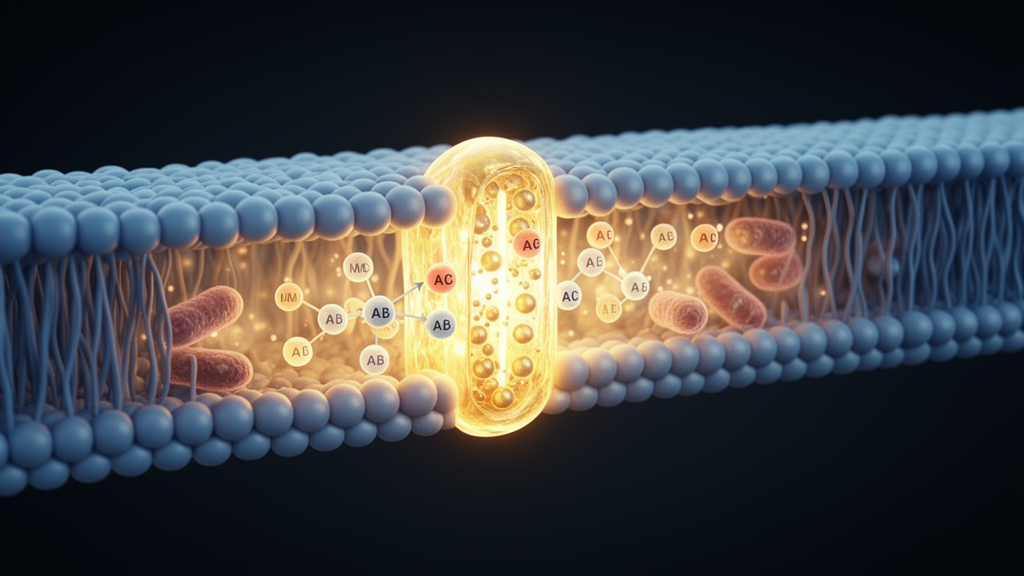
A newly published review in the journal Amino Acids examines the solute carrier transporter SLC7A5, a protein that shuttles large neutral amino acids across cell membranes and has become a focus of cancer research for its role in tumor metabolism. The article, published as an open-access review on 11 September 2026 and currently available as an early peer-reviewed version, was authored by Jing Xu and Jie Gao. It consolidates what is known about the transporter’s regulation, its functions in tumor progression, and the state of efforts to drug it.
According to the review, SLC7A5 mediates the transmembrane transport of large neutral amino acids, including essential amino acids such as leucine. The review also describes how the transporter’s expression is controlled by a multilayered network involving transcription factors, non-coding RNAs, and epigenetic modifications at both the RNA and protein levels.
Beyond nutrient uptake, the review places SLC7A5 within several processes that shape tumor behavior. The authors report that the transporter is involved in the tumor immune microenvironment, ferroptosis, redox homeostasis, epigenetic modification, and the integrated stress response. These activities are described as closely associated with tumor proliferation, invasion, metastasis, and poor prognosis, positioning SLC7A5 as a molecular hub that links nutrient sensing to malignant phenotypes.
In solid tumors such as colorectal cancer and breast cancer, the review assigns SLC7A5 a dual role: it can serve both as a prognostic biomarker and as a therapeutic target.
On the therapeutic front, the review highlights highly selective inhibitors, with JPH203 cited as a representative compound. According to the authors, inhibitors of this class have completed early-phase clinical trials in biliary tract cancer. The authors note, however, that clinical translation faces significant obstacles: adaptive drug resistance, systemic immunotoxicity, and the challenge of selecting the right patients for treatment remain key problems.
The review’s stated aim is to systematically summarize the regulatory mechanisms of SLC7A5, its molecular functions in driving tumor progression, its clinical significance across different solid tumors, and recent advances in the development of targeted inhibitors and the optimization of therapeutic strategies. The authors frame this synthesis as a theoretical basis and clinical reference for precision metabolic intervention targeting SLC7A5.
As a review article, the publication does not present new experimental data but aggregates existing findings on the transporter’s biology and therapeutic targeting. Readers should also note that the version now available is an early-release, peer-reviewed accepted manuscript that carries a permanent DOI but remains subject to further edits before the final version of record is published.
The outstanding questions the authors identify—resistance mechanisms, immune-related toxicity, and patient selection—define the terrain that future clinical studies of SLC7A5 inhibitors will need to address before such therapies can move beyond early-phase testing in biliary tract cancer.
Subject of Research: The role of the amino acid transporter SLC7A5 in cancer metabolism and therapy
Article Title: From metabolic remodeling to therapeutic intervention: research progress on SLC7A5 in cancer
Article References: Xu, J., & Gao, J. (2026). From metabolic remodeling to therapeutic intervention: research progress on SLC7A5 in cancer. Amino Acids. https://doi.org/10.1007/s00726-026-03560-y
Image Credits: AI Generated
DOI: 10.1007/s00726-026-03560-y
Keywords: SLC7A5, amino acid transport, cancer metabolism, mTORC1, tumor microenvironment, ferroptosis, JPH203, drug resistance, biomarker, targeted therapy, review, metabolic
News Source: Nathaniel Bowman. (October 29, 2026). SLC7A5 emerges as a central player in cancer amino acid metabolism. Scienmag.