


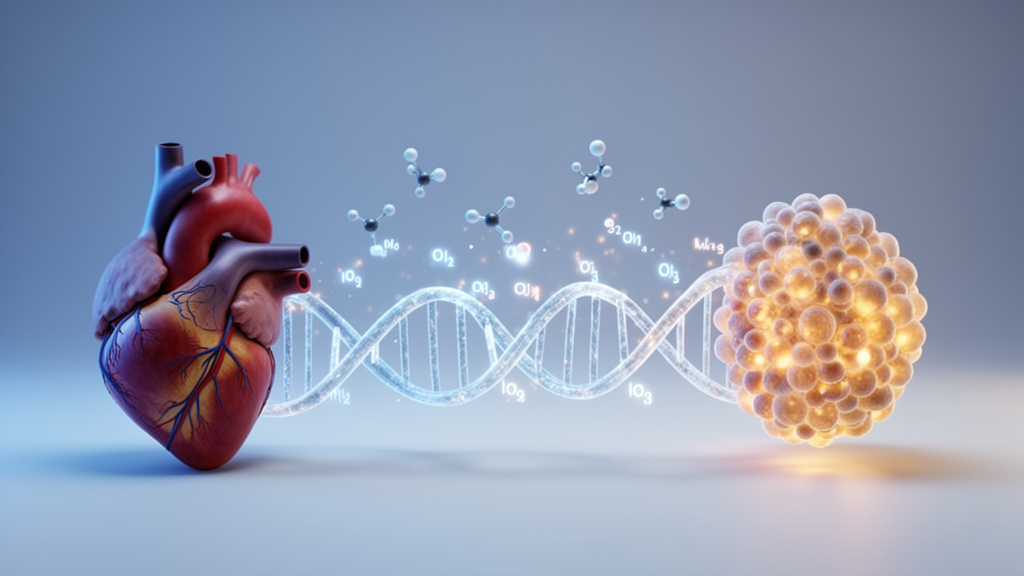
Metabolic stress may leave a lasting chemical imprint on the genome, and a new review in Clinical Epigenetics examines how that imprint forms across the cardiovascular–kidney–metabolic (CKM) continuum. The article, published on 26 September 2026 as an open-access review, brings together biochemical studies, human epigenome-wide association studies, target-tissue methylomes, causal-inference analyses, and intervention studies to ask how systemic metabolic perturbations converge on the DNA methylation machinery and generate tissue-specific responses.
CKM syndrome describes an interconnected continuum of metabolic, cardiovascular, and kidney dysfunction driven by persistent metabolic stress. While DNA methylation has been studied extensively in individual metabolic disorders, the authors argue that how these perturbations converge on methylation across the whole continuum has remained unclear. The review proposes three interconnected routes by which metabolism may shape methylation: altered availability of methyl donors, impaired TET-dependent demethylation, and stress-dependent changes in chromatin and cell state.
At the biochemical level, the review links one-carbon metabolism, tricarboxylic acid-cycle intermediates, and redox imbalance to the activity of DNA methyltransferases and ten-eleven translocation (TET) enzymes. Because these enzymes write and erase methylation marks, shifts in metabolite supply can in principle connect a person’s metabolic state to locus- and tissue-specific methylation dynamics. The authors emphasize that this is a framework drawn from synthesized evidence rather than a demonstration of a single causal pathway.
A distinctive feature of the review is its breadth across organs. Evidence is synthesized from adipose tissue, liver, skeletal muscle, pancreatic islets, kidney, and cardiovascular tissues, allowing the authors to distinguish peripheral biomarkers from target-organ mechanisms.
The review also confronts methodological pitfalls that complicate interpretation. These include cell-composition confounding, in which differing mixes of cell types masquerade as methylation differences; the inability of conventional bisulfite assays to resolve 5-methylcytosine from 5-hydroxymethylcytosine, two chemically distinct marks; and reverse causation, in which disease states alter methylation rather than the reverse. The authors note that these limitations mean methylation patterns may serve as markers of metabolic exposure without being mediators of disease.
To move beyond correlation, the review considers complementary approaches for prioritizing clinically relevant loci: methylation quantitative trait loci, Mendelian randomization, colocalization, multi-omic integration, and longitudinal intervention studies. These methods, the authors argue, can help distinguish methylation marks that merely track metabolic state from those that may contribute to persistent organ dysfunction.
Overall, the review concludes that DNA methylation may provide a context-dependent interface between metabolic stress and persistent organ dysfunction in CKM syndrome. However, the authors are explicit that the field needs longitudinal, cell-resolved, multi-tissue studies that integrate methylomics with metabolomics and functional perturbation in order to separate exposure markers from mediators and therapeutic targets. As a review, the article synthesizes existing evidence and identifies open questions rather than reporting new experimental findings.
Subject of Research: Metabolic regulation of DNA methylation in cardiovascular–kidney–metabolic syndrome
Article Title: Metabolic regulation of DNA methylation across the cardiovascular–kidney–metabolic continuum: mechanisms, tissue specificity, and clinical translation
Article References: Xie, W., Sheng, Z., Song, T., Wu, Z., Jiang, J., & Zhao, X. (2026). Metabolic regulation of DNA methylation across the cardiovascular–kidney–metabolic continuum: mechanisms, tissue specificity, and clinical translation. Clinical Epigenetics. https://doi.org/10.1186/s13148-026-02242-6
Image Credits: AI Generated
DOI: 10.1186/s13148-026-02242-6
Keywords: DNA methylation, CKM syndrome, epigenetics, one-carbon metabolism, TET enzymes, methyl donors, adipose tissue, kidney, Mendelian randomization, biomarkers, Metabolic, regulation
News Source: Daisy Hatcher. (October 29, 2026). How metabolism may reshape DNA methylation across the cardiovascular–kidney–metabolic continuum. Scienmag.



