In a study published in Alzheimer’s Research & Therapy, researchers report that blocking the neonatal Fc receptor (FcRn) with efgartigimod reduced circulating IgG and was associated with changes in Alzheimer’s-type pathologies in APP/PS1 mice, a transgenic model of amyloid pathology. The work, led by Xiao-Qin Zeng, Zhang-Cheng Fei, Yi-Lin Zhao and colleagues under senior authors Yan-Jiang Wang and Yu-Hui Liu, was published on 14 October 2026 as an open-access research article.
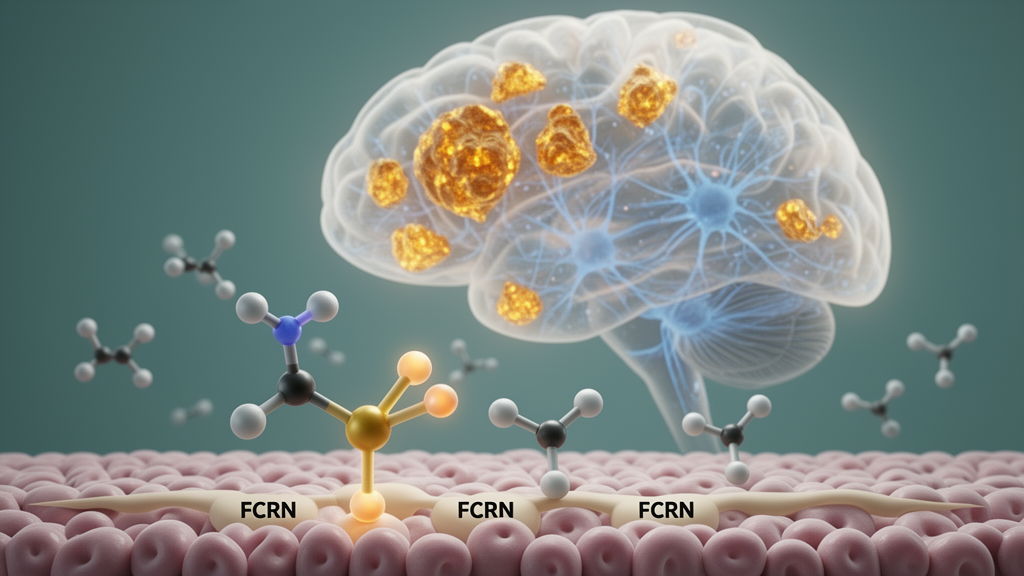
The rationale rests on a link between humoral immunity and Alzheimer’s disease. Autoimmune disorders are associated with an increased risk of developing Alzheimer’s disease, and dysregulated autoantibodies have been suggested to contribute to exacerbated amyloid-beta accumulation. From this observation, the team hypothesized that reducing circulating IgG might influence AD-type pathologies. Efgartigimod, an FcRn antagonist already approved for the treatment of IgG-mediated autoimmune diseases, rapidly lowers circulating IgG levels by blocking FcRn-mediated IgG recycling, making it a practical tool to test that hypothesis in animals.
In the experiment, eight-month-old female APP/PS1 mice received intraperitoneal injections of efgartigimod at 10 mg/kg once weekly for four weeks, while control animals received saline. After treatment, the mice underwent behavioral tests, pathological examinations and biochemical analyses to evaluate behavioral phenotypes and AD-type pathologies. The authors report that efgartigimod effectively reduced serum IgG levels and ameliorated brain IgG deposition. Relative to saline-treated controls, circulating IgG depletion by efgartigimod was associated with better performance in selected behavioral measures and lower brain amyloid-beta burden.
The treatment was also associated with lower levels of tau phosphorylation, neuroinflammation and neuronal apoptosis in the mice. To probe mechanisms, the researchers extended the work in vitro: serum collected from efgartigimod-treated male rats was applied to SH/APPswe/PS1wt cells. Compared with control serum, serum from the treated rats was associated with altered amyloid-beta processing and a higher mitochondrial-positive area fraction in the cell cultures.
The authors conclude that FcRn blockade depletes circulating IgG and is associated with changes in AD-type pathologies in APP/PS1 mice, supporting further investigation of humoral immunity and FcRn-targeted approaches in Alzheimer’s disease. Several caveats frame these findings. All results come from a mouse model and cell cultures, so no conclusions about human patients can be drawn from this study alone. The associations reported here do not establish that IgG depletion causes the pathological changes, and the treated animals were a single sex and age group. Notably, the article was shared early as a peer-reviewed, accepted, citable version carrying a permanent DOI, subject to further edits before the final Version of Record. The study’s value lies in pointing to a testable immune mechanism — the recycling of IgG by FcRn — that may now be examined more directly in future research on Alzheimer’s disease.
Subject of Research: IgG depletion via FcRn blockade and its association with Alzheimer's-type pathology in APP/PS1 mice
Article Title: IgG depletion by FcRn blockade is associated with changes in amyloid pathology and neurodegeneration in APP/PS1 mice
Article References: Zeng, X.-Q., Fei, Z.-C., Zhao, Y.-L., Zeng, G.-H., Chen, J., Li, X.-P., Zhang, W.-Q., Wang, Y.-J., & Liu, Y.-H. (2026). IgG depletion by FcRn blockade is associated with changes in amyloid pathology and neurodegeneration in APP/PS1 mice. Alzheimer's Research & Therapy. https://doi.org/10.1186/s13195-026-02226-x
Image Credits: AI Generated
DOI: 10.1186/s13195-026-02226-x
Keywords: FcRn, efgartigimod, IgG, Alzheimer's disease, APP/PS1 mice, amyloid-beta, tau phosphorylation, neuroinflammation, humoral immunity, autoimmunity, depletion, blockade
News Source: Diana Fleming. (October 30, 2026). FcRn Blockade Lowers IgG and Alters Amyloid Pathology in Alzheimer’s Model Mice. Scienmag.