


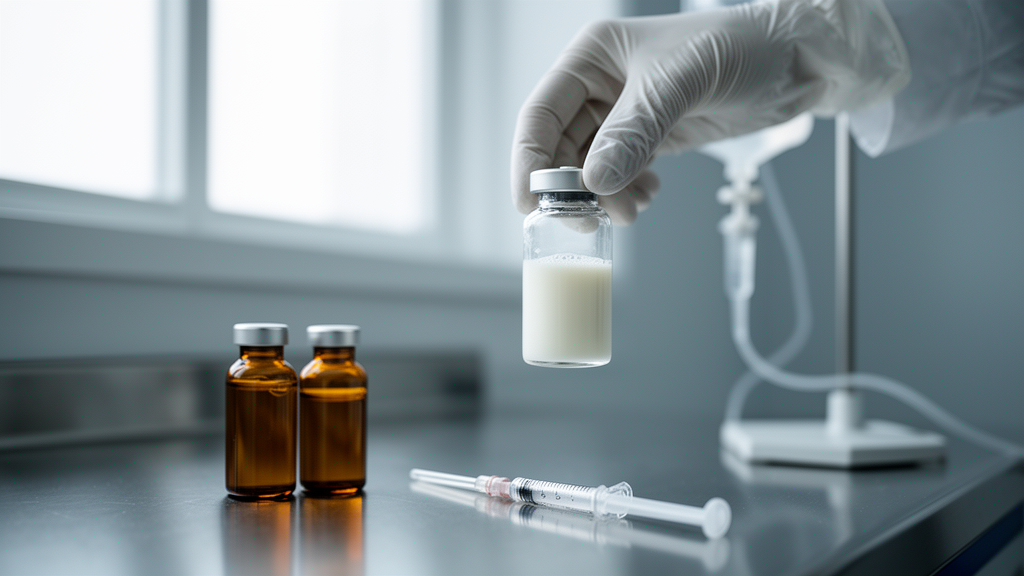
Intravenous lipid emulsions, once confined to feeding critically ill patients, now occupy a contested corner of emergency toxicology. A 2025 narrative review published in Annals of Intensive Care traces how these triglyceride droplets, first proposed in 1998 as a rescue therapy for bupivacaine-induced cardiac arrest, have spread into the treatment of poisonings by tricyclic antidepressants, calcium channel blockers, antipsychotics and other lipophilic drugs. The review, written by Gauthier Nendumba, Sydney Blackman, Nathan De Lissnyder, Marine Cillis and Patrick M. Honore, synthesizes randomized trials, cohort studies, animal models and case registries, and its verdict is deliberately two-sided: real signals of benefit in specific poisonings, but no proven reduction in mortality and evidence of limited methodological quality.
The story began with an observation about local anesthetics. In 1979, Albright drew attention to bupivacaine and etidocaine as causes of refractory cardiac arrest that resisted conventional resuscitation. In 1998, Weinberg and colleagues showed in rats that lipid emulsion infusion altered the bupivacaine dose needed to induce cardiac arrest, an effect partly attributed to sequestration of the drug into what became known as a lipid sink. Rosenblatt and colleagues later reported the first clinical case, a patient in cardiac arrest after presumed bupivacaine and mepivacaine toxicity who recovered after lipid infusion, a moment the review describes as a turning point for managing local anesthetic systemic toxicity, or LAST.
Since 2009, case reports of lipid emulsion use for non-local anesthetic poisonings have multiplied, and the review argues that the mechanism is now understood as multimodal rather than a simple chemical sponge. The lipid sink theory holds that the emulsion creates an intravascular lipid phase that binds lipophilic compounds, lowering the free, active concentration of the toxin in plasma. This has evolved into the lipid shuttle theory: laboratory studies show lipid infusion reduces the elimination half-life of bupivacaine and its concentrations in the brain and heart while increasing hepatic concentrations, suggesting the droplets absorb the drug from high-perfusion organs such as the brain and heart and ferry it to the liver, adipose tissue or muscle for detoxification and storage. A striking clinical illustration comes from a case the authors cite involving a 49-year-old man who ingested 5000 mg of trazodone; his plasma trazodone concentration fell from 3678 ng/mL to 111.6 ng/mL shortly after lipid infusion, then rebounded to 4784 ng/mL an hour later, a rebound the authors attributed to redistribution from tissue or lipid stores.
Lipophilicity, however, is not the whole story. The review highlights a study by Levine and colleagues covering 134 cases recorded between May 2012 and December 2018 in the Toxicology Investigators Consortium lipid sub-registry, of which 108 patients survived. No statistically significant relationship emerged between survival and the partition coefficient of the ingested drug, a measure of lipophilicity. The authors therefore devote detailed attention to non-scavenging cardiotonic effects. Lipid emulsions alone enhance the maximal rates of left ventricular pressure rise and fall and the rate-pressure product. Proposed mechanisms include augmentation of contractility and preload through intravascular volume expansion, inhibition of endothelial nitric oxide-mediated vasodilation by the polyunsaturated fatty acid linolenic acid, support of mitochondrial function by countering inhibition of carnitine-acylcarnitine translocase and preserving ATP production against toxin-driven reactive oxygen species, reversal of sodium channel blockade with enhanced calcium influx producing inotropic and chronotropic effects, and phosphorylation of glycogen synthase kinase-3β, which in experimental ischemia-reperfusion models has been associated with reduced myocardial damage.
Animal evidence remains the most quantitatively robust layer of the field. A 2020 systematic review and meta-analysis by Fettiplace and colleagues pooled 58 studies of drug-induced cardiac toxicity in animals and found that lipid treatment significantly reduced mortality, with a pooled odds ratio for death of 0.26 (95% confidence interval 0.16 to 0.44). Subgroup analyses confirmed benefit in both local anesthetic toxicity models (odds ratio 0.16) and non-local anesthetic models (odds ratio 0.43). Yet heterogeneity was substantial and tracked with species: swine models showed benefit only in local anesthetic toxicity, while non-swine models such as rats, rabbits and dogs showed consistent benefit across all toxicants. The authors of that analysis suggested dosing protocols, experimental design or species-specific hypersensitivity reactions might explain the swine discrepancy.
Human randomized trials paint a more fragmented picture. In organophosphate poisoning, a 2018 meta-analysis by Yu and colleagues of seven randomized controlled trials totaling 630 patients found a higher cure rate with lipid resuscitation (odds ratio 2.54) and, from four studies with mortality data on 301 patients, significantly reduced mortality (odds ratio 0.31). The review cautions, however, that all seven trials came from a single country, China, that blinding information was often missing, and that complications such as acute pancreatitis and lipid embolism went unaddressed. Individual trials add texture: Majeed and colleagues reported improved Glasgow Coma Scale scores, mean arterial pressure, ventilation requirements and mortality in 100 organophosphate-poisoned patients; Kazemifar and colleagues found no seizures among 80 tramadol-intoxicated patients given lipid emulsion versus 15 seizures in controls; Behnoush and colleagues, in 120 patients with isolated tramadol poisoning, recorded higher post-treatment GCS scores, shorter hospital stays and fewer seizures; and trials in clozapine and antipsychotic poisoning by Basiouny and Elgazzar showed faster neurological recovery, more frequent ECG normalization and shorter hospital stays. By contrast, Pannu and colleagues found no benefit in atropine requirements, hemodynamics or mortality in organophosphate poisoning, and Elabdeen and colleagues, in aluminum phosphide poisoning, saw reduced need for intubation and ventilation but no significant mortality difference.
Uncontrolled and registry-based data temper enthusiasm further. The LIPAEMIC prospective registry, run by Cave and colleagues from 2009 to 2012, enrolled 48 patients, 38 of whom had been exposed to agents other than long-acting local anesthetics; consciousness improved within 30 minutes in 26 patients, with median GCS rising from 4 to 8, and mean arterial pressure rose from 70 to 90 mmHg in eight hemodynamically unstable cases, but the authors could not conclusively attribute these improvements to lipid emulsions because of concurrent treatments and the absence of a control group. A multicenter prospective uncontrolled study by Mithani and colleagues in 2016, enrolling 36 hemodynamically unstable patients, failed its primary endpoint of hemodynamic stabilization; the mean change in mean arterial pressure at one hour was 17.22 mmHg, but this was driven by one extreme outlier, and without that patient the result was no longer statistically significant. A retrospective pediatric study by Presley and colleagues found improvement in 13 of 14 children treated with lipid emulsion, though one teenager with severe verapamil intoxication did not benefit and one case of acute pancreatitis was attributed to post-infusion hypertriglyceridemia.
Adverse effects, while uncommon, are clinically significant and volume-dependent. Acute pancreatitis can occur when triglyceride levels exceed 900 mg/dL, as triglyceride-rich chylomicrons obstruct pancreatic capillaries; several cases have followed lipid administration. Elevated triglycerides also interfere with hematological and biochemical laboratory analyses, a problem that can be mitigated by drawing blood before infusion or by brief high-speed centrifugation of serum. In a retrospective study across two US university hospitals, Levine and colleagues found that 6 of 9 patients treated with lipid emulsion as an antidote over 13 years experienced adverse effects, including two cases of acute pancreatitis with triglyceride peaks of 8611 and 3648 mg/dL, unusable blood tests in four patients, and three cases of acute respiratory distress syndrome of uncertain causation. Fat overload syndrome, circuit occlusion in continuous venovenous hemofiltration, ECMO and CytoSorb, bronchospasm and hypersensitivity reactions round out the reported spectrum. To limit risk, the review endorses capping total dose at roughly 10 to 12 mL/kg and monitoring serum triglycerides.
Guidelines reflect this uneven evidence base. The 2021 European Resuscitation Council recommends lipid emulsion as first-line treatment for LAST and suggests considering it in beta-blocker, calcium channel blocker and tricyclic antidepressant intoxication. The American Academy of Clinical Toxicology, in 2016, issued a strong recommendation for bupivacaine-induced cardiac arrest despite very low evidence, endorsed last-resort use in life-threatening amitriptyline and bupropion poisoning, and advised against first-line use in severe poisoning by lipophilic beta-blockers or calcium channel blockers such as verapamil and diltiazem. The American College of Medical Toxicology considers lipid emulsion a reasonable option in severe hemodynamic instability or highly lipophilic toxicity and specifies a 1.5 mL/kg bolus of 20% emulsion over 2 to 3 minutes followed by an infusion of 0.25 mL/kg/min, with a maximum of 10 mL/kg. The American Heart Association, updating guidance in 2023, retains that 20% lipid emulsion can be efficacious in life-threatening local anesthetic toxicity, especially from bupivacaine, advises against routine use in lipophilic beta-blocker or calcium channel blocker poisoning, and deems it reasonable to consider for refractory life-threatening sodium channel blocker poisoning.
The review’s bottom line is measured. Randomized trials suggest lipid emulsions may improve neurological symptoms, shorten hospitalization and reduce the need for mechanical ventilation in tramadol, clozapine, organophosphate and glyphosate surfactant poisonings, and adverse effects appear infrequent at recommended doses, but no significant mortality benefit has been demonstrated, likely because samples were small and deaths were rare in the studied groups. No randomized trial has yet evaluated the therapy in severe poisonings involving beta-blockers, calcium channel blockers or tricyclic antidepressants, or in patients with severe hemodynamic instability. The authors call for high-quality multicenter studies and new prospective registries, modeled on the LIPAEMIC report, to refine indications, dosing and long-term safety, and they conclude that lipid emulsions should remain part of the therapeutic arsenal despite the lack of high-quality data, with continued use grounded in the sheer number of reported cases rather than in definitive proof of survival benefit.
Subject of Research: The evolving use of intravenous lipid emulsions as antidotes in drug-induced toxicities
Article Title: Use of intravenous lipid emulsions in drug-induced toxicities: a 2025 narrative review
Article References: Nendumba, G., Blackman, S., De Lissnyder, N., Cillis, M., & Honore, P. M. (2025). Use of intravenous lipid emulsions in drug-induced toxicities: a 2025 narrative review. Annals of Intensive Care, 15(1), Article 181. https://doi.org/10.1186/s13613-025-01601-5
Image Credits: AI Generated
DOI: 10.1186/s13613-025-01601-5
Keywords: intravenous lipid emulsion, drug-induced toxicity, local anesthetic systemic toxicity, lipid sink, lipid shuttle, bupivacaine, organophosphate poisoning, tramadol intoxication, clozapine poisoning, cardiotonic effects, acute pancreatitis, toxicology guidelines
News Source: Ophelia Keating. (October 30, 2026). Lipid emulsions as antidotes: a 2025 review maps promise and limits in drug poisoning. Scienmag.



