Bread made with flour milled from whole wine-industry leftovers can carry substantially more fiber, protein, and antioxidant capacity than ordinary wheat bread, according to a pilot-scale study published in Frontiers in Sustainable Food Systems. Researchers in Portugal baked loaves fortified with flour from red and white grape pomace—the skins, seeds, and residual pulp left after pressing grapes during vinification—and measured how the substitution changed nutrition, chemistry, color, texture, acidity, and consumer acceptance. The findings suggest that an abundant winery by-product, typically discarded or funneled into low-value uses, could become a functional bakery ingredient, though the benefits come with clear trade-offs at higher doses.
Grape pomace is generated in enormous quantities worldwide, representing roughly 25 percent of the total grape mass processed during winemaking. It is naturally rich in dietary fiber and phenolic compounds, including flavonoids, phenolic acids, tannins, and, in red varieties, anthocyanins known for antioxidant properties. Conventional wheat bread made from refined flour, by contrast, usually contains low levels of these bioactive compounds. The research team, led by Daniela Freitas of the Polytechnic Institute of Beja and Ana Rita F. Coelho of NOVA School of Science and Technology, set out to test whether whole pomace flour—without separating skins from seeds—could enrich bread while valorizing a residue that wineries often pay to dispose of.
The study used pomace from two organically grown Portuguese cultivars: Alicante Bouschet, a red grape, and Arinto, a white grape, both supplied by Herdade dos Lagos in Alentejo in August 2023. The whole pomace was dried at 60 degrees Celsius for 12 hours to a moisture content of 5 to 8 percent, then ground and sieved to a particle size of 600 micrometers. Chemical analysis of the flours revealed striking differences between the two varieties. The red pomace flour contained 11.1 percent protein and 65.2 percent fiber, while the white pomace flour had 6.9 percent protein and 43.3 percent fiber but far more total sugars, at 29.7 percent versus 1.4 percent. The white flour also showed higher phenolic content, at 7,879.3 versus 7,372.9 milligrams of gallic acid equivalents per 100 grams, and higher antioxidant readings in both DPPH and ORAC assays.
Seven bread formulations were prepared at pilot scale using professional bakery fermentation and baking equipment: a control with no pomace, plus three incorporation levels—5, 10, and 15 percent by weight—for each pomace type, replacing an equivalent proportion of wheat flour. Each loaf contained 250 grams of total flour, 3 grams of fine salt, 5 grams of dry baker’s yeast, and 155 grams of water, with only the flour proportions varied. Three independent production batches were made per formulation, and each batch was analyzed in triplicate, yielding nine determinations per sample. Compositional and antioxidant results were expressed on a dry weight basis.
The nutritional results showed a consistent enrichment pattern. Protein rose from 4.40 percent in the control to 5.50 percent in the bread with 15 percent red pomace, the highest value recorded. Fat climbed from 0.05 percent in the control to 0.35 percent at 15 percent red pomace, an increase the authors attribute to the oil-rich grape seeds. Fiber showed the most dramatic change, rising from 4.46 percent in the control to 10.45 percent in the 15 percent red pomace bread, with the effect clearly dose-dependent and more pronounced in red pomace formulations. Sugar content behaved differently depending on pomace type: red pomace breads dropped below the control’s 0.73 percent, reaching 0.53 percent at 5 percent incorporation, while white pomace breads climbed steadily to 1.13 percent at the highest level, mirroring the sugar-rich composition of the Arinto flour.
Antioxidant capacity increased across all fortified breads, with the control consistently showing the lowest values. Total phenolic content ranged from 81.9 to 156.8 milligrams of gallic acid equivalents per 100 grams, peaking in the 15 percent red pomace loaf. ORAC values, a measure of oxygen radical absorbance, jumped from 378.1 micromoles of Trolox equivalents per 100 grams in the control to 2,537.7 in the 15 percent red pomace bread, followed by 2,347.1 in the equivalent white pomace formulation. DPPH activity told a slightly different story: white pomace breads led, with the 10 percent white formulation reaching 196.2 micromoles of Trolox equivalents per 100 grams, ahead of 15 percent white at 187.5 and 15 percent red at 166.3, versus 34.8 in the control. Interestingly, although the white pomace flour itself had higher phenolic and antioxidant readings, the red pomace breads showed greater increases in total phenolics and ORAC, suggesting the red varieties’ phenolic compounds were better retained or more extractable after baking.
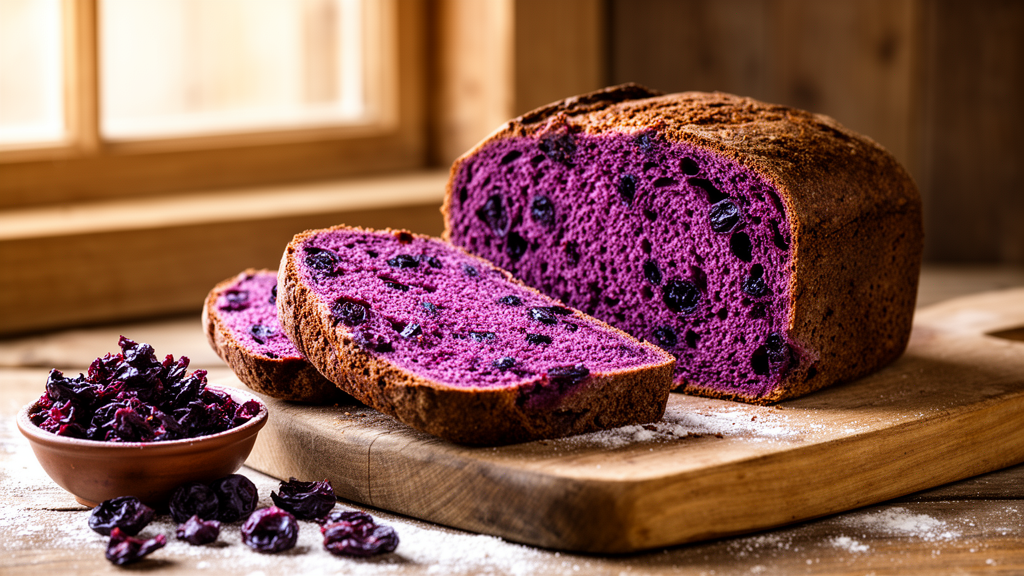
Color and texture shifted noticeably with fortification. Crust lightness fell from 55.27 in the control to 41.91 in the 15 percent red pomace bread, while crumb lightness dropped even further, from 56.67 to 29.18, producing a much darker loaf. White pomace breads maintained crust lightness similar to the control, around 50 to 52, indicating no significant impact on that parameter. Yellowness declined sharply in red pomace breads, with crust b* values falling from 15.58 in the control to 2.32 at 15 percent red incorporation. Hardness, measured by penetration test on 25-millimeter slices, rose from 10.0 newtons in the control to 33.5 newtons in the 15 percent red pomace bread, the highest value recorded. The authors link this firming to the higher fiber and phenolic content interfering with gluten network development and water distribution, yielding a denser crumb. Bread pH also fell progressively with pomace addition, from 5.86 in the control to 4.3 in the 15 percent red formulation, with red pomace exerting a stronger acidifying effect than white.
Consumer acceptance, tested with 28 untrained panelists using a nine-point hedonic scale, revealed a clear dose penalty. The 5 percent formulations, especially red pomace, scored highest across appearance, color, aroma, texture, flavor, and overall acceptability. The 10 percent breads landed in the middle, while the 15 percent loaves consistently received the lowest scores. Notably, the control bread was excluded from the sensory test, so the results reflect acceptance of the fortified breads on their own terms rather than preference against a familiar conventional loaf. Mean scores above the neutral point of 5 indicated all six fortified formulations were accepted, but the panel was small and drawn from a single institution, and the authors call for larger, more representative consumer panels in future work.
Correlation analysis across the measured parameters revealed strong positive associations between fiber content and antioxidant measures, between antioxidant activity and bread hardness, and between fat and both phenolics and ORAC. pH showed strong negative correlations with total phenolics, ORAC, fat, and hardness, indicating that lower-acidity breads tended to be less antioxidant-rich and softer. Crumb lightness was strongly negatively correlated with total phenolics and ORAC, meaning darker crumbs carried more antioxidant capacity. These patterns suggest that the same compounds responsible for nutritional enrichment also drive the textural and visual changes that consumers notice.
The authors conclude that whole grape pomace is a sustainable, polyphenol-rich ingredient for bread fortification, with red pomace at 5 percent appearing to offer the best balance between nutritional improvement and sensory quality. Both the incorporation level and the pomace type must be considered simultaneously, they note, since the two cultivars produced distinct compositional and technological outcomes. Economic aspects were not evaluated, so any claims about reducing winery by-product management costs or creating value-added bakery products would need confirmation through specific techno-economic analyses. Future research should identify individual phenolic compounds and their stability during baking, assess bioaccessibility, test shelf life, optimize formulation parameters such as water absorption and particle size to mitigate texture and flavor penalties at higher doses, and validate the approach at industrial scale. For now, the study demonstrates that a residue wineries often struggle to manage can measurably enhance the nutritional and antioxidant profile of one of the world’s most consumed staple foods—provided bakers respect the dose limits that keep the loaf palatable.
Subject of Research: Nutritional and sensory effects of incorporating red and white grape pomace flour into bread
Article Title: Can incorporating grape pomace into bread sustainably enhance its antioxidant capacity?
Article References: Freitas, D., Coelho, A. R. F., Dias, J., Simões, M., Floro, M., Marques, A. C., Lageiro, M., & Amaral, O. (2026). Can incorporating grape pomace into bread sustainably enhance its antioxidant capacity?. Frontiers in Sustainable Food Systems, 10, 1984250. https://doi.org/10.3389/fsufs.2026.1984250
Image Credits: AI Generated
DOI: 10.3389/fsufs.2026.1984250
Keywords: grape pomace, bread fortification, antioxidant capacity, dietary fiber, polyphenols, winery by-products, circular economy, food science, sensory evaluation, pilot-scale baking, Alicante Bouschet, Arinto
News Source: Sloane Callahan. (October 30, 2026). Grape pomace bread boosts fiber and antioxidants but tests taste limits. Scienmag.