


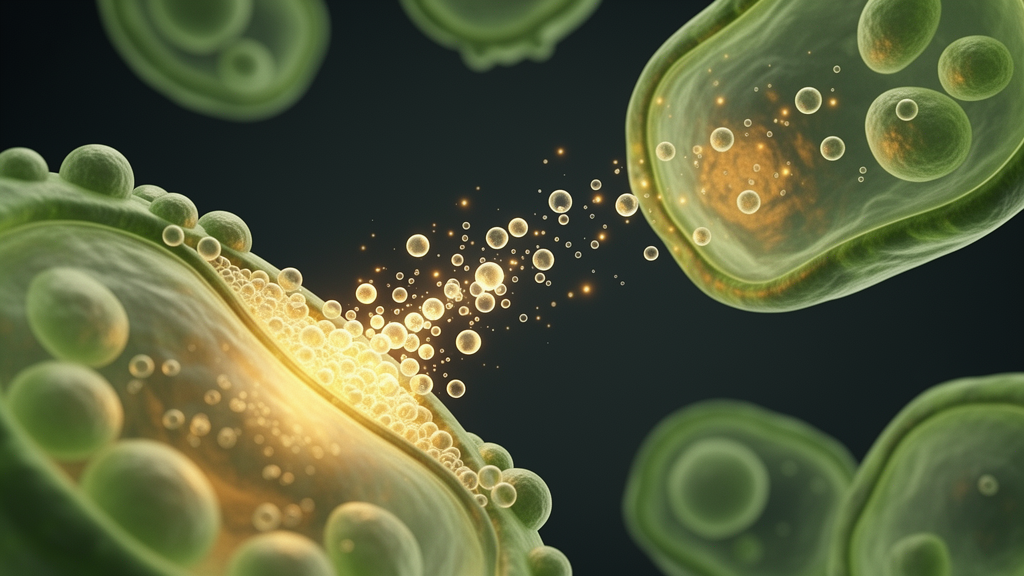
Plants under attack from drought, salt, heat or disease do not simply endure the damage alone. According to a review published in Discover Plants, they package stress-responsive proteins, lipids, metabolites and RNA species into nano-sized extracellular vesicles and dispatch them between cells, coordinating defense and adaptation across tissues. The review, authored by Harsha Sreeraj, K. S. Tamilselvi and Nirmal Kumar Ramasamy and published on 28 October 2026, argues that these plant-derived extracellular vesicles, or PDEVs, are emerging as central mediators of how plants perceive and tolerate adverse environmental conditions, and as a possible platform for delivering agrochemicals and RNA-based crop protection agents.
The vesicles in question are small, membrane-bound particles, generally observed in a size range of 30 to 500 nanometres, although the measured size varies with the characterization method used. They arise from several cellular pathways. In the best-characterized route, portions of the endosomal limiting membrane bud inward to form intraluminal vesicles inside multivesicular bodies. When these bodies fuse with the plasma membrane, the internal vesicles are released into the apoplast, the extracellular space surrounding plant cells. The review notes that plants also appear to use ESCRT-dependent and ESCRT-independent mechanisms for vesicle formation, including tetraspanin-enriched compartments such as TET8/TET9-positive vesicles and ARA6-labeled multivesicular bodies identified in Arabidopsis, as well as non-conventional secretion routes involving PEN1-associated compartments and exocyst-positive organelles. This diversity of origins produces heterogeneous vesicle populations that differ in molecular composition, size and biological function.
What makes these vesicles interesting for agriculture is their cargo. Plant extracellular vesicles selectively package proteins, lipids, messenger RNAs and small regulatory RNAs such as microRNAs and small interfering RNAs. Once released, they participate in intercellular communication, developmental regulation and responses to both biotic and abiotic stress. The review highlights that under stress conditions, plants enhance exosome biogenesis and selectively load stress-responsive materials that regulate signalling pathways, reinforce defense barriers and reprogram gene expression. Emerging evidence also points to a role in cross-kingdom signalling, influencing microbial communities associated with roots and leaves.
The evidence that stress itself drives vesicle production comes from several experimental systems. In tomato, the yield of exosomes increased considerably when plants were exposed to drought, salinity or nutrient deficiency, and the stress also altered the vesicles’ macromolecular composition: protein content rose while RNA content fell, indicating differential regulation of biomolecule packaging during stress adaptation. The authors suggest this may reflect extensive molecular reprogramming within stressed cells, which the vesicles mirror. Stress reshapes the plant’s small RNA landscape, increasing certain microRNAs involved in hormone regulation, antioxidant defense and growth control, making them more likely to be selectively loaded into vesicles, while stress-triggered RNA degradation pathways reduce overall RNA availability. Heat shock protein HSP70, a well-documented stress-responsive protein, is among the cargos exosomes are known to carry, helping preserve cellular homeostasis under adverse conditions.
Parallel observations in other organisms hint at a broader pattern, though the review is careful about how far it can be pushed. Chronic stress induces increased exosome release from multiple cell types in murine models, and in the sea cucumber Apostichopus japonicus, exosome concentrations rose during heat stress, with the vesicle-derived microRNAs implicated in the heat stress response. The authors note, however, that the available evidence is currently insufficient to establish that the underlying mechanisms are evolutionarily conserved across kingdoms, and they treat the similarities as a potential cross-kingdom parallel or working hypothesis rather than an established strategy. Further comparative studies of vesicle biogenesis, cargo composition and functional effects across plant and animal systems would be needed to determine whether the parallels reflect conserved mechanisms or independent adaptations.
Specific plant studies add detail to the picture. Pathway analysis of apple-derived nanovesicles identified the abscisic acid-activated signalling pathway, along with related ABA-responsive pathways, among significantly enriched biological processes. Abscisic acid is the key phytohormone regulating plant responses to drought, salinity and temperature extremes, so the finding suggests these nanovesicles may participate in ABA-mediated stress adaptation and signalling. A separate comparison of nanovesicles from the orchid Anoectochilus roxburghii grown in soil versus hydroponic systems found higher flavonoid levels in the soil-grown plants, likely because mild abiotic stresses in soil, such as nutrient fluctuations and microbe-root interactions, stimulate secondary metabolism. And a quantitative proteomic study of apoplastic fluid in jojoba under cold acclimation showed significant changes in the abundance of apoplast-associated proteins involved in cell wall modification, carbohydrate metabolism and redox regulation. Since the apoplast is a known reservoir of extracellular vesicles, the authors suggest these proteomic shifts likely reflect, at least in part, stress-induced modulation of vesicle cargo composition.
On the disease side, the vesicles appear to function as mobile arsenals. Extracellular vesicles derived from sunflower seedlings carried pathogenesis-related proteins including chitinase II, thaumatins, proteinase inhibitors, peroxidases and lipid transfer proteins. When phytopathogenic fungal spores internalized these vesicles, spore viability declined and hyphal growth was inhibited, demonstrating an antifungal defense function. The review also documents the other side of the arms race: the fungus Fusarium graminearum produces its own extracellular vesicles carrying virulence-related proteins expressed during corn infection, likely aiding the infection process through an unconventional secretion pathway that protects and transports effector proteins. In tomato infected with Fusarium, exosome-like nanoparticles initially suppressed fungal growth through antifungal molecules, but at later stages exosomal microRNAs appeared to downregulate plant defense genes, suggesting the pathogen may hijack the plant’s vesicle-mediated communication to weaken host immunity.
The most immediately practical application discussed in the review is spray-induced gene silencing, a crop protection technique in which double-stranded RNAs targeting pathogen virulence genes are applied to plants and taken up by pathogens, triggering RNA interference that blocks infection. The weakness of the approach is that RNA molecules are inherently unstable, degraded by rainfall, ultraviolet radiation and extracellular nucleases from plants or pathogens. Extracellular vesicles offer a solution: studies indicate they shield double-stranded RNA from degradation, promote cellular absorption and increase silencing efficiency. In one study, barley extracellular vesicles were shown to contain trace amounts of spray-derived CYP3RNA small interfering RNAs, enhancing their protected transport to Fusarium graminearum. In another, researchers engineered extracellular vesicle mimetic chimeric nanovesicles by fusing cationic sterosomes with tomato leaf membranes; these carriers showed high RNA loading and nuclease protection, strong leaf adhesion, efficient uptake into both pathogen and tomato cells, and sequence-specific silencing of the haustorial membrane protein gene Hmp1 produced a significant reduction of late blight lesions caused by Phytophthora infestans. A third team developed artificial vesicles with cationic lipids inspired by natural extracellular vesicles to deliver double-stranded RNA against Botrytis cinerea grey mold, targeting Dicer-like and vesicle-trafficking genes; the formulations resisted wash-off, achieved effective fungal uptake and provided up to 21 days of protection on grape leaves, tomatoes and grape fruits, with cost-effective PEG-free versions showing comparable efficacy.
Recent work also points toward exosome-like nanoparticles as nanocarriers for delivering CRISPR/Cas components, which the review describes as a pivotal shift from transient gene regulation toward stable modification of stress-responsive pathways. Beyond delivery technology, the authors envision purified vesicles enriched with stress-relieving molecules being developed as bio-stimulant sprays to prime crops before drought or salinity arrives, stress-responsive microRNA-loaded vesicles regulating gene expression in treated plants without genetic modification, and exosome-guided breeding strategies in which stress-tolerant varieties are analysed by their cargo output as a biomarker-driven approach to crop improvement. The review notes that transgenic approaches, while effective, remain constrained by positional effects from random gene insertion, transgene silencing, slow tissue culture-based transformation and legal and public resistance to genetically modified crops, which is precisely why non-invasive vesicle-based delivery is attracting attention.
None of this is ready for the field. The authors are explicit that the field is still in its infancy and that available evidence is not yet sufficient to establish PDEV-mediated mechanisms for all stress conditions or pathogen interactions, particularly for bacterial and viral systems. Major obstacles include the lack of standardized, plant-specific isolation, purification and quantification methods, which produces inconsistencies between studies and makes universal markers for plant exosomes difficult to define; the technical difficulty of tracing vesicles in plants due to limited labeling strategies; the scarcity of direct functional evidence that specific vesicular cargos modify stress responses in vivo; and unresolved questions about large-scale production, quantity, stability, shelf life and cost-effectiveness. The considerable heterogeneity of plant nanovesicle populations and the incomplete understanding of their biogenesis, cargo-selection mechanisms and functional delivery remain fundamental gaps. The review concludes that substantial methodological refinement, deeper mechanistic insight and scalable production technologies are essential before the biological functions of these vesicles can be translated into stress-resilient crops and environmentally sustainable crop protection.
Subject of Research: Plant-derived extracellular vesicles in plant stress responses and crop improvement
Article Title: Plant-derived extracellular vesicles in stress mitigation and crop improvement
Article References: Sreeraj, H., Tamilselvi, K. S., & Ramasamy, N. K. (2026). Plant-derived extracellular vesicles in stress mitigation and crop improvement. Discover Plants, 3(1), Article 504. https://doi.org/10.1007/s44372-026-00958-6
Image Credits: AI Generated
DOI: 10.1007/s44372-026-00958-6
Keywords: plant-derived extracellular vesicles, exosomes, abiotic stress, plant immunity, RNA interference, spray-induced gene silencing, crop protection, abscisic acid, Fusarium graminearum, nanocarriers, CRISPR delivery, stress tolerance
News Source: Juliet Wilcox. (October 30, 2026). Tiny vesicles from plants may help crops fight drought, salt and disease. Scienmag.



