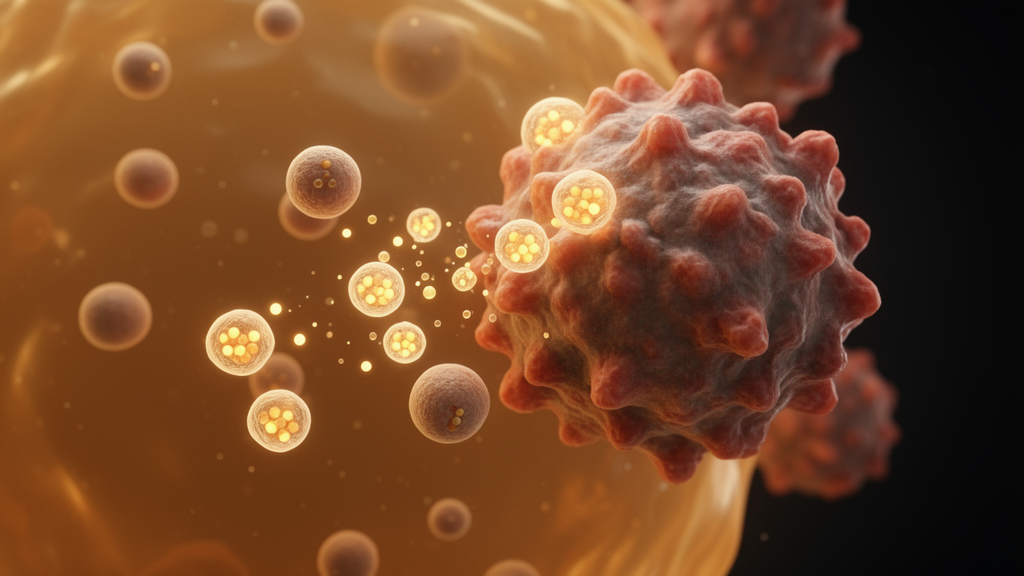
Extracellular vesicles (EVs), nanosized membrane-bound particles released by cells, are gaining attention as key regulators of immune communication within the tumor microenvironment, according to a review published in Cellular & Molecular Biology Letters. Because of their small size and natural cargo of tumor antigens, major histocompatibility complex (MHC) molecules, immune checkpoint proteins, cytokines and regulatory RNAs, these vesicles can modulate both innate and adaptive immune responses, making them a potential tool for cancer immunotherapy.
The review, authored by Manvi Negi, Ramya Lakshmi Rajendran, Saurabh Kumar Jha, Prachi Tiwari, Jagriti Narang, Kushi Anand, Suhel Parvez, Byeong-Cheol Ahn and Prakash Gangadaran, emphasizes that the effect of exosomes—a subtype of extracellular vesicles—depends strongly on their cellular origin. Tumor-derived exosomes largely help cancers evade immune surveillance. They interfere with T cell function, promote the expansion of myeloid-derived suppressor cells, and steer tumor-associated macrophages toward immunosuppressive roles, collectively dampening the body’s antitumor defenses.
In contrast, exosomes released by immune cells—including dendritic cells, B and T lymphocytes, natural killer cells, mast cells and neutrophils—tend to strengthen the immune response. According to the review, these immune-cell-derived vesicles enhance antigen presentation, activate cytotoxic lymphocytes and drive Th-1-type antitumor immunity. The authors examine how this origin-dependent duality shapes the immune landscape of tumors, and how the molecular cargo carried by the vesicles influences immune surveillance and tumor growth.
Among the most striking findings highlighted are those from animal studies of exosome-based cancer vaccines. Dendritic cell exosomes loaded with tumor antigens were reported to trigger strong CD8+ T cell responses and slow tumor progression in preclinical models. The authors stress that such evidence comes from animal studies, and clinical translation remains an open question. The review also surveys current clinical trials testing exosome-based immunotherapies, while flagging the hurdles that stand between laboratory promise and routine clinical use: the heterogeneity of extracellular vesicle preparations, the difficulty of scaling up production, and the lack of standardized methods for controlling vesicle cargo.
Beyond therapy, the review describes exosomes as emerging biomarkers.
The authors also identify specific molecular targets within the exosomal cargo that suppress immunity, including programmed death ligand-1 (PD-L1), transforming growth factor-beta (TGF-β) and immunoregulatory microRNAs.
The review’s overall message is that exosomes should be viewed not merely as molecular messengers but as promising tools and targets for the future of cancer immunotherapy.
Subject of Research: The roles of extracellular vesicles and exosomes in modulating antitumor immunity and their potential as cancer immunotherapy tools and biomarkers.
Article Title: Harnessing extracellular vesicles for innovative immunotherapy for cancer treatment
Article References: Negi, M., Rajendran, R. L., Jha, S. K., Tiwari, P., Narang, J., Anand, K., Parvez, S., Ahn, B.-C., & Gangadaran, P. (2026). Harnessing extracellular vesicles for innovative immunotherapy for cancer treatment. Cellular & Molecular Biology Letters. https://doi.org/10.1186/s11658-026-01031-6
Image Credits: AI Generated
DOI: 10.1186/s11658-026-01031-6
Keywords: extracellular vesicles, exosomes, cancer immunotherapy, tumor microenvironment, dendritic cells, PD-L1, TGF-beta, biomarkers, cancer vaccines, immune evasion, CD8+ T cells, clinical trials
News Source: Nathaniel Bowman. (October 28, 2026). Extracellular vesicles emerge as dual players and tools in cancer immunotherapy. Scienmag.