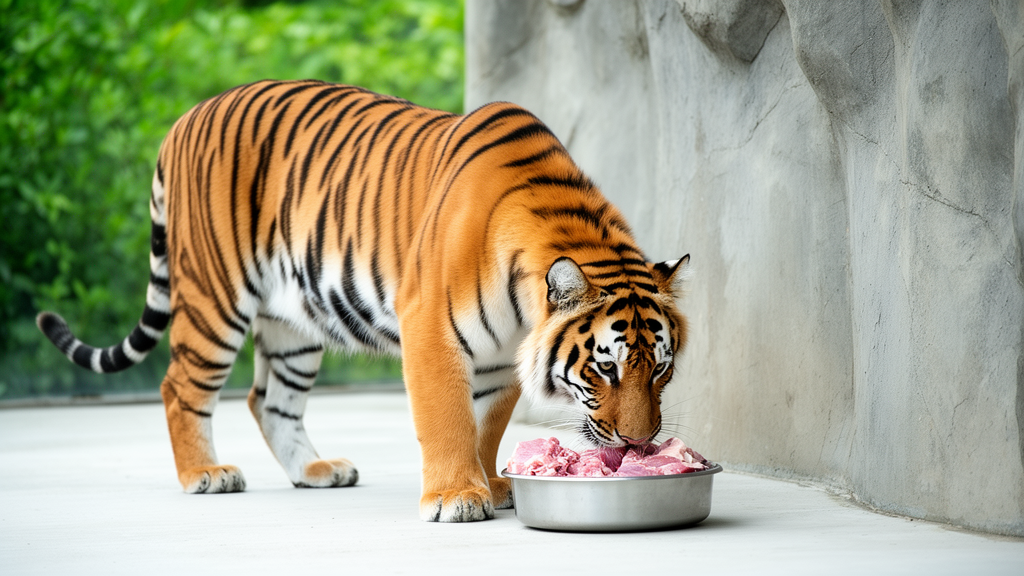
Captive Amur tigers fed exactly the same diet show markedly different metabolic and gut microbial profiles depending on their age, according to a new open-access study published in Animal Microbiome on 14 October 2026. Using non-targeted metabolomics and 16S rRNA sequencing on fecal samples from subadult, adult and old tigers kept under a unified feeding and management model, researchers identified 169 significantly different metabolites across the three age groups, pointing to substantial age-specific remodeling even when nutrition is held constant.
The findings matter because captive breeding is a central strategy for preserving the genetic resources of endangered species, yet standardized nutritional protocols are applied broadly across life stages. Amur tigers, a flagship endangered species, have been subjected to a unified breeding and management model for an extended period, making them a useful case for examining whether one-size-fits-all feeding truly serves all animals in a population.
Each age group displayed a distinct metabolic signature. The adult group contained more substances conducive to lipid digestion and absorption, such as bilirubin and taurocholic acid, suggesting a metabolic state optimized for processing dietary fats.
The old tigers presented a different picture. Their metabolite profile included more compounds related to inflammation, among them the oxidative stress products 5-OxoETE and 13,14-dihydro-15-keto-tetranor prostaglandin E2.
The gut microbial communities mirrored these metabolic shifts. Opportunistic pathogens such as Dysgonomonas and Solobacterium were enriched in the old group, whereas potentially beneficial bacterial taxa like Lachnoclostridium were more prevalent in adult tigers. This parallel patterning of microbes and metabolites across ages was one of the study’s central observations.
Correlation analysis linked the two datasets directly. Lachnoclostridium was significantly negatively correlated with prostaglandin derivatives, while Solobacterium showed a positive correlation with them. The authors interpret this as a hint that alterations in gut microbiota composition are a plausible link in the regulation of inflammation-related metabolites, thereby potentially affecting the health and aging trajectory of Amur tigers. As a correlation-based analysis, this does not establish causation between specific bacteria and inflammatory metabolites.
The study’s conclusions emphasize that even under an identical diet, the Amur tiger exhibits significant age-specific metabolism and gut microbiota, with greater enrichment of potentially harmful metabolites and microbes in the old stage. The authors argue that these insights support a shift toward tailored, precision nutrition protocols grounded in life stage biology, rather than uniform feeding regimes for all captive animals.
Because the work is cross-sectional, comparing groups of subadult, adult and old tigers at one point in time, it documents associations between age, microbes and metabolites rather than tracking changes within individual animals over their lifespans. The authors also note the article is being shared early as peer-reviewed, accepted research carrying a permanent DOI, with a final version of record to follow. Even so, the results provide a concrete evidence base for zoos and breeding centers considering age-differentiated diets for one of the world’s most recognizable endangered carnivores.
Subject of Research: Age-related metabolic and gut microbial differences in captive Amur tigers under uniform feeding
Article Title: Metabolic and gut microbial remodeling in captive Amur tigers under uniform feeding
Article References: Hu, X., He, Z., Liu, C., Gong, M., Lang, W., Mu, D., Zhang, Y., Jin, D., Wang, K., Lu, J., Shan, D., Li, Y., Ning, Y., Jiang, G., & Feng, J. (2026). Metabolic and gut microbial remodeling in captive Amur tigers under uniform feeding. Animal Microbiome. https://doi.org/10.1186/s42523-026-00642-w
Image Credits: AI Generated
DOI: 10.1186/s42523-026-00642-w
Keywords: Amur tiger, gut microbiota, metabolomics, 16S rRNA, captive breeding, aging, inflammation, precision nutrition, endangered species, Animal Microbiome, Metabolic, microbial
News Source: Daisy Hatcher. (October 28, 2026). Captive Amur Tigers Show Age-Specific Gut Microbes and Metabolism on the Same Diet. Scienmag.