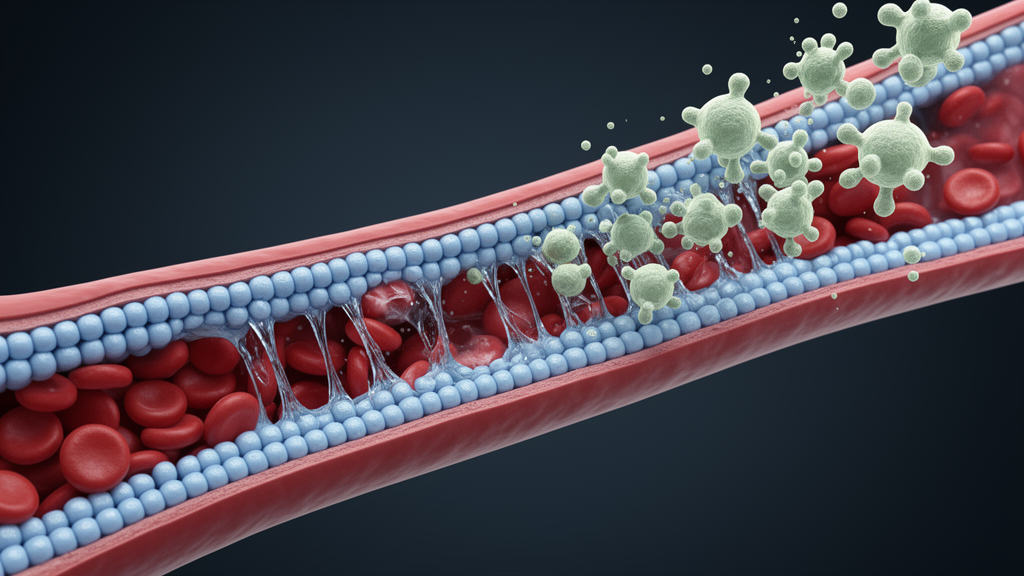
Elderly patients who undergo surgery sometimes emerge with lasting problems in memory and attention, a cluster of conditions known as perioperative neurocognitive disorders. A new study published in Cell Death Discovery points to an unexpected immune mechanism behind this vulnerability: the destabilization of regulatory T cells, a specialized subset of CD4-positive T cells best known for restraining inflammation. According to the research, perioperative stress drives these cells away from their normal immunosuppressive identity, and that shift appears to loosen the tight junctions that seal the blood–brain barrier, allowing inflammatory traffic to reach the hippocampus and erode cognitive function.
The evidence began in the clinic. Using single-cell transcriptomic profiling of peripheral blood mononuclear cells from elderly surgical patients, the researchers mapped how the perioperative period remodels the CD4-positive T-cell compartment. The most striking change was a disproportionate loss of regulatory T cells, together with a functional destabilization of those that remained. Rather than holding their resting, immunosuppressive state, the cells drifted toward an inflammatory-shifted profile, accompanied by reduced expression of regulatory and tissue-reparative genes including FOXP3, CTLA4, PDCD1 and AREG. This is an observational finding in patient blood samples, not a demonstration of cause and effect, but it framed a testable hypothesis: if perioperative immune dysregulation damages the neurovascular unit, unstable regulatory T cells might be a central contributor.
To identify which molecular programs might stabilize the cells, the team compared transcriptomes of regulatory T cells and found 34 genes whose expression was corrected by dexmedetomidine. Within the protein–protein interaction network built from those genes, CTNNB1, which encodes the signaling protein β-catenin, emerged as a prominent candidate hub. The data position β-catenin-associated signaling as an important regulatory axis in perioperative Treg destabilization rather than merely a bystander transcript.
The murine experiments then connected the immune signal to the brain’s vascular gate. Single-cell RNA sequencing of the mouse hippocampus after surgery revealed endothelial remodeling characterized by reduced expression of S1pr1 and Cldn5, genes central to endothelial barrier maintenance, alongside increased Icam1, an adhesion molecule that recruits leukocytes across vessel walls. In a murine model of perioperative neurocognitive disorders, pharmacological activation of β-catenin restored postoperative regulatory T cell abundance and their regulatory gene expression while preserving the hippocampal endothelial barrier program, reflected by increased S1PR1 and Claudin-5 and reduced ICAM1. When the researchers depleted the Treg compartment with the PC61 antibody, the protective effects of β-catenin activation were markedly attenuated, supporting a Treg-dependent contribution rather than a direct vascular action of the drug.
A second therapeutic angle reinforced the same logic. Recombinant PD-L1-Fc treatment restored postoperative regulatory T cell abundance and was associated with preserved ultrastructural integrity of the blood–brain barrier, reduced Evans blue-defined barrier leakage, attenuated hippocampal neuroinflammation and improved cognitive function in the operated animals. Together, the mouse data support a mechanistic chain in which perioperative Treg instability, acting through the β-catenin–tight junctions axis, facilitates disruption of the blood–brain barrier and thereby contributes to postoperative cognitive dysfunction.
The authors conclude that perioperative regulatory T cell instability is a prominent immune-associated contributor to blood–brain barrier disruption and cognitive dysfunction, and that Treg-associated β-catenin signaling helps maintain neurovascular integrity. The findings carry the usual caveats of translational research: the human data are correlative single-cell observations from patient blood, while the causal chain rests on mouse models. The study was released as an accepted manuscript that remains subject to further edits before the final version of record. Even so, the work reframes postoperative cognitive decline as a neurovascular event with a traceable immune origin, and it nominates β-catenin signaling within regulatory T cells as a candidate regulatory pathway for maintaining the integrity of the aging brain’s vascular gate during the perioperative window.
Subject of Research: Perioperative neurocognitive disorders and regulatory T cell–mediated blood–brain barrier disruption
Article Title: Regulatory T cell instability facilitates blood–brain barrier disruption via the β-catenin-tight junctions axis, leading to perioperative neurocognitive disorders
Article References: Xu, W., Lin, L., Zhang, E., Sui, X., Yan, W., Wang, J., Zheng, Y., Suo, Z., Chu, H., Geng, J., Yuan, K., Xiao, T., Zheng, H., & Ni, C. (2026). Regulatory T cell instability facilitates blood–brain barrier disruption via the β-catenin-tight junctions axis, leading to perioperative neurocognitive disorders. Cell Death Discovery. https://doi.org/10.1038/s41420-026-03424-0
Image Credits: AI Generated
DOI: 10.1038/s41420-026-03424-0
Keywords: regulatory T cells, blood-brain barrier, perioperative neurocognitive disorders, beta-catenin, tight junctions, hippocampus, neuroinflammation, single-cell transcriptomics, dexmedetomidine, PD-L1, surgery, immunology
News Source: Ophelia Keating. (October 26, 2026). Unstable Regulatory T Cells Weaken the Blood–Brain Barrier After Surgery. Scienmag.