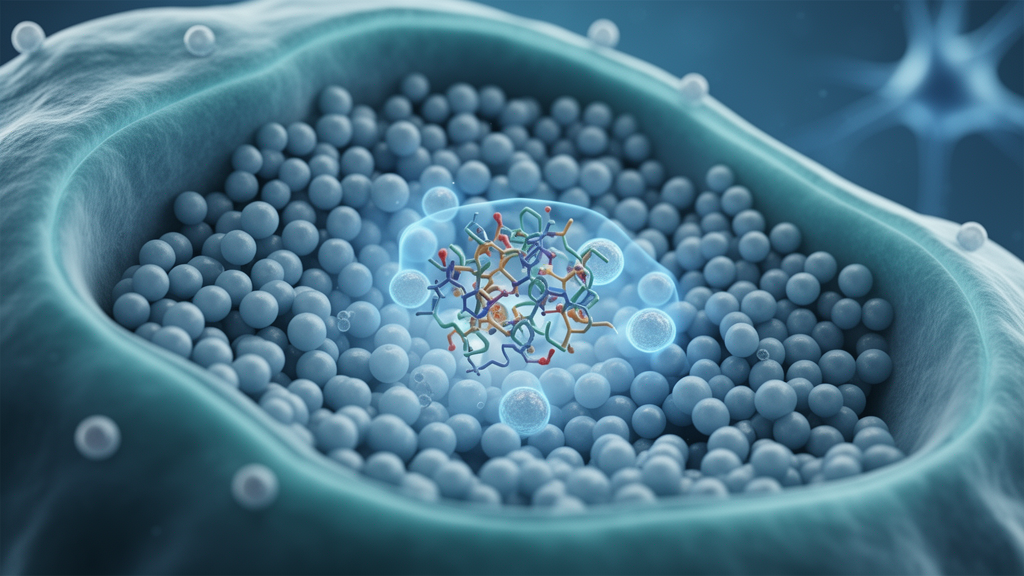
A rare and devastating neurological condition that strikes newborns within days of birth has been traced to defects in a single component of the cell’s membrane-sorting machinery, and the discovery points to an unexpected driver of human brain malformation: the tiny vesicles that cells use to talk to one another. In a study published in Genome Medicine, an international team of clinical geneticists and cell biologists describes five unrelated families in which infants presented with a lethal neonatal encephalopathy marked by severe hypotonia, epilepsy, and profound structural brain anomalies. Exome sequencing revealed that every affected child carried damaging biallelic variants in VPS25, a gene encoding an essential subunit of the ESCRT-II complex, and follow-up experiments showed that the mutant protein disrupts the biogenesis and cargo loading of small extracellular vesicles, the membranous packets known as exosomes that cells release into their surroundings.
The clinical picture across the cohort was strikingly consistent. Families 1, 4, and 5, all multiplex consanguineous families of Middle Eastern descent, carried a novel homozygous missense variant in VPS25 that changes proline 8 to serine, a substitution at a residue that is highly conserved from humans to fruitflies. Affected siblings in Family 1 showed agenesis of the corpus callosum on prenatal ultrasound and postnatal MRI, along with colpocephaly, subarachnoid hemorrhage, and a simplified gyral pattern; both siblings died before one year of age from respiratory failure and cardiac arrest. Family 2, a simplex case from North America, carried two different missense variants in trans, one of which, P8L, affects the same residue as the founder variant, while the second, G172S, substitutes serine for a glycine whose flexibility is likewise evolutionarily constrained. Family 3, from Europe, carried a homozygous M49V variant. In total, the cohort comprised seven affected individuals, several of whom died in infancy, while the proband from Family 4 remains in intensive care at nine months of age with feeding difficulties and failure to thrive.
VPS25 is a 176-amino-acid protein that forms part of ESCRT-II, a heterotetrameric complex built from two copies of VPS25 plus single copies of VPS22 and VPS36. The ESCRT machinery, short for endosomal sorting complexes required for transport, catalyzes fundamental membrane remodeling events throughout the cell, including the budding of intraluminal vesicles into multivesicular bodies, or MVBs. These organelles sit at a critical junction: they can fuse with lysosomes and destroy their contents, or they can fuse with the plasma membrane and release their intraluminal vesicles into the extracellular space as exosomes, vesicles typically 40 to 200 nanometers in diameter carrying proteins, RNA, and lipids. During brain development, small extracellular vesicles have been implicated in neural progenitor proliferation, neuronal differentiation, and communication between neurons and astroglia, yet a causal link between abnormal vesicle biogenesis and neurodevelopmental disease has remained largely elusive. The new study suggests that link may now be within reach.
To probe how the patient variants perturb the ESCRT-II complex, the team turned to computational structural biology. Because the available experimental structure of ESCRT-II was low resolution, the researchers refined the complex using molecular dynamics simulations with the YASARA2 force field before modeling the P8S, P8L, M49V, and G172S substitutions. The simulations predicted that none of the variants would prevent the complex from assembling; theoretical binding energies between VPS25 and the VPS22/VPS36 dimer fell by only 5 to 8 percent, from roughly -346 kilojoules per mole in the wild type to about -317 to -319 kilojoules per mole in the mutants, and steered molecular dynamics showed no significant increase in the force needed to pull VPS25 away from its partners. Instead, the most notable effect emerged in the helical domain of the VPS22/VPS36 dimer, the intrinsically mobile segment thought to bridge the complex’s core to the GLUE domain that VPS36 uses to engage ESCRT-I. In the deleterious mutants P8S, P8L, and G172S, the conformational dynamics of this domain were almost completely obliterated over 200-nanosecond simulations, hinting at an allosteric mechanism in which mutations in one subunit freeze the motions of another.
Experimental assays on patient-derived cells told a compatible story. When the researchers expressed wild-type and mutant ESCRT-II complexes recombinantly in Sf9 insect cells, both purified with similar profiles and eluted with the expected 2:1:1 stoichiometry of VPS25, VPS22, and VPS36. But size exclusion chromatography of lysates from patient lymphoblasts revealed that the mutant complex eluted at a higher apparent molecular weight, around 180 kilodaltons, compared with roughly 138 kilodaltons for the wild-type complex, suggesting that abnormal additional proteins may associate with the mutant assembly. Co-immunoprecipitation followed by mass spectrometry sharpened the picture: five interacting partners present in the wild-type pull-down were absent from the mutant one, including VPS22 itself, the ESCRT-0 components STAM and STAM2, the ESCRT-I subunit MVB12A, and the spastin protein that regulates polarized membrane trafficking. Gene ontology analysis of the altered interactomes showed a loss of centrosome- and microtubule-binding proteins in the mutant pull-down and a gain of actin filament-binding partners, and fluorescence microscopy confirmed that actin filaments in mutant cells adopt an irregular shape and direction.
Electron microscopy then exposed the cellular consequences. Transmission electron micrographs of mutant lymphoblasts revealed engorged multivesicular bodies and an increased abundance of lysosomes, echoing earlier work in mice in which Vps25 mutations impaired lysosomal trafficking and cargo degradation. Quantification showed that cells carrying VPS25 variants contained more than double the number of MVBs per cell compared with wild-type controls, and flow cytometry with LysoTracker dye confirmed a significantly elevated lysosomal signal, most pronounced in cells homozygous for the P8S variant. The researchers note that the P8S/P8S cells consistently showed more severe defects than the P8L/G172S cells, a gradient that parallels the clinical course and life duration of the corresponding patients.
The most consequential findings concerned the vesicles themselves. Using serial ultracentrifugation, the team isolated small extracellular vesicles from patient and control lymphoblasts and quantified their release by nanoparticle tracking analysis, normalizing to cell number and culture time. The mutant cells secreted significantly fewer vesicles than wild-type cells, even as they accumulated MVBs internally, a pattern consistent with a bottleneck in the ESCRT-dependent exosome biogenesis pathway. Cryo-electron microscopy showed that the vesicles retained a normal size distribution of roughly 50 to 200 nanometers and carried classical markers such as CD81, but a small fraction of mutant-derived vesicles displayed abnormally complex multilayer structures, architectures that have also been observed in vesicles from the cerebrospinal fluid of Parkinson’s disease patients and that are only beginning to be characterized.
Cargo analysis revealed that the problem is qualitative as well as quantitative. High-sensitivity mass spectrometry identified 537 proteins present only in vesicles from mutant cells and 457 present only in wild-type vesicles, out of 1669 detected in the mutant sample. The wild-type vesicles were enriched in proteins tied to neuronal health, including the postsynaptic density and neuronal cell body categories, and carried specific proteins essential for developing and maintaining neurons: SCN1A, the voltage-gated sodium channel whose loss-of-function mutations cause severe early infantile epileptic encephalopathy; STMN2, or stathmin 2; and SQSTM1, also known as p62, a protein critical for the cellular response to reactive oxygen species whose dysfunction leads to neurodegeneration. Western blotting confirmed a dramatic decrease of p62 in mutant-derived vesicles. The mutant vesicles, by contrast, showed enrichment in immune response categories such as adaptive immunity and T cell activation, along with disease associations pointing toward Alzheimer’s disease, suggesting a shift toward inflammatory signaling. Because oligodendrocyte-derived vesicles are known to deliver proteins to neuronal axons, and vesicles lacking specific cargo such as proteolipid protein can drive neuron degeneration, the absence of axon-protective proteins from mutant vesicles offers a plausible route by which faulty vesicle processing could damage the developing brain.
The mouse model reinforced the developmental relevance of these mechanisms. Coronal head sections from embryonic day 14.5 Vps25 hypomorphic mutants, which carry an ENU-induced intronic mutation inserting nine neutral amino acids into the protein, showed strikingly dilated lateral ventricles, a thinned cerebral cortex, a markedly hypoplastic thalamus, and an enlarged third ventricle, recapitulating the ventriculomegaly and cortical malformations seen in patients. The researchers caution that the mouse model exhibits phenotypic features not observed in humans, likely because protein levels in the hypomorphic line are reduced by roughly 90 percent, whereas patient cells show relatively normal VPS25 expression, consistent with the variants being hypomorphic rather than null. A further limitation is that the cellular observations were made in lymphoblasts and fibroblasts rather than neurons, the primary affected cell type, although the team argues that because VPS25 acts through a conserved mechanism present in all human cells, the observed ESCRT miscommunication and cargo mis-sorting likely occur in neurons as well. Future studies with neuronal samples will be needed to validate the mechanism in the relevant tissue, and additional cases will help delineate the full phenotypic and mutational spectrum. Even so, the consistency with which biallelic VPS25 variants disrupted vesicle number and cargo across the cohort offers a new perspective on abnormal small extracellular vesicles as drivers of human neurodevelopmental disorders, and it places the ESCRT-II complex, alongside its better-studied roles in membrane scission and cargo sorting, at the center of early brain development.
Subject of Research: Genetics of neurodevelopmental disorders
Article Title: Recessive variants in ESCRT-II component VPS25 alter vesicular transport and small extracellular vesicle processing in lethal neonatal encephalopathy
Article References: Isaioglou, I., AlAbdi, L., Tehseen, M., de los Santos, Y. L., Aldehaiman, M., Lopez-Madrigal, G., Altuwaijri, N., Aguayo, V. H., Pleyers, A., Ayach, M., Al-Amoudi, A., Kai, J., Raducanu, V.-S., Alhaddad, B., Hofstätter, E., Al-Amodi, A., Hashem, M. O., Alsaif, H. S., Fazelnia, C., … Merzaban, J. S. (2026). Recessive variants in ESCRT-II component VPS25 alter vesicular transport and small extracellular vesicle processing in lethal neonatal encephalopathy. Genome Medicine, 18(1), 165. https://doi.org/10.1186/s13073-026-01693-z
Image Credits: AI Generated
DOI: 10.1186/s13073-026-01693-z
Keywords: VPS25, ESCRT-II, neonatal encephalopathy, exosomes, small extracellular vesicles, multivesicular bodies, corpus callosum agenesis, molecular dynamics, Genome Medicine, Recessive, variants, component
News Source: Juliet Wilcox. (October 26, 2026). Faulty vesicle recycling gene VPS25 linked to lethal neonatal encephalopathy. Scienmag.