• HOME
  • NEWS
  • EXPLORE
    • CAREER
      • Companies
      • Jobs
    • EVENTS
    • iGEM
      • News
      • Team
    • PHOTOS
    • VIDEO
    • WIKI
  • BLOG
  • COMMUNITY
    • FACEBOOK
    • INSTAGRAM
    • TWITTER
Friday, October 30, 2026
BIOENGINEER.ORG
No Result
View All Result
  • Login
  • HOME
  • NEWS
  • EXPLORE
    • CAREER
      • Companies
      • Jobs
        • Lecturer
        • PhD Studentship
        • Postdoc
        • Research Assistant
    • EVENTS
    • iGEM
      • News
      • Team
    • PHOTOS
    • VIDEO
    • WIKI
  • BLOG
  • COMMUNITY
    • FACEBOOK
    • INSTAGRAM
    • TWITTER
No Result
View All Result
Bioengineer.org
No Result
View All Result
Home NEWS Science News Technology

Polyaniline-Coated MgCo2O4 Composite Boosts Supercapacitor Performance

by
October 29, 2026
in Technology
Reading Time: 2 mins read
0
Polyaniline-Coated MgCo2O4 Composite Boosts Supercapacitor Performance

Polyaniline-Coated MgCo2O4 Composite Boosts Supercapacitor Performance

Share on FacebookShare on TwitterShare on LinkedinShare on RedditShare on Telegram

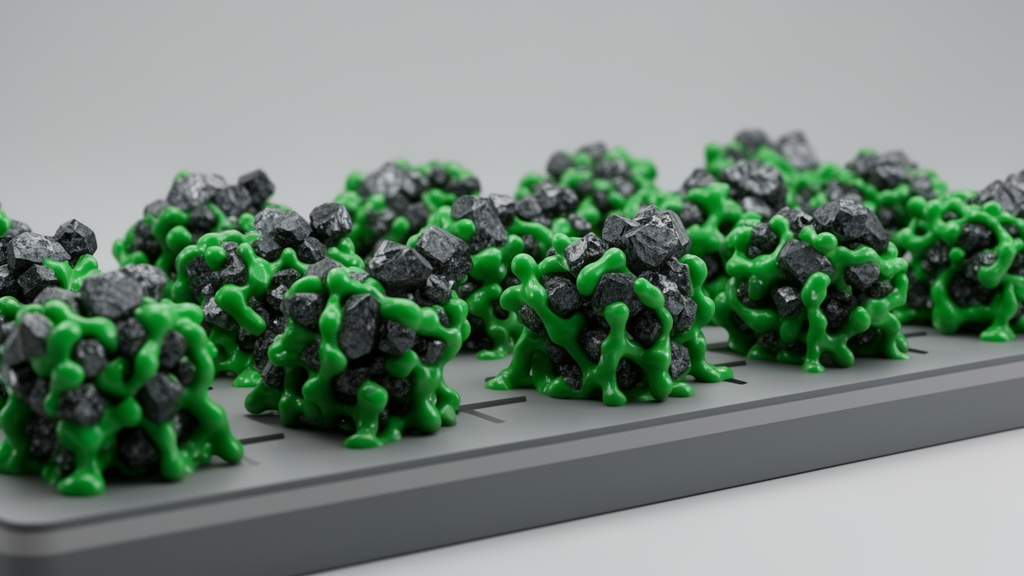
A new hybrid electrode material combining polyaniline with a magnesium cobalt oxide spinel has shown markedly higher charge-storage capacity than the oxide alone, according to a study published in the journal Ionics. The composite, prepared by coating MgCo2O4 nanostructures with the conducting polymer polyaniline, delivered a specific capacitance of 141.93 F g−1 at a current density of 0.1 A g−1, roughly double the 69.04 F g−1 measured for pristine MgCo2O4 under the same conditions.

The researchers synthesized the material in two stages. Second, aniline was polymerized chemically through oxidative polymerization directly onto the oxide surface, producing the hybrid denoted P@MCO.

To establish how the hybrid is built and behaves, the team characterized it with X-ray diffraction, Fourier-transform infrared spectroscopy, X-ray photoelectron spectroscopy, transmission electron microscopy coupled with energy-dispersive X-ray spectroscopy, BET surface area analysis, and thermogravimetric analysis.

Electrochemical testing was carried out in a three-electrode configuration using a 3.0 M potassium hydroxide electrolyte. Cyclic voltammetry and galvanostatic charge–discharge quantified capacitance and cycling behavior, while electrochemical impedance spectroscopy resolved the resistive components of the electrode. The impedance data showed lower series resistance and charge-transfer resistance for the hybrid, at 1.59 and 3.18 ohms respectively, indicating faster ion and electron transfer at the electrode interface.

After 10,000 charge–discharge cycles, the P@MCO electrode retained 88.71 percent of its initial capacitance, which the authors describe as good cycling stability. Ragone analysis, which maps the trade-off between energy and power density, yielded a maximum energy density of 19.71 Wh kg−1 and a maximum power density of 87.61 W kg−1 for the hybrid. Pristine MgCo2O4, by comparison, reached 9.59 Wh kg−1 in energy density but a higher power density of 98.39 W kg−1 under the corresponding conditions.

The authors attribute the enhanced electrochemical response of the hybrid to the combined contributions of both constituent phases. The polyaniline coating improves electrical conductivity and adds pseudocapacitive redox activity, while the oxide contributes additional redox sites and a more accessible surface area, together supporting improved ion and electron transport.

As a laboratory study based on three-electrode measurements, the findings characterize individual electrode behavior rather than the performance of an assembled full device, and further work would be needed to translate the reported capacitance and stability figures into practical energy-storage hardware.

Subject of Research: A polyaniline-decorated MgCo2O4 hybrid composite evaluated as a supercapacitor electrode material

Article Title: Investigating the enhanced nanostructures of PAni-decorated MgCo2O4 hybrid composite as supercapacitor electrode material

Article References: Al-Qahtani, S. D., Carnerero, I., Al-Kadhi, N. S., Al-Senani, G. M., Moulefera, I., Kiari, M., & Benyoucef, A. (2026). Investigating the enhanced nanostructures of PAni-decorated MgCo2O4 hybrid composite as supercapacitor electrode material. Ionics. https://doi.org/10.1007/s11581-026-07597-7

Image Credits: AI Generated

DOI: 10.1007/s11581-026-07597-7

Keywords: supercapacitors, polyaniline, MgCo2O4, hybrid composite, specific capacitance, electrode materials, cycling stability, electrochemical impedance spectroscopy, energy density, hydrothermal synthesis, Investigating, enhanced

News Source: Denise Maddox. (October 29, 2026). Polyaniline-Coated MgCo2O4 Composite Boosts Supercapacitor Performance. Scienmag.


Tags: cycling stabilityelectrochemical impedance spectroscopyElectrode Materialsenergy densityenhancedhybrid compositeHydrothermal synthesisInvestigatingMgCo2O4polyanilinespecific capacitanceSupercapacitors
Share12Tweet7Share2ShareShareShare1

Related Posts

Leather Waste Becomes 3D Printing Filament, With a 30 Percent Ceiling

Leather Waste Becomes 3D Printing Filament, With a 30 Percent Ceiling

October 30, 2026
AI Network Reads Rotating Polarizer Views to Trace Thin Mineral Grain Edges

AI Network Reads Rotating Polarizer Views to Trace Thin Mineral Grain Edges

October 30, 2026

Quantization Beats Redesign: 4-Bit Small Language Models Cut Memory 71% and Boost Speed 83%

October 30, 2026

Delta Wing Study Shows Suction Peak Does Not Sit Under the Vortex Center

October 30, 2026

POPULAR NEWS

  • When Doctors Show Emotion: Public Perceptions of Serious Illness Conversations

    When Doctors Show Emotion: Public Perceptions of Serious Illness Conversations

    29 shares
    Share 12 Tweet 7
  • New Protocol Aims to Predict Serious Treatment Side Effects in Advanced Lung Cancer

    29 shares
    Share 12 Tweet 7
  • Dense Microporous Layers Keep Phosphoric Acid Inside Fuel Cells Under Heavy Loads

    29 shares
    Share 12 Tweet 7
  • Low-Cost 3D-Printed Robotic Arm Lifts 0.8 kg Payload With 100% Success

    29 shares
    Share 12 Tweet 7

About

We bring you the latest biotechnology news from best research centers and universities around the world. Check our website.

Follow us

Recent News

Europe’s Forest Quarantine System Struggles Against Unknown Fungal Invaders

Small neural network sharpens gene alignment across species

Native gut bacteria boost Nile tilapia growth in Ivory Coast feeding trial

Subscribe to Blog via Email

Enter your email address to subscribe to this blog and receive notifications of new posts by email.

Join 86 other subscribers
  • Contact Us

Bioengineer.org © Copyright 2023 All Rights Reserved.

Welcome Back!

Login to your account below

Forgotten Password?

Retrieve your password

Please enter your username or email address to reset your password.

Log In
No Result
View All Result
  • Homepages
    • Home Page 1
    • Home Page 2
  • News
  • National
  • Business
  • Health
  • Lifestyle
  • Science

Bioengineer.org © Copyright 2023 All Rights Reserved.