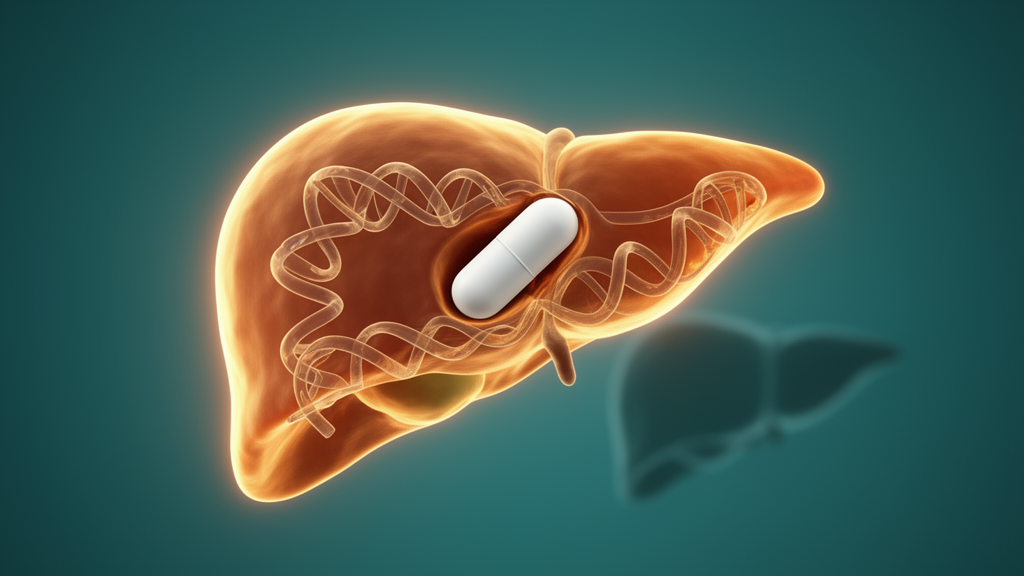
Olanzapine, a second-generation antipsychotic, appears to drive fat accumulation in liver cells partly by binding to and suppressing a hepatic protein called orosomucoid 2, according to a new study published in Cell Biology and Toxicology. The research, released as an open-access article on 26 October 2026, identifies Orm2 as a direct molecular target of the drug and links that interaction to disruptions in glucose metabolism and oxidative stress.
Olanzapine is effective for schizophrenia, but its use is associated with a distinct metabolic syndrome that raises cardiovascular and other health risks. The precise molecular mechanisms behind these metabolic perturbations had remained unclear, which motivated the research team to search for direct protein targets of the drug in liver tissue.
In laboratory experiments, olanzapine exposure significantly increased hepatic lipid accumulation. The treatment was accompanied by disturbances in glucose metabolism, particularly in glycolysis and the tricarboxylic acid cycle, and it elicited excessive oxidative stress in vitro. These cellular changes together point toward the steatotic phenotype observed with the drug.
To find the protein target, the researchers used a technique called DNA-programmed affinity labeling, or DPAL, which identified hepatic Orm2 as a direct target of olanzapine. The team then validated the interaction using three independent methods: molecular docking, surface plasmon resonance, and differential scanning fluorimetry. Notably, olanzapine exposure significantly reduced hepatic Orm2 expression at both the mRNA and protein levels.
The functional consequences of losing Orm2 were tested through knockdown experiments. When Orm2 was knocked down, olanzapine-induced disturbances in glucose metabolism and oxidative stress were exacerbated, and hepatocyte steatosis was aggravated. This suggests that Orm2 normally acts as a protective regulator, and that its suppression by olanzapine may worsen the metabolic fallout in liver cells.
The findings were not confined to cell culture. In mice, olanzapine exposure disrupted hepatic lipid metabolism and downregulated Orm2, providing an in vivo correlate of the in vitro observations. The authors emphasize that these results identify Orm2 as a key regulator associated with olanzapine-induced metabolic disturbances, potentially linking glucose metabolic alterations and oxidative stress to the observed steatotic phenotype.
The authors are careful to note the limits of the current evidence. While the binding interaction is validated by multiple biophysical methods and the knockdown experiments support a regulatory role for Orm2, the precise causal relationships warrant further functional validation. The article was shared early to provide faster access to peer-reviewed, accepted research, and this version is subject to further edits before the final Version of Record is published.
Subject of Research: Identification of orosomucoid 2 as a direct hepatic target of olanzapine in drug-associated hepatic steatosis, glucose metabolism disruption and oxidative stress
Article Title: Olanzapine interacts with Orosomucoid 2 in hepatic steatosis associated with alterations in glucose metabolism and oxidative stress
Article References: Zhao, H., Wang, D., Liang, X., Bai, Y., Chen, Y., Lee, S. M.-Y., Giesy, J. P., Hu, H., Dong, X., & Gong, G. (2026). Olanzapine interacts with Orosomucoid 2 in hepatic steatosis associated with alterations in glucose metabolism and oxidative stress. Cell Biology and Toxicology. https://doi.org/10.1007/s10565-026-10306-9
Image Credits: AI Generated
DOI: 10.1007/s10565-026-10306-9
Keywords: olanzapine, orosomucoid 2, hepatic steatosis, glucose metabolism, oxidative stress, antipsychotics, metabolic syndrome, DNA-programmed affinity labeling, liver, molecular docking, interacts, Orosomucoid
News Source: Drew Townsend. (October 28, 2026). Olanzapine binds hepatic protein Orm2 in drug-linked liver fat study. Scienmag.