Proximity labeling has become one of the most powerful tools for mapping the molecular geography of living cells, but its most popular enzyme, APEX2, has carried a stubborn limitation: it needs hydrogen peroxide to work. That oxidizing agent disrupts redox signaling in cells and has kept the technique out of living animals. A study published in Nature Chemical Biology on 29 October 2026 reports a way around this barrier, introducing an H2O2-independent version of APEX2, dubbed Hi-APEX, that the authors show works directly in tumor xenografts and hippocampal neurons.
The key innovation lies not in the enzyme but in the substrate. Hi-APEX uses a clickable tetrazine-phenol probe, and no enzyme engineering is required. According to the abstract, APEX2 directly catalyzes labeling with this probe in the absence of hydrogen peroxide, through a mechanism that depends on the probe’s tetrazine group and on oxygen. Because the standard APEX2 enzyme can accept the new probe, existing proximity labeling setups can in principle adopt the chemistry without redesigning their fusion constructs.
To benchmark the method, the team mapped the mitochondrial matrix and dynamic secretomes, establishing Hi-APEX-based spatial proteomics and transcriptomics. The removal of hydrogen peroxide proved consequential for biology as well as convenience: Hi-APEX outperformed traditional APEX in capturing redox-sensitive processes such as stress response and ferroptosis, the iron-dependent form of cell death closely tied to oxidative damage. Using the method, the researchers identified authentic stress granule components and built protein interaction networks for mitochondria-localized GPX4, an enzyme central to ferroptosis regulation.
One interactor of mitochondrial GPX4 stood out. TRMT61B, already known to regulate mitochondrial m1A RNA modifications, was found to promote ferroptosis in this study, linking a mitochondrial RNA-modifying activity to the cell death pathway through an unbiased interaction screen. The authors also demonstrated simultaneous proteomic and transcriptomic mapping of stress granules, showing that the platform can capture both the protein and RNA contents of a subcellular structure in the same experiment.
The most consequential claim is in vivo compatibility. The abstract reports direct protein and RNA proximity labeling in tumor xenografts and in hippocampal neurons, extending proximity-labeling-based spatial multi-omics from cultured cells to living organisms. If the approach proves broadly usable, it could allow researchers to map molecular neighborhoods in intact tissue contexts where redox signaling, stress responses and cell death pathways operate under their natural conditions rather than under peroxide treatment.
Subject of Research: A hydrogen peroxide-independent APEX2 proximity labeling method for spatial multi-omics in living animals
Article Title: In vivo-compatible spatial multi-omics via hydrogen peroxide-independent APEX2 labeling
Article References: Chen, B., Guo, H., Yan, Z., Lu, W., Li, C., Xu, S., Zhang, Y., Guo, H., Sun, S., Yang, H., Sun, X., Zhao, S., Shangguan, Q., Chen, Y., Lu, L., Wu, Z., Chen, Y., & Qin, W. (2026). In vivo-compatible spatial multi-omics via hydrogen peroxide-independent APEX2 labeling. Nature Chemical Biology. https://doi.org/10.1038/s41589-026-02356-1
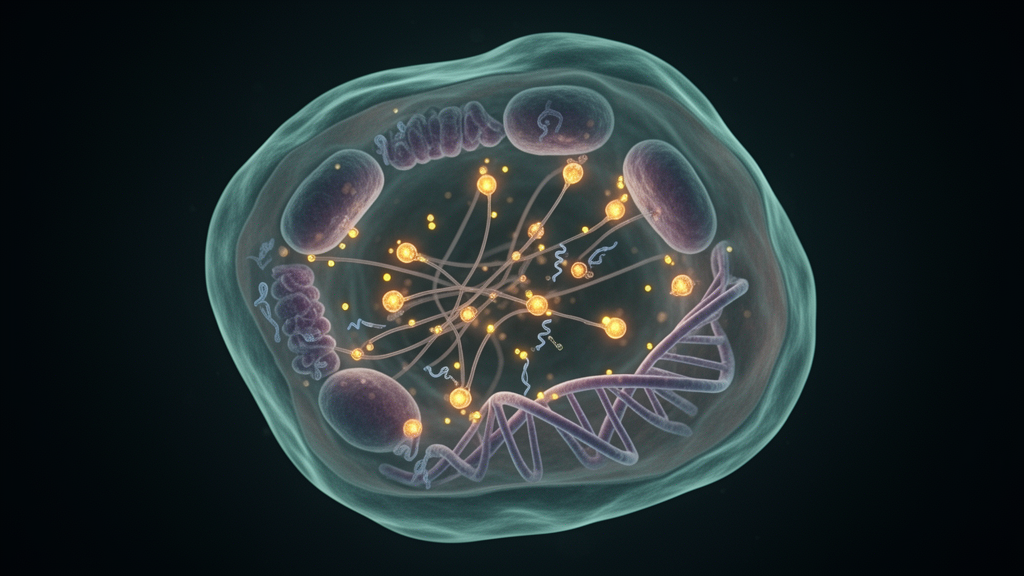
Image Credits: AI Generated
DOI: 10.1038/s41589-026-02356-1
Keywords: APEX2, proximity labeling, spatial multi-omics, hydrogen peroxide, ferroptosis, GPX4, stress granules, mitochondria, TRMT61B, tumor xenografts, hippocampal neurons, Nature Chemical Biology
News Source: Drew Townsend. (October 29, 2026). Research report: In vivo-compatible spatial multi-omics via hydrogen peroxide-independent APEX2 labeling. Scienmag.