


A new review published in Frontiers in Medical Technology examines how optogenetics, a technique that combines microbial opsins, genetic engineering and optical stimulation, has reshaped the study of neurodegenerative disorders such as Alzheimer’s disease, Parkinson’s disease, Huntington’s disease, amyotrophic lateral sclerosis, multiple sclerosis and stroke. The article, authored by Vijayapoopathi Singaravel of Saveetha Medical College and Hospital in Chennai, India, is a review of existing literature rather than a report of new experimental findings.
The central premise of the review is that while considerable progress has been made in understanding the molecular pathology of neurodegenerative diseases, the circuit-level mechanisms driving disease onset and progression remain incompletely understood. Optogenetics addresses this gap by enabling reversible, cell-specific control of neuronal activity with millisecond precision, allowing researchers to move beyond observational analysis toward causal investigation of neural circuits.
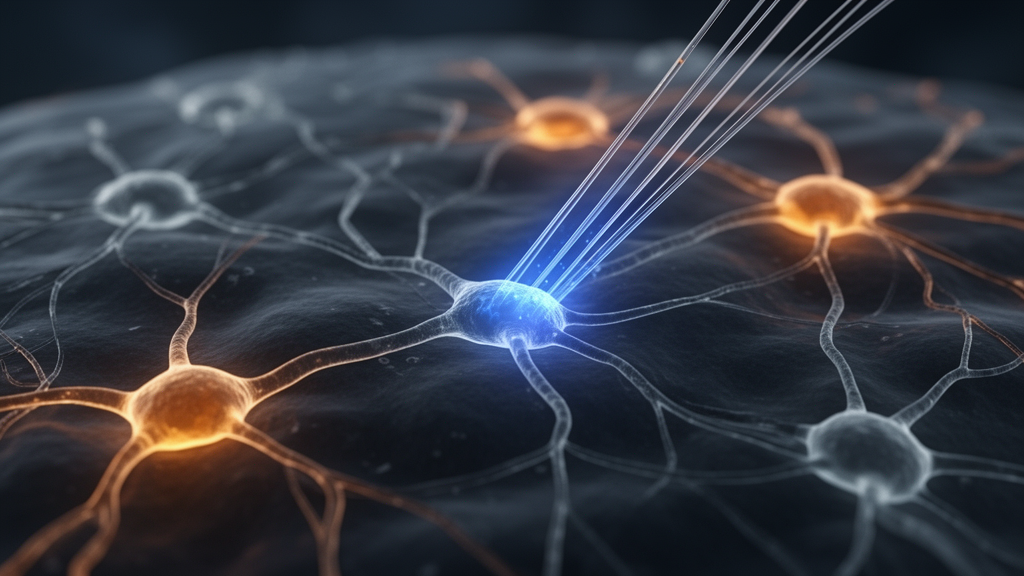
According to the review, the technique works by introducing light-sensitive microbial proteins called opsins into genetically targeted neurons. When illuminated, these opsins can either activate or suppress the activity of specific cell types, giving experimenters direct control over defined elements of a neural circuit. The review summarizes recent advances in the molecular basis of optogenetics, the range of microbial opsins available, gene delivery strategies and the optical stimulation technologies used to apply light to neural tissue.
The applications surveyed span basic neurobiology as well as disease research. The review describes how optogenetics has advanced understanding of neural circuit organization, synaptic plasticity, memory, neurodevelopment and sleep regulation. On the disease side, it has been used to probe protein aggregation, synaptic dysfunction, neuroinflammation, mitochondrial impairment, oxidative stress and regulated cell death, processes that are central to the pathology of many neurodegenerative conditions.
The review emphasizes that these studies have generated important mechanistic insights and have demonstrated functional improvements in experimental models. However, it draws a clear distinction between such laboratory results and clinical reality: translation into human therapies remains investigational. The challenges identified include gene delivery, long-term opsin expression, immune compatibility and optical accessibility, meaning that reaching deep structures of the human brain with light while maintaining safe, stable expression of opsins is far from solved.
Beyond the current state of the field, the review evaluates emerging therapeutic strategies that build on optogenetic principles. These include closed-loop neuromodulation, in which stimulation is delivered in response to detected neural activity; wireless photostimulation, which removes the need for tethered optical hardware; artificial intelligence-assisted neural decoding; nanotechnology-enabled light delivery; and brain-computer interfaces. The review stresses that these approaches are assessed in terms of their current evidence status, translational challenges and limitations for clinical implementation, rather than as ready-made treatments.
The framing of the review is deliberately cautious. It positions optogenetics as an unprecedented platform for deciphering disease mechanisms and for evaluating circuit-based neuromodulation strategies, while concluding that continued technological and biological validation will determine its future role in precision therapies for neurodegenerative disorders. In other words, the technique’s value today lies primarily in basic research, where its precision allows specific hypotheses about circuit function to be tested directly.
For readers following developments in neuroscience, the review’s significance lies in its synthesis of a rapidly expanding field. By connecting the molecular tools of optogenetics to the unsolved questions of neurodegenerative disease, it maps both what has been learned about circuit dysfunction in conditions such as Alzheimer’s and Parkinson’s disease and what obstacles remain before any optogenetic approach could be considered for human use. The review was received on 5 August 2026 and accepted on 15 October 2026, and it is published open access under a Creative Commons Attribution license.
Subject of Research: The use of optogenetics to study neural circuit mechanisms in neurodegenerative disorders and its translational challenges.
Article Title: Optogenetics in neurobiology and neurodegenerative disorders: from neural circuit mechanisms to precision neuromodulation
Article References: Singaravel, V. (2026). Optogenetics in neurobiology and neurodegenerative disorders: from neural circuit mechanisms to precision neuromodulation. Frontiers in Medical Technology, 8, 1958917. https://doi.org/10.3389/fmedt.2026.1958917
Image Credits: AI Generated
DOI: 10.3389/fmedt.2026.1958917
Keywords: optogenetics, neurodegenerative disorders, neural circuits, microbial opsins, synaptic plasticity, neuromodulation, Alzheimer's disease, Parkinson's disease, gene delivery, brain-computer interfaces, neurobiology, neurodegenerative
News Source: Cassandra Pierce. (October 29, 2026). Optogenetics offers a precise window into neural circuits behind neurodegenerative disease. Scienmag.



