

• HOME
  • NEWS
  • EXPLORE
    • CAREER
      • Companies
      • Jobs
    • EVENTS
    • iGEM
      • News
      • Team
    • PHOTOS
    • VIDEO
    • WIKI
  • BLOG
  • COMMUNITY
    • FACEBOOK
    • INSTAGRAM
    • TWITTER
Sunday, November 1, 2026
BIOENGINEER.ORG
No Result
View All Result
  • Login
  • HOME
  • NEWS
  • EXPLORE
    • CAREER
      • Companies
      • Jobs
        • Lecturer
        • PhD Studentship
        • Postdoc
        • Research Assistant
    • EVENTS
    • iGEM
      • News
      • Team
    • PHOTOS
    • VIDEO
    • WIKI
  • BLOG
  • COMMUNITY
    • FACEBOOK
    • INSTAGRAM
    • TWITTER
No Result
View All Result
Bioengineer.org
No Result
View All Result
Home NEWS Science News Health

Never-Smoker COPD Shows Stronger Lung Function Gains from Salbutamol and Glycopyrronium

by
October 29, 2026
in Health
Reading Time: 2 mins read
0
Never-Smoker COPD Shows Stronger Lung Function Gains from Salbutamol and Glycopyrronium

Never-Smoker COPD Shows Stronger Lung Function Gains from Salbutamol and Glycopyrronium

Share on FacebookShare on TwitterShare on LinkedinShare on RedditShare on Telegram

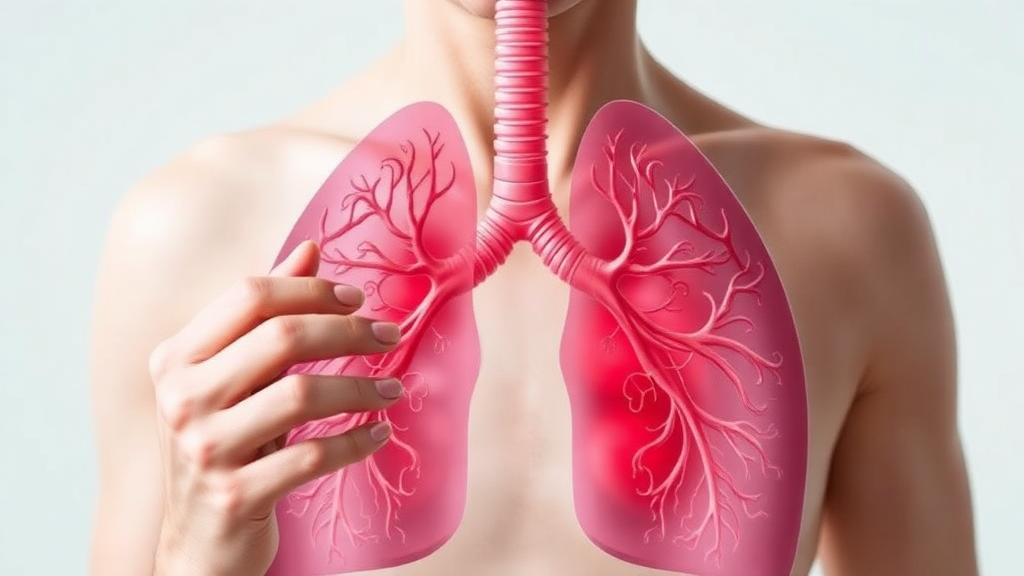
Chronic obstructive pulmonary disease (COPD) is usually treated as a single disease of smokers, and guidelines recommend the same bronchodilator treatment whether or not a patient has ever smoked. A new study published in BMC Pulmonary Medicine challenges that assumption by comparing how ever-smokers and never-smokers with COPD respond to two inhaled bronchodilators: salbutamol, a short-acting agent, and glycopyrronium, a long-acting muscarinic antagonist. The researchers report that both groups benefited from both drugs, but never-smokers showed consistently greater and more frequent improvements in lung function.

The team recruited COPD patients from an outpatient department and performed pragmatic on-the-spot spirometry, measuring airflow before treatment, after salbutamol, and then after glycopyrronium. The ever-smoker group comprised 461 patients, who tended to be older and predominantly male, while the never-smoker group comprised 418 patients. Across all three measurement states, never-smokers had statistically better FEV1 percent predicted, FEV1/FVC ratio, and FEF25-75 percent predicted values than ever-smokers.

The improvement in these parameters followed a similar trend in both groups, but the gains were significantly larger for FEV1 and FEF25-75 in never-smokers at every stage of measurement. Responsiveness, defined as a change in FEV1 of at least 100 ml, was also more frequent among never-smokers for glycopyrronium alone and for the combined salbutamol-plus-glycopyrronium assessment, at both the 100 ml and the more lenient 50 ml thresholds. In contrast, patients whose FEV1 changed by less than 50 ml on combined testing had worse lung function, a difference that was mostly significant among ever-smokers compared with those showing more than 50 ml of combined responsiveness.

The authors conclude that COPD responds to both salbutamol and glycopyrronium irrespective of smoking history, but that never-smoker COPD displays a higher frequency of responsiveness and better improvement in FEV1 and FEF25-75. They emphasize that more research is needed to understand the cause of this difference. The findings are observational and derived from a single outpatient cohort, so they do not by themselves justify changing prescribing practice; rather, they suggest that smoking history may mark clinically relevant differences in airway biology and bronchodilator responsiveness that current one-size-fits-all guidelines do not account for.

Subject of Research: Bronchodilator responsiveness to salbutamol and glycopyrronium in ever-smoker versus never-smoker COPD

Article Title: Ever-smoker and never-smoker COPD from the prism of salbutamol and glycopyrronium responsiveness: an appraisal

Article References: Bhattacharyya, P., Dey, D., Sen, S., Ghosh, S., & Banerjee, R. (2026). Ever-smoker and never-smoker COPD from the prism of salbutamol and glycopyrronium responsiveness: an appraisal. BMC Pulmonary Medicine. https://doi.org/10.1186/s12890-026-04889-6

Image Credits: AI Generated

DOI: 10.1186/s12890-026-04889-6

Keywords: COPD, bronchodilator responsiveness, salbutamol, glycopyrronium, spirometry, never-smokers, ever-smokers, FEV1, FEF25-75, lung function, BMC Pulmonary Medicine, smoking history

News Source: Ophelia Keating. (October 29, 2026). Never-Smoker COPD Shows Stronger Lung Function Gains from Salbutamol and Glycopyrronium. Scienmag.


Tags: BMC Pulmonary Medicinebronchodilator responsivenessCOPDever-smokersFEF25-75FEV1glycopyrroniumlung functionnever-smokerssalbutamolSmoking historyspirometry
Share12Tweet7Share2ShareShareShare1

Related Posts

ZNF207 shields glutamine transporter ASCT2 from degradation to fuel liver cancer growth

ZNF207 shields glutamine transporter ASCT2 from degradation to fuel liver cancer growth

October 30, 2026
Most Ethiopian HIV patients on dolutegravir therapy show good knowledge, survey finds

Most Ethiopian HIV patients on dolutegravir therapy show good knowledge, survey finds

October 30, 2026

Serum and urine protein biomarkers may sharpen prostate cancer detection beyond PSA

October 30, 2026

One gene locus flags atrial fibrillation risk after major surgery, UK Biobank study finds

October 30, 2026

POPULAR NEWS

  • Microbial Sources and Stress Shape the Hidden Endophytes of an Invasive Plant

    Microbial Sources and Stress Shape the Hidden Endophytes of an Invasive Plant

    29 shares
    Share 12 Tweet 7
  • Firebreaks Leave Lasting Scars in Grasslands While Wildfire Heals Fast

    29 shares
    Share 12 Tweet 7
  • ZNF207 shields glutamine transporter ASCT2 from degradation to fuel liver cancer growth

    29 shares
    Share 12 Tweet 7
  • Systematic review maps sustainability tensions in offshore wind development

    29 shares
    Share 12 Tweet 7

About

We bring you the latest biotechnology news from best research centers and universities around the world. Check our website.

Follow us

Recent News

Microbial Sources and Stress Shape the Hidden Endophytes of an Invasive Plant

Firebreaks Leave Lasting Scars in Grasslands While Wildfire Heals Fast

ZNF207 shields glutamine transporter ASCT2 from degradation to fuel liver cancer growth

Subscribe to Blog via Email

Enter your email address to subscribe to this blog and receive notifications of new posts by email.

Join 86 other subscribers
  • Contact Us

Bioengineer.org © Copyright 2023 All Rights Reserved.

Welcome Back!

Login to your account below

Forgotten Password?

Retrieve your password

Please enter your username or email address to reset your password.

Log In
No Result
View All Result
  • Homepages
    • Home Page 1
    • Home Page 2
  • News
  • National
  • Business
  • Health
  • Lifestyle
  • Science

Bioengineer.org © Copyright 2023 All Rights Reserved.
