Breast cancer remains the most frequently diagnosed malignancy among women worldwide, affecting more than two million people each year, and despite major advances in diagnosis and treatment the mortality rate has risen in recent years. A review proposes that a subpopulation of tumor cells, cancer stem cells, may help explain why, and that using natural compounds has been put forward as a promising and effective strategy to eliminate them. The work, appearing in the open-access journal Cancer Cell International, focuses on breast cancer stem cells, which the review says play an essential role in the initiation, progression, metastasis, and treatment resistance of the disease.
Patient deaths from breast cancer are attributed primarily to disease recurrence, metastasis and resistance to therapy. According to the review, cancer stem cells within tumor tissues play an essential role in all three processes. According to the review, these cells can self-renew and generate heterogeneous cancer cell lineages. Because of these properties, the authors describe their ablation as a practical approach to breast cancer treatment.
The review surveys the latest knowledge of breast cancer stem cells, emphasizing their biomarkers, the signaling pathways that sustain them and the mechanisms by which they survive drug treatment. It then highlights the importance and mechanisms of action of plant compounds in destroying these cells. Natural products, the authors note, include plant metabolites such as polyphenols, flavonoids, alkaloids and isothiocyanates, each with distinct biological characteristics that can act on cancer stem cells either directly or indirectly.
Those characteristics include antioxidant, anti-inflammatory, and pro-apoptotic activities. The review also describes regulation of cell signaling pathways as a key mode of action. The review also describes regulation of cell signaling pathways as a way these compounds can affect cancer stem cells.
A central theme of the review is that these compounds often suppress the growth of cancer stem cells by targeting specific cellular markers. Among the markers discussed are ALDH1, an enzyme associated with stem-like properties, CD44, a surface molecule commonly used to identify stem-like breast cancer cells, and CXCRs, a family of chemokine receptors. The review states that these compounds often suppress the growth of CSC cells by targeting cellular markers such as ALDH1, CD44, and CXCRs.
The compounds also converge on critical signaling pathways that govern the self-renewal and proliferation of cancer stem cells. The review highlights three in particular: Notch, Wnt/beta-catenin and Hedgehog. The review identifies Notch, Wnt/β-catenin, and Hedgehog as critical signaling pathways involved in the self-renewal and proliferation of CSCs. The review presents targeting these pathways as part of how natural compounds may suppress the growth of cancer stem cells.
The review describes natural compounds as acting on cancer stem cells both directly and indirectly, through their biological characteristics and through regulation of cell signaling pathways.
The authors conclude that developing and using natural compounds as complementary or alternative therapies is a promising step toward improving breast cancer treatment. The review states that developing and using natural compounds as complementary or alternative therapies is a promising step to improve breast cancer treatment. The review investigates the latest knowledge of breast cancer stem cells, emphasizing their biomarkers, signaling pathways, and drug resistance mechanisms, and then highlights the importance and mechanism of action of plant compounds in destroying them.
As a review article, the work consolidates existing knowledge rather than reporting new laboratory or clinical results, and it does not establish that any specific compound improves outcomes for patients. Its contribution lies in mapping how plant metabolites interact with the biology of breast cancer stem cells and in arguing that this interaction deserves a place in future therapeutic development. The review notes that patient mortality is primarily attributed to disease recurrence, metastasis, and resistance to therapy, and argues that ablating cancer stem cells is a practical approach to the treatment of breast cancer.
Subject of Research: How natural plant compounds may target breast cancer stem cells and their signaling pathways
Article Title: Targeting breast cancer stem cells with natural compounds: mechanisms and therapeutic prospects
Article References: Saadati-Eskandari, N., Hashemi-Niasari, F., Keyvani-Ghamsari, S., & Razmi, M. (2026). Targeting breast cancer stem cells with natural compounds: mechanisms and therapeutic prospects. Cancer Cell International. https://doi.org/10.1186/s12935-026-04499-6
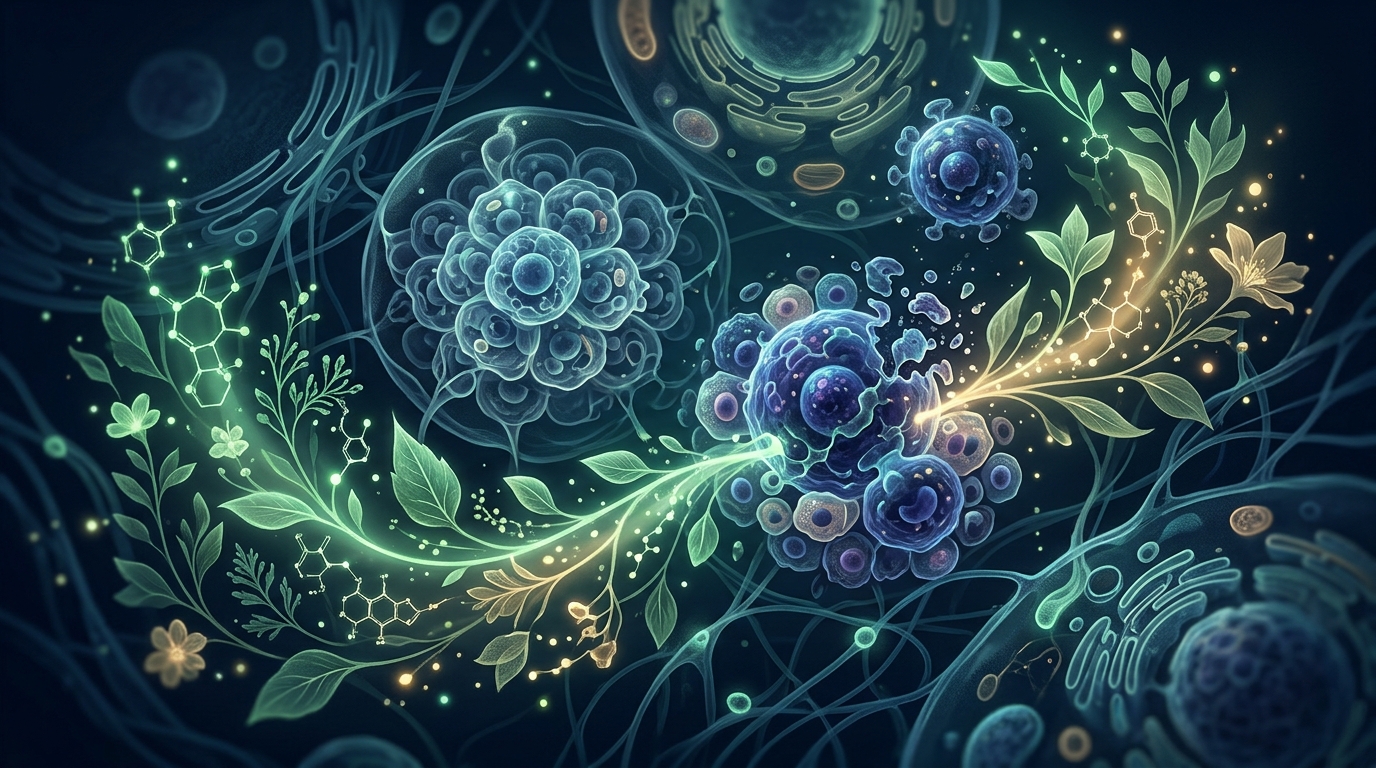
Image Credits: AI Generated
DOI: 10.1186/s12935-026-04499-6
Keywords: breast cancer, cancer stem cells, natural compounds, polyphenols, flavonoids, Notch signaling, Wnt/beta-catenin, Hedgehog pathway, drug resistance, ALDH1, CD44, chemoprevention
News Source: Nathaniel Bowman. (November 4, 2026). Natural Compounds Show Promise Against Breast Cancer Stem Cells. Scienmag.