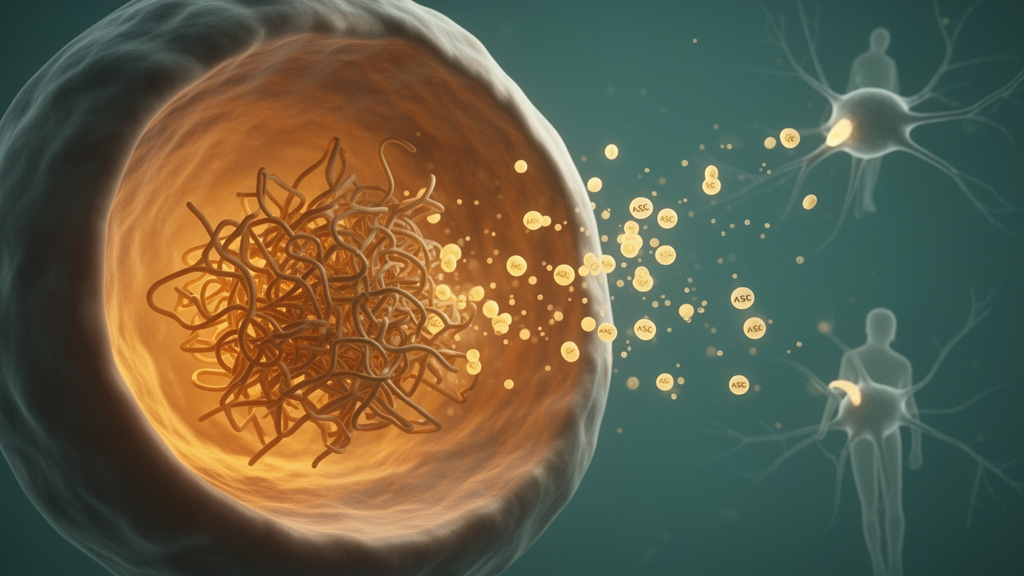
A new review published in Cellular and Molecular Neurobiology examines how protein misfolding drives neurodegenerative disease through the immune system, focusing on the NLRP3 inflammasome and the recently described prion-like, or “prionoid”, activity of ASC specks. The paper, authored by Adriana Limone, Valentina Amendola and Daniela Sarnataro, was published on 28 October 2026 as an open access review.
Protein-misfolding neuropathic diseases, including prion diseases, Alzheimer’s disease, Parkinson’s disease, amyotrophic lateral sclerosis and frontotemporal dementia, share a common feature: misfolded proteins accumulate in the central nervous system. When proteins misfold irreversibly into a sticky beta-sheet conformation, they aggregate, and these aggregates are the main commonality shared by these disorders. The review frames this within the inflammation model, one of at least three models proposed to explain how misfolding and aggregation lead to disease, alongside the widely accepted gain- or loss-of-function models for misfolded proteins. In the inflammation model, abnormal protein aggregates act as culprits that trigger a chronic inflammatory response leading to cell death.
Historically, inflammatory events in these diseases were viewed as a consequence of toxicity arising from the cell’s inability to clear misfolded proteins. The authors note, however, that how misfolded proteins actually cause inflammation remains an open issue. Citing the current lack of an overarching view connecting protein misfolding-related neurodegenerative diseases with the inflammasome, the review sets out to outline this relationship, integrating recent insights into the mechanistic links between protein misfolding and NLRP3 inflammasome activation.
A central element of the review is the impact of the recently described prionoid activity of ASC specks on the progression of different neurodegenerative misfolding diseases. As a review, the article synthesizes and interprets existing literature rather than reporting new experimental findings, and it is an accepted manuscript shared early for faster access, subject to further edits before the final version of record.
Subject of Research: The role of protein misfolding, NLRP3 inflammasome activation and prion-like ASC specks in neurodegenerative diseases
Article Title: Unfolding Danger: Protein Misfolding, NLRP3 Inflammasome Activation, and the Prion-Like Propagation of ASC Specks in Neurodegenerative Diseases
Article References: Limone, A., Amendola, V., & Sarnataro, D. (2026). Unfolding Danger: Protein Misfolding, NLRP3 Inflammasome Activation, and the Prion-Like Propagation of ASC Specks in Neurodegenerative Diseases. Cellular and Molecular Neurobiology. https://doi.org/10.1007/s10571-026-01838-z
Image Credits: AI Generated
DOI: 10.1007/s10571-026-01838-z
Keywords: protein misfolding, NLRP3 inflammasome, ASC specks, prion-like propagation, neurodegenerative diseases, Alzheimer's disease, Parkinson's disease, amyotrophic lateral sclerosis, frontotemporal dementia, prion diseases, inflammation, review
News Source: Diana Fleming. (October 29, 2026). Misfolded Proteins, Inflammasomes and the Spreading of ASC Specks in Neurodegeneration. Scienmag.