


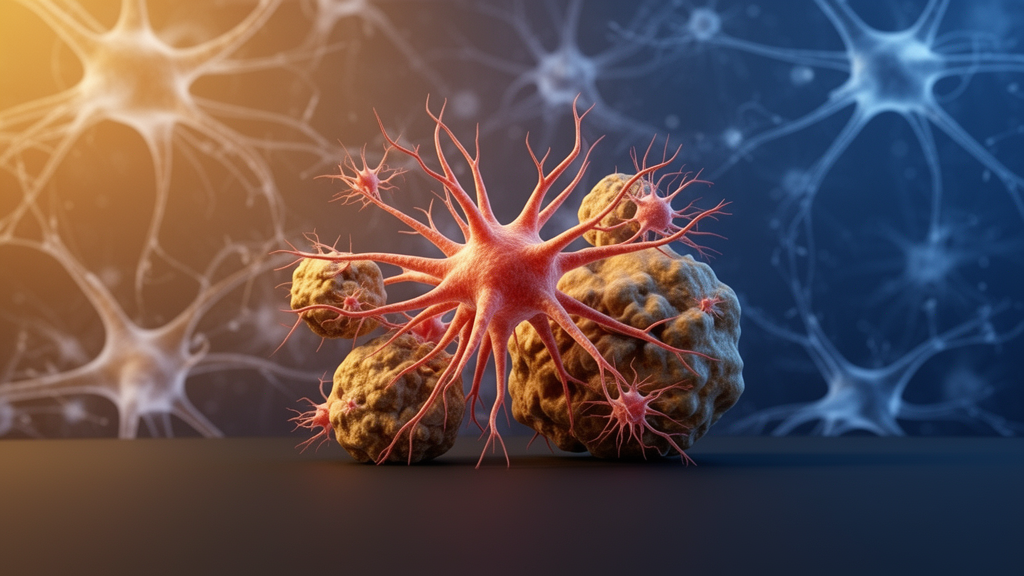
Alzheimer’s disease research is undergoing a quiet but decisive pivot. For decades, drug development fixated on amyloid-β, the sticky protein that clumps into plaques in the aging brain. Yet a new review published in Biological Research argues that the most promising frontier now lies elsewhere: in microglia, the brain’s resident immune cells, which genomic studies have repositioned from passive bystanders to active drivers of the disease. The review, led by Jun Wu, Jueying Zhao, Shen Chen and Fangyi Xu, maps a next generation of therapies designed not to blunt inflammation wholesale but to re-tune microglial behavior with precision.
The case for this shift rests on genetics. Genome-wide association studies have revealed that the majority of risk genes for sporadic Alzheimer’s disease—including TREM2, CD33, APOE, the MS4A cluster and PLCG2—are highly or exclusively expressed in microglia rather than neurons. That finding, the authors write, catalyzed a paradigm shift from a strictly neurocentric view of the disease toward one centered on neuro-immune interactions. Microglia do more than engulf amyloid; they express the very molecules that geneticists have repeatedly flagged as the strongest determinants of risk.
Understanding why microglia can turn from protectors into saboteurs requires a look at their life cycle within the disease. In a healthy state, these cells patrol the brain, clearing debris and supporting neurons. Genetic predisposition and pathological stress push them into a disease-associated state, marked by the loss of signature markers such as P2RY12, TMEM119 and CX3CR1. Initially, this transition is thought to be protective, driven by the TREM2-APOE axis to upregulate lipid metabolism and phagocytosis. But as microglia remain chronically exposed to persistent amyloid and tau aggregates, they slide into a neurodegenerative phenotype marked by robust expression of SPP1, CLEC7A and LGALS3. At this late stage, their phagocytic capacity declines, and they release chronic inflammatory mediators such as TNF-α and IL-1β alongside high levels of reactive oxygen species. These toxic mediators attack healthy synapses, disrupt neurotransmission and ultimately induce neuronal death, while damaged neurons generate more debris, further exacerbating microglial burden and dysfunction.
The first wave of microglia-targeted drugs aimed at TREM2, a cell-surface receptor essential for microglial survival, metabolic fitness and phagocytic competency. TREM2 drives microglial clustering around amyloid plaques, promoting plaque compaction and the formation of a neuroprotective barrier that limits the diffusion of toxic amyloid species. Humanized agonist antibodies such as AL002, VHB937 and VGN-740 advanced into clinical development on the strength of preclinical success. But the results have been sobering: while Phase I trials confirmed safety and target engagement, neither AL002 nor VGN-740 met their primary efficacy endpoints for slowing cognitive decline, leading to termination in 2024 and 2025 respectively. The review offers several possible explanations. TREM2 plays distinct stage-dependent roles—protective in early disease, potentially harmful through aberrant synaptic pruning in advanced stages. Stimulation by AL002 also triggers receptor internalization and degradation, accompanied by a significant reduction in cerebrospinal fluid soluble TREM2, a molecule associated with a decelerated disease course. And TREM2 agonists can provoke amyloid-related imaging abnormalities by activating perivascular macrophages, causing vascular inflammation and localized microhemorrhages that forced some patients to discontinue treatment.
The field is now pivoting toward small molecules with better physicochemical properties. VG-3927, described as a first-in-class molecular glue designed to stabilize the TREM2-DAP12 interaction, demonstrated high blood-brain barrier penetrance and dose-dependent modulation of soluble TREM2 with a favorable safety profile in Phase I trials. Another orally bioavailable agonist, MNA-001, is under assessment in the Netherlands. Meanwhile, other immune checkpoints—CD33, CD28, TMEM119 and TIM-3—have emerged as additional targets implicated in amyloid clearance, though the authors stress that receptor expression shifts dynamically across the disease continuum, demanding a precision medicine approach timed to disease progression.
Beyond individual receptors, the review examines the inflammatory cascades that microglia unleash. The NLRP3 inflammasome, a cytosolic protein complex assembled primarily in microglia, becomes activated when microglia internalize fibrillar amyloid, triggering lysosomal destabilization and the leakage of cathepsin B into the cytosol. This cascade activates caspase-1, which cleaves pro-IL-1β and pro-IL-18 into their active forms, perpetuating neuroinflammation and driving pyroptosis. Human post-mortem analyses confirm that inflammasome activation is detectable in early Alzheimer’s and mild cognitive impairment. Genetic deletion of Nlrp3 or Asc in transgenic mouse models ameliorates cognitive deficits, reduces amyloid accumulation and attenuates tau hyperphosphorylation. Pharmacological inhibitors such as MCC950 and CRID3 have shown robust preclinical efficacy, and candidates including usnoflast and NT-0796 are progressing through clinical pipelines for other neurodegenerative disorders. Emlenoflast, a blood-brain barrier-penetrant inhibitor, showed potent anti-inflammatory activity in preclinical studies, though Roche discontinued it for undisclosed reasons.
Not every anti-inflammatory strategy has fared well in humans. Minocycline, a second-generation tetracycline that readily crosses the blood-brain barrier, showed neuroprotective effects in preclinical models by suppressing microglial overactivation. But randomized trials such as MADE found no significant cognitive benefit in patients with mild-to-moderate Alzheimer’s, and although minocycline reduced microglial activation in traumatic brain injury patients, it was associated with increased neurodegenerative markers and worsened axonal injury. The review attributes decades of such translational failures partly to an oversimplified M1/M2 dichotomy borrowed from rodent studies: single-cell RNA sequencing shows that activated microglia in the human brain occupy transitional states, co-expressing pro- and anti-inflammatory markers, meaning targets identified through binary mouse models may lack efficacy or even exacerbate pathology in humans.
Metabolic reprogramming represents another frontier. Microglia shift from oxidative phosphorylation to glycolysis under acute amyloid exposure, but chronic stress disrupts this regulation, generating oxidative damage and sustained inflammatory mediator production. Lipid metabolism adds a further layer: microglia inundated with lipid-rich debris convert excess fatty acids into triglycerides for storage in lipid droplets, which physically compress organelles and drive a pro-inflammatory phenotype. The APOE ε4 allele, the most potent genetic risk factor for late-onset disease, increasing susceptibility nine to twelve fold, impairs microglial function through multiple pathways, including reduced binding affinity for TREM2 and upregulation of ACSL1. Glucagon-like peptide-1 receptor agonists such as semaglutide have demonstrated neuroprotective properties, and epidemiological data show semaglutide use significantly lowers dementia risk in type 2 diabetes patients. Semaglutide is currently undergoing Phase III clinical trials for Alzheimer’s disease. The authors caution, however, that metabolic agents offer only marginal benefits in mild cognitive impairment or early disease, and that metabolic drugs alone are insufficient to break the amyloid-tau pathological cascade, positioning them instead as adjunct therapies.
Perhaps the most radical approach is replacement. Microglial replacement therapy aims to reconstitute the cerebral immune microenvironment by substituting chronically dysfunctional cells with healthy ones. Selective CSF-1R inhibitors can eliminate resident microglia, creating a transient niche for adoptive transfer of exogenous therapeutic cells. In a pivotal study, transplanted circulation-derived myeloid cells from TREM2-intact donors into TREM2-deficient mice carrying amyloid pathology, reactivating phagocytic signaling and reducing plaque burden. CRISPR-engineered induced pluripotent stem cell-derived microglia, modified to express the amyloid-degrading enzyme neprilysin under the control of the CD9 promoter—which is selectively upregulated in the amyloid niche—enabled in situ plaque degradation and significantly slowed disease progression in mouse models. Reliable replacement protocols have been established, and in eight patients with adult-onset leukoencephalopathy with axonal spheroids and pigmented glia, treatment reconstituted normal microglial populations and significantly attenuated disease progression over 24 months without serious adverse events. Separately, a Phase II trial of Laromestrocel, a bone marrow mesenchymal stem cell product, in 49 patients with mild Alzheimer’s reported that a single intravenous injection reduced the rate of hippocampal atrophy by 61.9 percent and preserved total brain volume by 48.4 percent, with no amyloid-related imaging abnormalities observed.
Delivery remains the final barrier. Extracellular vesicles—nanoscale lipid bilayer-enclosed sacs secreted by cells—offer low immunogenicity, high biocompatibility and a natural ability to cross the blood-brain barrier. Mesenchymal stem cell-derived vesicles reduce both amyloid and tau pathological burden in mouse models, while plant-derived vesicles from sources such as ginger and ginseng inhibit NLRP3 inflammasome assembly. Oat-derived nanovesicles developed by the authors’ group possess intrinsic blood-brain barrier permeability and target microglia with approximately 85 percent efficiency. In a clinical context, an open-label Phase I/II trial evaluated intranasally administered exosomes derived from human mesenchymal stem cells over 12 weeks; the treatment was well-tolerated with no reported adverse events, and the medium-dose group exhibited reduced hippocampal atrophy and a 3.98-point improvement in ADAS-cog scores. No extracellular vesicle-based therapeutics have yet received FDA approval, and the field faces hurdles in standardized manufacturing and long-term safety data. Still, the authors conclude that the convergence of genetic insight, precision modulation and advanced delivery platforms positions microglia as the central nexus linking amyloid pathology, tauopathy and neurodegeneration—and as one of the most promising therapeutic targets in the quest to alter the trajectory of Alzheimer’s disease.
Subject of Research: Next-generation microglia-targeted therapeutic strategies for Alzheimer's disease, including immune checkpoint modulation, metabolic reprogramming, cell replacement and nanovesicle delivery
Article Title: Reshaping the immune landscape: next-generation microglia-targeted therapies for Alzheimer’s disease
Article References: Wu, J., Zhao, J., Chen, S., & Xu, F. (2026). Reshaping the immune landscape: next-generation microglia-targeted therapies for Alzheimer’s disease. Biological Research, 59(1), Article 56. https://doi.org/10.1186/s40659-026-00716-8
Image Credits: AI Generated
DOI: 10.1186/s40659-026-00716-8
Keywords: Alzheimer's disease, microglia, TREM2, neuroinflammation, NLRP3 inflammasome, APOE, immunometabolism, microglial replacement therapy, induced pluripotent stem cells, extracellular vesicles, blood-brain barrier, drug delivery
News Source: Cassandra Pierce. (October 30, 2026). Microglia Move to Center Stage as Alzheimer’s Therapies Enter a New Era. Scienmag.



