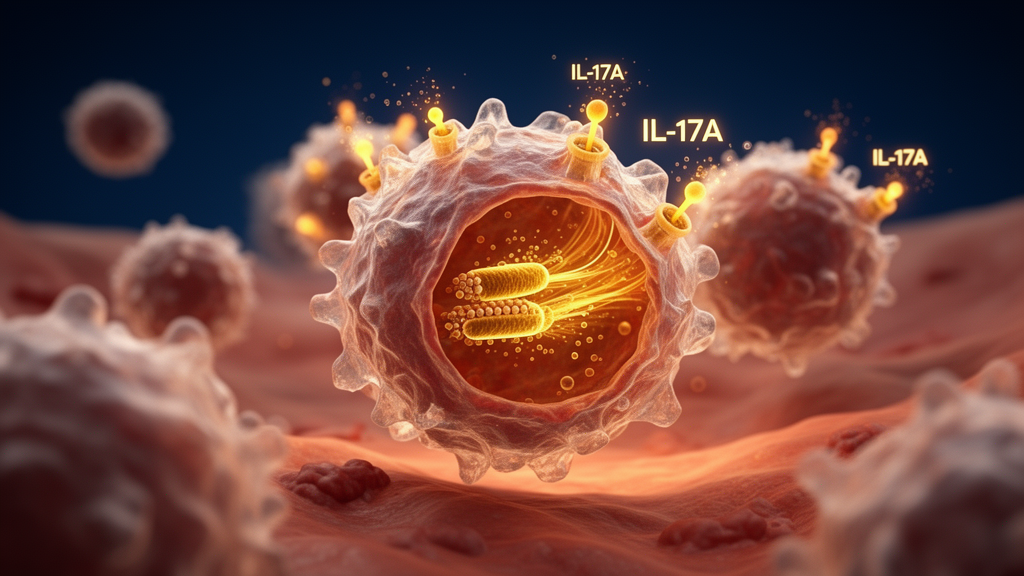
Interleukin-17A, an immune signaling molecule already known to be elevated in cutaneous T-cell lymphoma, appears to drive the growth of malignant T cells by boosting a specific component of the cells’ mitochondrial machinery, according to a new study published in Cancer & Metabolism. The research, made available as a peer-reviewed accepted manuscript on 19 August 2026, identifies the IL-17A–electron transport chain complex I axis as a potential therapeutic target in this rare malignancy.
Cutaneous T-cell lymphoma is a rare cancer of skin-resident T cells, and its clinically distinct subtypes are characterized by an aberrant cytokine profile, with notably elevated levels of IL-17A. Until now, however, the functional importance of this IL-17A dysregulation in the disease’s development had remained poorly understood, leaving open the question of whether the cytokine is merely a marker of the malignancy or an active participant in its progression.
The research team, led by Diksha Attrish and colleagues with senior author Rahul Purwar, began by examining clinical biospecimens. Immunofluorescence analysis of skin from CTCL patients and flow cytometric analysis of blood samples from five patients showed increased levels of the IL-17A receptor, IL-17RA, in both patient samples and T-cell lymphoma cell lines. This established that the malignant cells were equipped to respond directly to IL-17A signaling.
To find out what that signaling does inside the cells, the researchers performed high-throughput label-free quantitative proteomic analysis on malignant T cells treated with IL-17A. The analysis identified mitochondrial electron transport chain complex I as a key protein enriched in the IL-17A-induced cells, pointing to a specific metabolic structure as the downstream target of the cytokine.
The team then confirmed this finding by flow cytometry, showing increased levels of electron transport chain complex I both in IL-17A-stimulated T-cell lymphoma cell lines and in samples from nine CTCL patients, which the authors say highlights the clinical relevance of the IL-17A–ETC complex I axis. Flow cytometric analysis also demonstrated increased levels of phosphorylated NF-κB-p65 at the S536 position, indicating activation of this inflammatory signaling pathway in the malignant cells.
Functionally, IL-17A signaling was associated with increased electron transport chain complex I activity and improved mitochondrial bioenergetics, including increased mitochondrial membrane potential and ATP levels. These metabolic changes correlated with increased malignant T-cell viability and survival, suggesting that the cytokine helps the cancer cells sustain the energy production they need to proliferate.
The evidence for causality came from loss-of-function experiments. Genetic knockdown of IL-17RA reduced the IL-17A-associated expression of electron transport chain complex I and abrogated cell survival. Consistently, both pharmacological inhibition and genetic silencing of electron transport chain complex I suppressed IL-17A-induced proliferation in vitro, indicating that the metabolic axis is required for the cytokine’s growth-promoting effect.
Altogether, the authors write, the data reveal a role for IL-17A signaling in the metabolic changes accompanying T-cell lymphoma progression and identify the IL-17A–ETC complex I axis as a potential therapeutic target. In a significance statement accompanying the paper, the team states that it has uncovered an IL-17A-induced ETC complex I pro-tumorigenic circuit and provides mechanistic evidence that ETC complex I is a potential metabolic vulnerability that could be used to sensitize malignant T cells. The findings are drawn from cell-line experiments and small patient cohorts, with five patients in the receptor analysis and nine in the complex I analysis, so further clinical validation would be needed before the axis could be exploited therapeutically.
Subject of Research: How the cytokine IL-17A promotes malignant T-cell proliferation in cutaneous T-cell lymphoma through mitochondrial electron transport chain complex I.
Article Title: Interleukin-17A regulates malignant T-cell proliferation via electron transport chain complex I
Article References: Attrish, D., Dhamija, B., Mukherjee, D., Sawant, V., Marathe, S., Saul, D., Basu, M., Banik, A., Sharma, N., Shet, T., Jain, H., Kosinsky, R. L., Sharma, P., & Purwar, R. (2026). Interleukin-17A regulates malignant T-cell proliferation via electron transport chain complex I. Cancer & Metabolism. https://doi.org/10.1186/s40170-026-00453-2
Image Credits: AI Generated
DOI: 10.1186/s40170-026-00453-2
Keywords: cutaneous T-cell lymphoma, interleukin-17A, IL-17RA, electron transport chain complex I, mitochondrial bioenergetics, ATP, NF-κB signaling, proteomics, metabolic rewiring, therapeutic target, T-cell lymphoma, Cancer & Metabolism
News Source: Nathaniel Bowman. (October 29, 2026). Immune Signal IL-17A Fuels T-Cell Lymphoma Growth Through Mitochondrial Complex I. Scienmag.