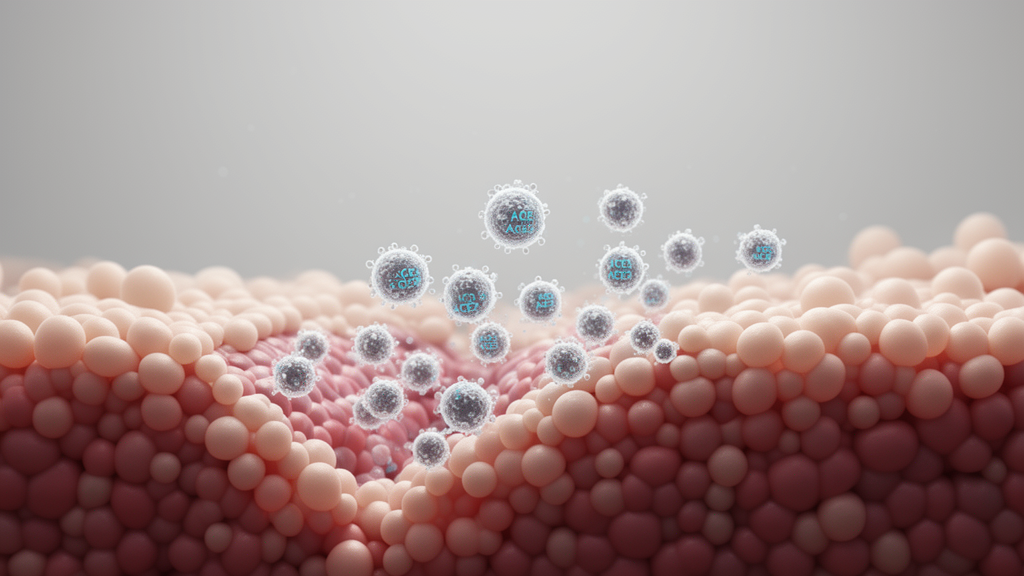
Metabolic dysfunction-associated steatohepatitis (MASH) is increasingly recognized as a leading contributor to cirrhosis globally, creating a substantial demand for deeper understanding of its underlying pathophysiological drivers. New research published in Frontiers in Pharmacology suggests that the gut-liver axis plays a more nuanced role in this progression than previously established, specifically through the transport of ACE2-enriched exosomes from the small intestine to the liver. Investigators observed that these gut-derived vesicles act as a significant source of hepatic ACE2 and, under physiological conditions, function to preserve hepatocyte integrity and dampen inflammatory responses. By isolating exosomes from STC-1 small intestinal endocrine cells, the research team demonstrated that these functional messengers significantly improve metabolic parameters and attenuate hepatic fibrosis in mouse models of MASH, offering a novel paradigm for understanding systemic metabolic regulation.
The study highlights a clear distinction between the functional potential of exosomes under normal versus lipotoxic conditions. Using both in vitro models with palmitic acid-stimulated AML-12 hepatocytes and in vivo mouse models fed a high-fat diet supplemented with low-dose streptozotocin, researchers compared the effects of physiological exosomes (NCEXO) against lipotoxic exosomes (PAEXO). The experimental design relied on the isolation and comprehensive characterization of these extracellular vesicles using nanoparticle tracking analysis, transmission electron microscopy, and Western blotting to verify their typical cup-shaped morphology, size range of 50 to 150 nanometers, and expression of canonical markers including ALIX, CD9, and TSG101. These rigorous identification protocols ensured that observed biological effects could be accurately attributed to the exosomal populations under study.
A primary discovery of the investigation is the robust expression of ACE2 within NCEXO, which is notably downregulated in PAEXO. Fluorescence tracking using the green dye PKH67 revealed that these vesicles possess a distinct capacity to accumulate within hepatocytes in vitro within 24 hours. In vivo tracking conducted after tail vein injection in C57BL/6J mice confirmed this phenomenon, showing sustained hepatic accumulation over five days with minimal signal detection in the kidneys. This suggests that gut endocrine cells provide a continuous, long-distance regulatory mechanism for hepatic ACE2 levels. The loss of this ACE2 enrichment in PAEXO under lipotoxic stress underscores the impact of metabolic disturbances on the composition and subsequent function of gut-derived signaling molecules.
In the MASH mouse model, the administration of NCEXO resulted in markedly improved metabolic and hepatic outcomes compared to control groups fed a high-fat diet. While both NCEXO and PAEXO groups maintained comparable food intake, the NCEXO-treated mice showed enhanced hepatic function and a significant reduction in inflammatory signaling, whereas PAEXO intervention proved ineffective at ameliorating hepatic steatosis and even correlated with exacerbated inflammatory responses, as evidenced by increased circulating interleukin-1β levels. These findings distinguish the functional outcome of physiological versus pathologically modified exosomes in the progression of liver disease, suggesting that the molecular cargo of these vesicles directly influences the host’s ability to resist lipid-induced injury.
Histopathological analysis further clarified the protective impact of NCEXO on liver tissue architecture. Mice treated with NCEXO maintained intact hepatic lobular architecture on H&E staining, exhibited significantly reduced lipid deposition in Oil Red O staining, and showed diminished signs of fibrosis in Masson’s staining compared to the high-fat diet control group. These structural improvements were mirrored by molecular findings: immunofluorescence analysis confirmed that while ACE2 expression in the liver was upregulated in the NCEXO group, it remained unchanged in mice treated with PAEXO. This localized increase in ACE2 protein suggests that therapeutic intervention via these specific exosomes directly influences the molecular environment of the liver.
Mechanistically, the protective effects of NCEXO appear linked to the suppression of the NLRP3 inflammasome, a multiprotein complex responsible for sensing danger signals and triggering inflammation and pyroptosis in hepatocytes. The research demonstrated that NCEXO treatment consistently reduced macrophage infiltration in liver tissue. Subsequent transcriptional and protein-level analysis showed that while the administration of NCEXO improved hepatic glucose homeostasis and lipid metabolism, it notably suppressed the activation of the NLRP3 pathway. This regulatory effect likely contributes to the reduction in hepatocyte apoptosis observed in flow cytometric analysis and may explain the improved survival and proliferation seen in EdU assay results for hepatocytes treated with NCEXO.
To confirm the pivotal role of ACE2 in this process, the researchers employed ACE2 knockout mice. Under standard chow diet, these animals showed no significant differences in glucolipid metabolism or liver function compared to wild-type controls. However, upon exposure to a high-fat diet, the ACE2 knockout mice experienced more severe weight gain, exacerbated metabolic dysfunction, and greater hepatic impairment than their wild-type counterparts. Systemic inflammation levels and NLRP3 inflammasome activation were also significantly elevated in the knockout model. Crucially, the administration of NCEXO to these animals reversed much of this damage, improving their metabolic status and reducing the severity of hepatic steatosis, reinforcing the conclusion that exosomal ACE2 is a vital mediator of the observed hepatoprotective effects.
The study also examined the status of the gut endocrine system under lipotoxic stress. Researchers observed that in all groups exposed to a high-fat diet, there was a substantial decrease in ACE2 expression within intestinal tissues. This reduction in the intestinal source of ACE2 provides a mechanistic link between chronic dietary fat intake and the subsequent impairment of the gut-liver regulatory pathway. The decreased expression of ACE2 in the small intestine directly correlates with the reduced ACE2 levels found in PAEXO, suggesting that the metabolic dysfunction induced by a high-fat diet compromises both local gut homeostasis and the distal protective signals sent to the liver.
Despite these findings, the study acknowledges several limitations that require further investigation. First, while ACE2 is identified as a critical component, the study cannot entirely rule out the potential confounding effects of other proteins, mRNAs, or microRNAs contained within the isolated exosomes. Future research would benefit from the inclusion of ACE2-knockout exosomes as additional negative controls to isolate the specific impact of the ACE2 cargo. Additionally, while the dosage of 7.5 micrograms per gram used for the in vivo experiments aligns with established protocols, the long duration of the MASH model and the significant variability in metabolic responses among mice presented challenges in optimizing dosing frequency and quantity, suggesting that further pharmacokinetic studies are needed.
Finally, while the research provides strong evidence of an inverse relationship between NCEXO-derived ACE2 and NLRP3 inflammasome activation, the exact molecular pathways that govern this direct interaction have not been fully elucidated. The study establishes the theoretical and experimental foundation for understanding this exosome-mediated gut-liver communication but leaves the mapping of precise downstream signaling events for future work. Nonetheless, the findings effectively demonstrate that ACE2-enriched small intestinal exosomes represent a critical and previously unrecognized component of the gut-liver axis, with significant implications for the development of innovative therapeutic strategies intended to prevent or ameliorate the progression of metabolic dysfunction-associated steatohepatitis.
The experimental timeline and modeling regimen provided essential operational context for observing these hepatic changes over an extended disease course. Six-week-old male C57BL/6J wild-type and ACE2-knockout mice were maintained on either a standard chow diet consisting of twenty percent protein, seventy percent carbohydrates, and ten percent fat, or a high-fat diet formulated with sixty percent fat, twenty percent carbohydrates, and twenty percent protein. To induce steatohepatitis, animals assigned to the metabolic stress groups received high-fat feeding across fourteen weeks, combined with low-dose streptozotocin injections of forty milligrams per kilogram administered across five consecutive days starting at seven weeks of age. Exosome treatments were subsequently introduced at week fourteen via tail-vein injections delivering seven point five micrograms per gram of normalized exosomal protein, followed by continuous monitoring until sacrifice at week twenty-four, with food intake, body weight, and fasting blood glucose tracked at two-week intervals.
To quantify the physiological consequences of exosome exposure, the investigators tracked systemic glycemic control and circulating hepatic biomarkers. Glucose regulation was evaluated through intraperitoneal glucose tolerance tests following an overnight fast, during which blood glucose concentrations were tracked across two hours and integrated using the trapezoidal rule to calculate area-under-the-curve metrics, alongside intraperitoneal insulin tolerance tests using zero point seven five units of insulin per kilogram. Biochemical evaluations of plasma collected into EDTA tubes during glucose testing quantified circulating interleukin-1 beta levels, alongside measurements of aspartate aminotransferase, alanine aminotransferase, high-density lipoprotein, low-density lipoprotein, triglycerides, and total cholesterol. In AML-12 hepatocytes, in vitro metabolic stress was established through forty-eight hours of exposure to zero point five millimoles per liter of palmitic acid in the presence or absence of one hundred micrograms per milliliter of isolated exosomes.
The mechanistic evaluation also revealed an informative dissociation between gene transcription and protein abundance within hepatic tissue. Although NCEXO administration produced a pronounced upregulation of ACE2 protein in the liver, quantitative real-time PCR revealed no corresponding rise in hepatic ACE2 transcript levels compared to high-fat diet or PAEXO groups, indicating that the elevated hepatic protein was delivered directly via exosomal cargo rather than induced by endogenous transcriptional activation. The authors contextualized these hepatic benefits within the broader renin-angiotensin system, specifically the hepatic ACE2, angiotensin-(1-7), and Mas receptor axis, wherein Mas signaling supports microcirculation, endothelial preservation, and suppression of oxidative stress.
Subject of Research: The role of small intestinal endocrine cell-derived exosomal ACE2 in MASH pathogenesis and therapeutic potential.
Article Title: Small intestinal endocrine cell-derived exosomal ACE2 is associated with amelioration of MASH and may act through suppression of NLRP3 inflammasome activation
Article References: Yang, S., Cao, J., Chen, Q., Li, F., Gao, Y., Li, R., Wu, Z., & Yuan, L. (2026). Small intestinal endocrine cell-derived exosomal ACE2 is associated with amelioration of MASH and may act through suppression of NLRP3 inflammasome activation. Frontiers in Pharmacology, 17, Article 1998183. https://doi.org/10.3389/fphar.2026.1998183
Image Credits: AI Generated
DOI: 10.3389/fphar.2026.1998183
Keywords: MASH, Metabolic dysfunction-associated steatohepatitis, ACE2, exosomes, gut-liver axis, NLRP3 inflammasome, hepatocyte function, steatohepatitis, intestinal endocrine cells, STC-1 cells, palmitic acid, liver fibrosis, pyroptosis, metabolic regulation, gut endocrine function, endocrinology, gastrointestinal pharmacology, molecular imaging, liver metabolism, therapeutic development
News Source: Ophelia Keating. (November 18, 2026). Gut-Derived Exosomal ACE2 Ameliorates Metabolic Dysfunction-Associated Steatohepatitis in Mouse Models. Scienmag.