Chronic opioid exposure leaves a lasting mark on the brain, and the problems do not end when drug use stops. A new rat study adds a further complication to this picture: opioid-induced hypogonadism, the suppression of sex hormone production that accompanies chronic opioid use, may aggravate these cognitive problems. The research, published in Behavioral and Brain Functions, examined whether treadmill exercise of different intensities, alone or combined with testosterone replacement, could ease these deficits in castrated male rats undergoing morphine withdrawal.
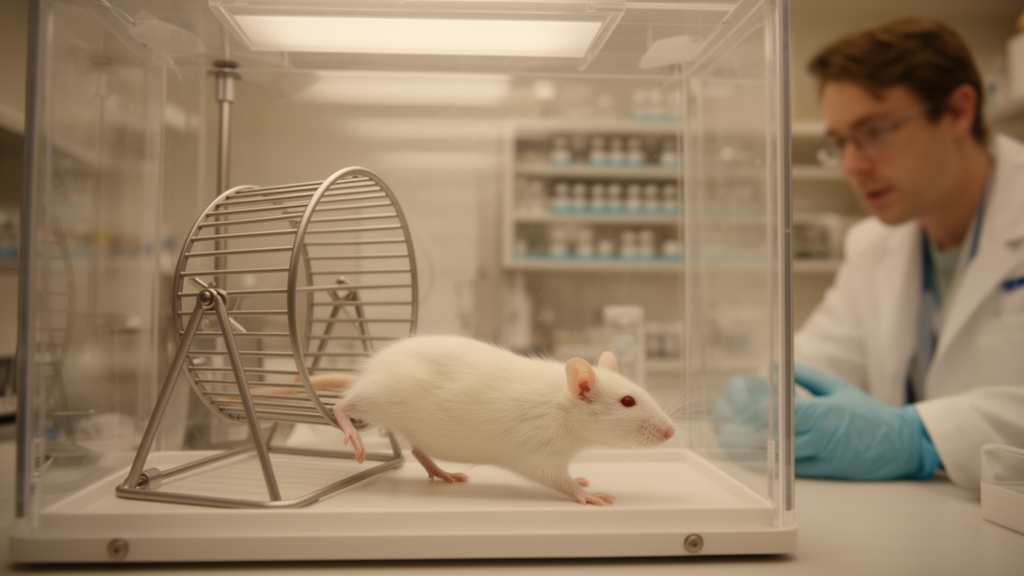
The experimental design was deliberately layered. Rats first underwent either sham surgery or bilateral castration, followed by a 30-day recovery period. The animals were then made dependent on morphine through injections of 10 mg/kg twice daily for 10 days. After dependence was established, the rats entered a 28-day intervention period in which they remained sedentary or performed treadmill exercise, with or without testosterone treatment. This structure allowed the researchers to separate the effects of castration, morphine dependence, abstinence, exercise intensity, and hormone replacement.
Cognition was assessed with two complementary behavioral tasks.
The results confirmed the expected baseline damage. Morphine abstinence and castration each impaired spatial learning, spatial memory, and avoidance memory, and both significantly reduced levels of brain-derived neurotrophic factor, or BDNF, in the hippocampus and prefrontal cortex. BDNF levels were also quantified in serum, providing a peripheral measure alongside the brain tissue analysis.
Exercise emerged as the most consistent intervention. Both mild- and moderate-intensity treadmill exercise improved cognitive performance and increased hippocampal and prefrontal cortex BDNF levels in the abstinent animals. Importantly, the dose-response pattern favored the harder workout: moderate-intensity exercise generally produced greater benefits than mild exercise across the behavioral and neurochemical outcomes. This suggests that, within the range tested, the intensity of the exercise matters for how much cognitive recovery is achieved during morphine abstinence.
Testosterone replacement told a more nuanced story. The hormone partially ameliorated the adverse effects of castration and improved selected behavioral and neurochemical outcomes, but its effects varied across experimental conditions. In other words, testosterone was not a uniform rescue therapy; it helped in some contexts and less so in others.
The findings point to appropriately prescribed exercise as an effective non-pharmacological strategy for promoting cognitive recovery and restoring neurotrophic signaling during morphine abstinence, with testosterone replacement potentially providing additional benefit under hypogonadal conditions. Because chronic opioid exposure and subsequent abstinence are associated with persistent cognitive impairment and disrupted neuroplasticity, an accessible intervention that targets both behavior and brain chemistry is of considerable interest to researchers studying opioid use disorder.
Several caveats deserve emphasis. This was a study in castrated male rats, not a clinical trial, and the abstract reports the direction and general pattern of effects rather than detailed statistics. Whether these findings translate to humans with opioid-induced hypogonadism, and what exercise prescription would be optimal in a clinical setting, remain open questions that will require further research.
By showing that moderate-intensity exercise outperformed mild exercise and that testosterone produced partial, condition-dependent benefits, the results offer a framework for thinking about how behavioral and hormonal interventions might be combined to support cognitive recovery during withdrawal from opioids.
Subject of Research: Effects of exercise intensity and testosterone replacement on cognition and BDNF during morphine abstinence in castrated male rats
Article Title: Exercise intensity and testosterone modulate cognitive recovery and BDNF levels during morphine abstinence in castrated male rats
Article References: Mohammadi, F., Shahroodi, A., Rashidy-Pour, A., Miladi-Gorji, H., Bandegi, A. R., Vafaei, A. A., & Raise-Abdullahi, P. (2026). Exercise intensity and testosterone modulate cognitive recovery and BDNF levels during morphine abstinence in castrated male rats. Behavioral and Brain Functions. https://doi.org/10.1186/s12993-026-00365-7
Image Credits: AI Generated
DOI: 10.1186/s12993-026-00365-7
Keywords: morphine abstinence, treadmill exercise, testosterone, BDNF, Morris water maze, shuttle box, hippocampus, prefrontal cortex, castrated rats, cognitive recovery, neuroplasticity, Exercise
News Source: Glenn Wilkins. (October 29, 2026). Exercise and testosterone help rat brains recover from morphine withdrawal. Scienmag.