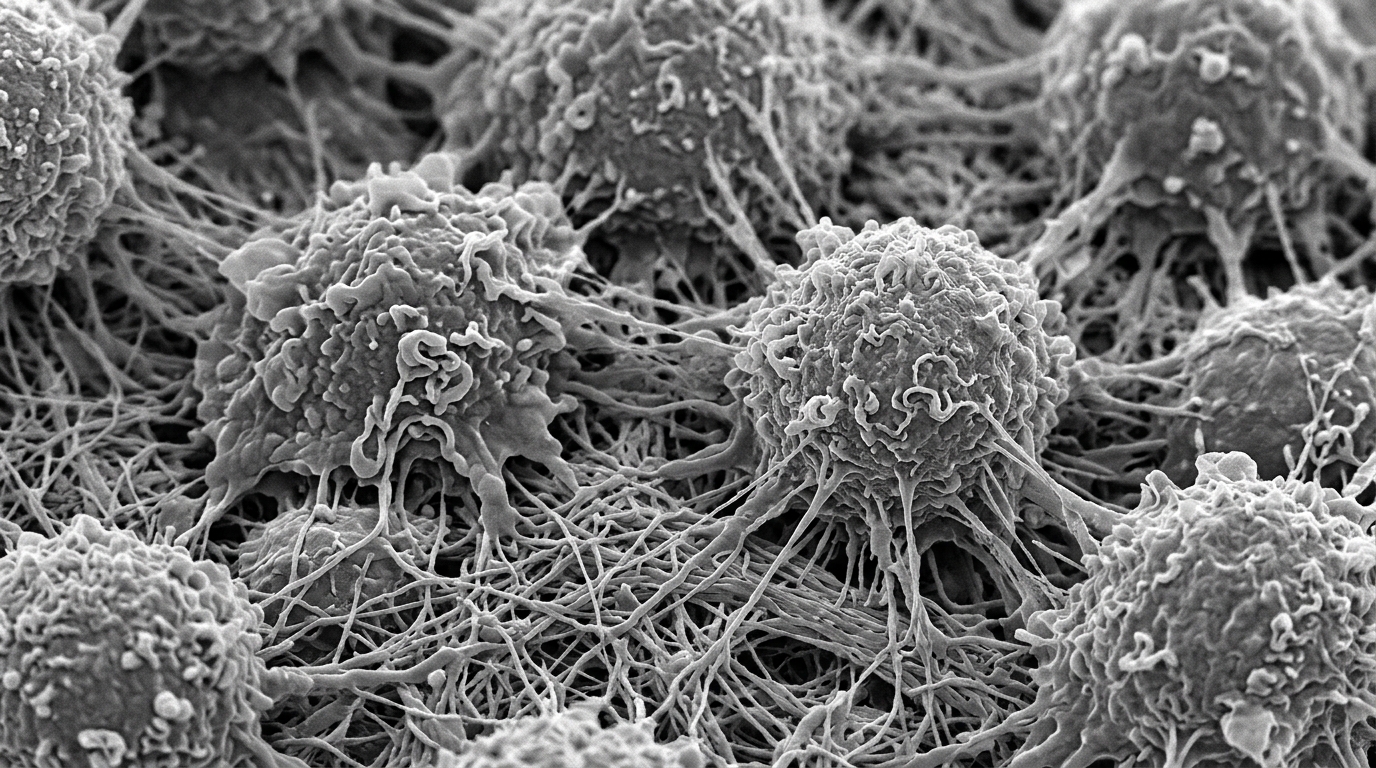
Dickkopf-1, better known to researchers as DKK1, has long been described simply as a brake on canonical Wnt/β-catenin signaling. A new open-access review published in Cellular Oncology argues that this description is no longer sufficient. Drawing together scattered findings from across the literature, the authors present DKK1 as a multifunctional regulator whose behavior depends on which receptors it engages, which cells produce it, and what upstream signals control its expression.
The review, authored by Gloria Fiorentino, Beatrice Latiano, Patrizia D’Amelio, Emanuela Arvat and Maria Graziella Catalano, was published online on 30 October 2026 as a peer-reviewed, accepted manuscript carrying a permanent DOI. The authors describe DKK1 as a secreted glycoprotein that was first characterized as an antagonist of canonical Wnt/β-catenin signaling but is now recognized to act through several routes: canonical Wnt inhibition, non-canonical Wnt branches, and Wnt-independent axes mediated by the receptor Cytoskeleton-Associated Protein 4, or CKAP4. This receptor diversity, they argue, is central to understanding why the same molecule can behave differently in different tumor contexts.
One of the review’s central claims concerns prognosis. Elevated circulating or tissue DKK1, the authors report, is associated with poor prognosis across multiple malignancies. On that basis, DKK1 has been proposed as a diagnostic and prognostic biomarker, particularly when used within multi-marker panels rather than as a stand-alone test. The review consolidates current evidence on this biomarker performance across cancer types, an area the authors say has previously lacked a unifying explanatory framework.
That framework is the review’s most distinctive contribution. The authors propose an integrative model organized around three axes: receptor engagement, cellular source, and upstream regulatory control. By sorting the literature through this lens, they aim to explain DKK1’s context-dependent effects on tumor behavior, effects that have remained scattered and apparently contradictory across individual studies. The model is explicitly a proposal intended to organize existing evidence, not a new experimental finding.
Beyond its signaling roles, DKK1 appears to matter for how tumors interact with the immune system. The review summarizes evidence that DKK1 drives immune evasion and that this activity converges with resistance to checkpoint blockade, the immunotherapy approach that has transformed treatment for several cancers. If DKK1 contributes to tumors’ ability to dodge immune attack, the authors suggest, measuring or targeting it could become relevant to predicting and overcoming immunotherapy resistance.
The therapeutic angle receives its own treatment in the review, which surveys clinical progress with DKK1-targeting agents. The authors link mechanistic insight to biomarker performance throughout, arguing that understanding which receptor DKK1 engages in a given tumor should inform which patients are most likely to benefit from which DKK1-directed strategy. The stated goal is to support future efforts to validate DKK1 as a clinical biomarker and to guide biomarker-driven combination therapies.
The review’s scope is deliberately broad, spanning basic signaling biology, biomarker evidence across cancer types, immune evasion, and clinical drug development. Whether the integrative model holds up across the full range of malignancies, and whether DKK1-targeting agents deliver clinical benefit in biomarker-selected populations, are questions the authors frame as priorities for future validation work rather than settled conclusions.
Subject of Research: The roles of the secreted glycoprotein DKK1 in Wnt signaling, cancer biomarkers, and therapeutic targeting
Article Title: DKK1 in cancer and beyond: biology, biomarkers, and therapeutic opportunities
Article References: Fiorentino, G., Latiano, B., D’Amelio, P., Arvat, E., & Catalano, M. G. (2026). DKK1 in cancer and beyond: biology, biomarkers, and therapeutic opportunities. Cellular Oncology. https://doi.org/10.1007/s13402-026-01319-x
Image Credits: AI Generated
DOI: 10.1007/s13402-026-01319-x
Keywords: DKK1, Wnt signaling, CKAP4, cancer biomarkers, prognosis, immune evasion, checkpoint blockade, drug targets, tumor microenvironment, Cellular Oncology, cancer, beyond
News Source: Nathaniel Bowman. (November 6, 2026). DKK1 emerges as a multifunctional player in cancer progression. Scienmag.