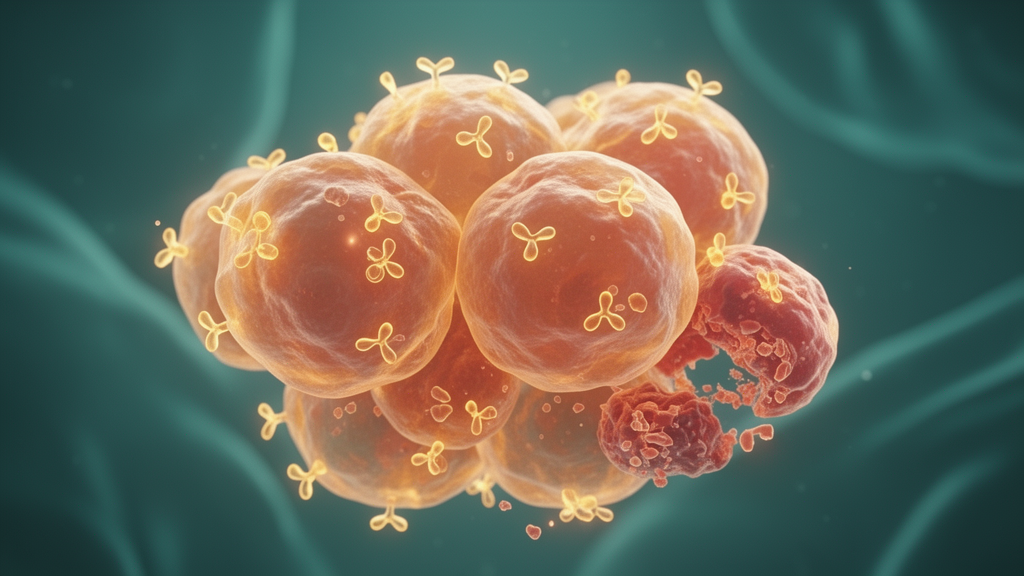
Cancer researchers have long focused on genes and proteins as the master regulators of tumor behavior, but a growing body of evidence points to an unexpected class of molecules playing an equally decisive role: fats. A comprehensive new review published in Molecular Biology Reports by Deepak Ganpatrao Thombre, Vishal Arun Katre, Shailza Singh, and Vivek Vaish of Savitribai Phule Pune University and the National Centre for Cell Science synthesizes decades of work on sphingolipids, a family of membrane lipids that has been revealed as dynamic signaling molecules governing whether a cell proliferates, dies, invades surrounding tissue, or evades the immune system. The authors argue that these lipids operate according to a kind of molecular code, one that differs strikingly from tumor to tumor and that could reshape how cancers are diagnosed, prognosticated, and treated.
The central concept in this code is the balance between two opposing lipid messengers: ceramide and sphingosine-1-phosphate, commonly abbreviated as S1P. Ceramide is the death signal of the pair. When DNA is damaged by chemotherapy or radiation, enzymes such as serine palmitoyltransferase and acid sphingomyelinase ramp up ceramide production, and the molecule accumulates in mitochondrial membranes, where it forms channels that increase permeability and trigger the apoptotic self-destruction program. Studies cited in the review show that p53, the famous tumor-suppressor protein, depends in part on this ceramide response to execute genotoxic stress signals. S1P, by contrast, is the survival signal. Generated when sphingosine kinases 1 and 2 phosphorylate sphingosine, it activates a family of five cell-surface receptors and intracellular pathways including PI3K/Akt, NF-kappaB, and STAT3, all of which promote proliferation, migration, and resistance to cell death. The ratio between these two metabolites, sometimes called the sphingolipid rheostat, effectively functions as a life-or-death switch inside the cell.
What makes the new review particularly valuable is its insistence that this switch is not wired the same way in every cancer. In colorectal cancer, for example, alkaline sphingomyelinase activity is decreased in carcinomas, and the S1P lyase enzyme SGPL1, which degrades S1P, is downregulated, tilting the rheostat toward survival. Comparative lipidomics of 5-fluorouracil-sensitive and resistant colorectal cancer cells has revealed altered sphingomyelin and ceramide profiles controlled by acid sphingomyelinase, while recent work shows that S1P stimulates angiogenesis in the colorectal tumor microenvironment and polarizes macrophages through macrophage migration inhibitory factor. In gastric cancer, sphingosine kinase 1 expression correlates with disease progression and poor patient survival, and lipidomic machine-learning predictors of gastric cancer progression are now being developed from these metabolic signatures.
Pancreatic ductal adenocarcinoma, one of the deadliest malignancies, presents another distinct sphingolipid pattern. Inhibition of acid ceramidase in pancreatic cancer cells elicits mitochondrial dysfunction and oxidative stress, and targeting sphingolipid metabolism has been shown to defeat resistance to the frontline drug gemcitabine. Transcriptomic and lipidomic analyses suggest that upregulation of SPHK1, the gene encoding sphingosine kinase 1, promotes stemness in pancreatic cancer stem-like cells, and recent work indicates that SPHK1 drives lymphangiogenesis through activation of the ERK pathway in lymphatic endothelial cells. In breast cancer, the picture is further complicated by hormone signaling: high expression of S1P receptors 1 and 3, sphingosine kinase 1, and ERK1/2 is associated with tamoxifen resistance in estrogen receptor-positive patients, and sphingosine kinase 1 signaling has been implicated in the maintenance of breast cancer stem cells, particularly in triple-negative disease.
The review also highlights the darker, more specialized members of the sphingolipid family: gangliosides, sialic-acid-bearing glycosphingolipids that stud the surface of many tumor cells. Ganglioside GD3 enhances adhesion signaling in melanoma cells by recruiting integrins into glycolipid-enriched microdomains, augmenting their malignant properties, and upregulation of cell-surface GD3 is associated with melanoma brain metastasis. In lung cancer, the ganglioside GM2 induces invasiveness in irradiation-tolerant cells, suggesting a role in therapy-induced aggression. Perhaps most strikingly, ovarian tumor cells release exosomes carrying GD3, which sialic-acid-dependently inhibits T cells in the tumor microenvironment, a direct mechanism of immune evasion. These findings position gangliosides not merely as markers of malignancy but as active participants in metastasis and immunosuppression.
A recurring mechanistic theme across tumor types is chemoresistance driven by glucosylceramide synthase, the enzyme that converts ceramide into glucosylceramide, thereby depleting the death signal at its source. Landmark work showed that transfecting resistant cells with antisense against glucosylceramide synthase reversed adriamycin resistance by uncoupling ceramide glycosylation, and the enzyme is overexpressed in metastatic breast carcinoma. In ovarian carcinoma cells, lack of ceramide generation and altered sphingolipid composition are associated with drug resistance. Because ceramide sits upstream of apoptosis, its metabolic disposal, whether by glycosylation, by ceramidases that convert it to sphingosine, or by sphingomyelin synthase, becomes a universal strategy tumors use to survive treatment. Acid ceramidase in particular has emerged as a double-edged sword: it correlates with better prognosis in epithelial ovarian cancer in some studies, yet its inhibition enhances antitumor immune responses in colorectal cancer and kills glioblastoma stem cells with high efficiency.
The therapeutic implications of this biology are already moving into the clinic. Sphingosine kinase inhibitors, including selective agents against SphK1 and the SphK2 inhibitor ABC294640, have shown antitumor activity in preclinical models across leukemia, lung, gastric, and breast cancers. Fingolimod (FTY720), an S1P receptor modulator approved for multiple sclerosis and followed by the next-generation agent siponimod, inhibits angiogenesis and tumor vascularization and has demonstrated preclinical efficacy in triple-negative breast cancer and epithelial ovarian cancer models. Ceramide delivery systems represent another frontier: C6-ceramide nanoliposomes suppress tumor metastasis by regulating integrin affinity and have shown synergy with vinblastine in hepatocarcinoma and colorectal models, and a phase I study of ceramide nanoliposome in patients with advanced solid tumors has now been completed. An anti-S1P antibody has been validated as a potential therapeutic reducing growth, invasion, and angiogenesis across multiple tumor lineages.
Immunotherapy is where the sphingolipid code may prove most transformative. GD2-targeted CAR T cells have produced results in a phase 1/2 trial for high-risk neuroblastoma, and GD2-specific antibodies downregulate the PI3K/Akt/mTOR signaling network in neuroblastoma cells. Vaccination with a GD3-lactone conjugate plus the adjuvant QS-21 induced antibodies against GD3 in melanoma patients. Meanwhile, targeting SPHK1 in macrophages has been shown to remodel the tumor microenvironment and enhance anti-PD-1 immunotherapy efficacy in colorectal cancer liver metastasis, and inhibiting glycosphingolipid synthesis with eliglustat in combination with immune checkpoint inhibitors has advanced from preclinical evidence into a phase I clinical trial in advanced cancers. S1P-S1PR1 signaling has also been shown to impair the metabolism and effector function of CD8-positive T cells in tumors, meaning that manipulating this axis could directly restore antitumor immunity.
Beyond treatment, sphingolipids are emerging as biomarkers. Ceramide and polyunsaturated phospholipids are strongly reduced in human hepatocellular carcinoma, altered sphingolipid metabolism characterizes endometrial cancer with links to oxidative stress, and lipidomic profiling of metastatic lung cancer-derived exosomes has identified ceramides as potential biomarkers using supramolecular probe enrichment and mass spectrometry. Sphingosine kinase 1 levels predict overall survival in non-small cell lung cancer patients treated with carboplatin and vinorelbine, and sphingosine kinase 2 expression carries prognostic significance in the same disease. Even dietary sphingomyelin has been shown to inhibit chemically induced colon cancer in mice, hinting at preventive dimensions of this biology.
The authors are candid about the obstacles that remain. Tumor heterogeneity means that a sphingolipid-targeting strategy effective in one patient’s malignancy may fail in another with a different enzyme isoform profile or microenvironmental context. Drug delivery barriers, particularly for lipophilic ceramide species that must reach intracellular compartments, and toxicity concerns arising from the normal physiological roles of S1P in vascular and immune function, complicate clinical translation. Yet the convergence of lipidomics, machine-learning-based metabolic predictors, nanoliposome delivery, and ganglioside-directed immunotherapy suggests that the sphingolipid code is finally being read with sufficient precision to act upon. If researchers can decode which enzyme isoforms and metabolite profiles define each patient’s tumor, these once-overlooked membrane fats could become both the biomarkers that guide precision oncology and the targets that make previously resistant cancers vulnerable.
Subject of Research: The divergent roles of sphingolipid metabolism, particularly the ceramide–sphingosine-1-phosphate balance and gangliosides, in tumor progression, chemoresistance, and therapy across cancer types
Article Title: The sphingolipid code of cancer: divergent roles across tumor types and therapeutic horizons
Article References: Thombre, D. G., Katre, V. A., Singh, S., & Vaish, V. (2026). The sphingolipid code of cancer: divergent roles across tumor types and therapeutic horizons. Molecular Biology Reports, 53(1), Article 1689. https://doi.org/10.1007/s11033-026-12899-0
Image Credits: AI Generated
DOI: 10.1007/s11033-026-12899-0
Keywords: sphingolipids, ceramide, sphingosine-1-phosphate, gangliosides, cancer metabolism, drug resistance, sphingosine kinase, immunotherapy, ceramide nanoliposomes, precision oncology, biomarkers, tumor microenvironment
News Source: Nathaniel Bowman. (October 9, 2026). Cancer’s Sphingolipid Code: How One Lipid Family Decides Cell Fate Across Tumors. Scienmag.