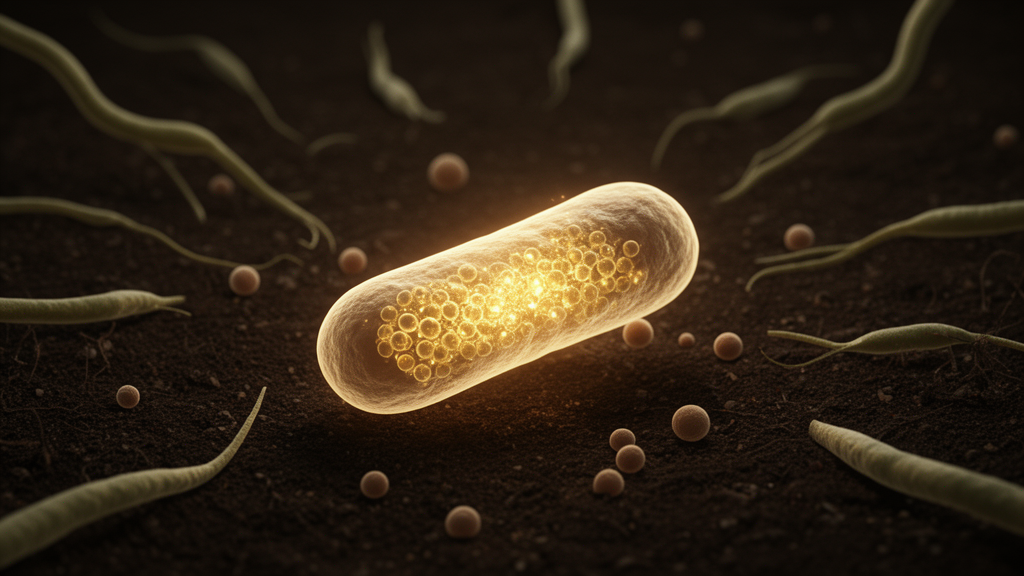
Beneath every healthy plant root lies a battlefield. Beneficial soil bacteria defend their plant hosts against pathogens, compete with rival microbes for nutrients, and negotiate a delicate truce with the immune system of the plant itself. For decades, researchers have studied these behaviors one gene at a time, piecing together fragments of a puzzle that never quite formed a complete picture. Now, a study published in the journal Microbiome has taken a systematically broader view, and its findings suggest that a single regulatory hub in the plant-beneficial bacterium Pseudomonas fluorescens acts as a master coordinator, simultaneously directing chemical warfare against competitors and remodeling the entire bacterial community that surrounds plant roots.
The research, led by Yuan Luo, Jing Wang, and Hai-Lei Wei of the Chinese Academy of Agricultural Sciences, together with colleagues at China Agricultural University, focused on Pseudomonas fluorescens strain 2P24, a well-characterized plant growth-promoting rhizobacterium. These bacteria, often abbreviated as PGPR, colonize the rhizosphere, the narrow zone of soil influenced by root secretions, and can suppress soil-borne diseases while stimulating plant growth. What has remained unclear is how a single strain manages the full portfolio of ecological interactions it must navigate: engaging with the plant, suppressing pathogens, and contending with the thousands of other microbial species sharing the same crowded habitat.
Previous work in the field had a persistent limitation, the authors note. Most studies examined individual genes or individual traits in isolation, which made it difficult to compare the relative contributions of different genetic systems within one strain. A gene that looks important in a petri dish may matter little in real soil, and traits studied separately may turn out to be tightly interlinked in nature. To overcome this reductionist bottleneck, the team designed a comprehensive deletion panel. Drawing on genome annotation and prior knowledge, they selected sixteen representative genes and gene clusters in strain 2P24 spanning three functional layers considered central to plant-beneficial bacteria: protein secretion systems, which deliver effector molecules to other cells; regulatory pathways, which control gene expression in response to environmental cues; and secondary metabolite biosynthesis clusters, which produce bioactive compounds such as antibiotics.
Each of the sixteen mutants was then put through a battery of genetic and phenotypic analyses. The researchers measured fundamental physiological traits, assessed how strongly each mutant elicited plant immune responses, and used amplicon sequencing to track how deleting each gene altered the composition of bacterial communities in bulk soil and in the rhizosphere. This systematic screen allowed the team to rank the genetic systems against one another within the same strain background, something earlier single-gene studies could not achieve. The screen narrowed the field considerably: six genes and gene clusters emerged as essential for basic physiology and ecological fitness. These were lapBCE, involved in biofilm formation; gacS, a sensor kinase at the top of a global regulatory cascade; phoP, part of a two-component system responding to environmental conditions; rsmX, a small regulatory RNA; fliC, the gene encoding flagellin, the protein that builds the bacterial flagellum; and phl, the biosynthetic gene cluster for the antimicrobial compound 2,4-diacetylphloroglucinol.
The most striking discovery, however, lay not in the individual genes but in the architecture connecting them. The team identified two regulatory modules, which they describe as GacS-Phl and GacS-FliC, that coordinately govern ecological interactions across multiple interfaces in the rhizosphere. GacS, a membrane-spanning sensor kinase, sits at the apex of this framework and controls two very different weapons in the bacterium’s arsenal. The first is chemical: GacS regulates the production of 2,4-diacetylphloroglucinol, often abbreviated as 2,4-DAPG, a broad-spectrum antimicrobial secondary metabolite long associated with disease-suppressive soils. The second is immunological: GacS modulates the expression of flagellin, the protein subunit of the bacterial flagellum.
These two outputs act through strikingly different mechanisms on different targets. Through the GacS-Phl module, the bacterium deploys 2,4-DAPG as a direct competitive weapon. The experiments showed that this antimicrobial compound suppresses soil-dwelling Streptomyces populations, a genus of bacteria famous both for producing antibiotics themselves and for competing fiercely in soil environments. When the researchers compared soils inoculated with the wild-type strain 2P24 against soils treated with mutants lacking either gacS or the phl cluster, they found that the presence of the antimicrobial compound reshaped which bacterial genera thrived, with Streptomyces standing out as a key casualty of the chemical assault. Machine-learning classifiers, including Random Forest and Gaussian-kernel Fisher discriminant analysis, could reliably distinguish the soil communities treated with the wild-type strain from those treated with the phl and gacS mutants at seven, fourteen, and twenty-one days after inoculation, indicating that the effect on community composition was persistent rather than transient.
Through the GacS-FliC module, the bacterium influences the plant side of the equation. Flagellin is not merely a structural protein for swimming; it is one of the best-studied microbe-associated molecular patterns, or MAMPs, molecules that plant immune receptors recognize as a signature of microbial presence. Recognition of flagellin triggers a cascade of plant immune responses, including the production of reactive oxygen species. The team’s assays, which measured reactive oxygen species bursts and hypersensitive-response challenge experiments in the model plant Arabidopsis thaliana, showed that flagellin expression levels, governed by GacS, determine how strongly the bacterium stimulates plant immunity. This immune activation, in turn, indirectly reshapes the composition and structure of the rhizosphere microbiome, because the plant’s immune state influences which microbes can successfully colonize the root zone. In other words, the same regulatory hub that arms the bacterium with an antibiotic also tunes the volume of the molecular signal that plants use to police their own microbial residents.
The study therefore establishes a coordinated regulatory model that integrates three previously separate threads: global regulatory networks, microbe-associated molecular patterns, and antimicrobial secondary metabolites. Rather than managing plant interactions, pathogen suppression, and community competition as independent tasks, Pseudomonas fluorescens 2P24 appears to run them through a shared control system centered on GacS. This kind of centralized coordination makes ecological sense. A bacterium in the rhizosphere faces a constantly shifting landscape of competitors, plant signals, and nutrient gradients, and a single sensor that integrates environmental information and allocates resources between chemical offense and immune signaling could allow rapid, coherent adjustments. It also helps explain why gacS mutants consistently showed altered performance across so many of the assays in the study, from biofilm formation and antagonistic activity against the wilt pathogen Ralstonia solanacearum to plant growth promotion of Arabidopsis seedlings.
The practical implications reach into sustainable agriculture. Plant growth-promoting Pseudomonas strains are promising biocontrol agents, living alternatives to synthetic pesticides, but their performance in the field has often been inconsistent, partly because researchers lacked a mechanistic understanding of which regulatory features determine success in complex soil communities. By showing that a GacS-mediated framework simultaneously manages plant-beneficial activities and competitive strategies, the study provides a theoretical foundation for the rational design of microbial biocontrol agents. Strains could, in principle, be selected or engineered for stronger GacS-dependent traits, improving their ability to establish themselves in the rhizosphere, suppress competitors such as Streptomyces, and maintain productive dialogue with the plant immune system. The work was funded by the Agricultural Science and Technology Project for Rural Revitalization in Beijing and the Agricultural Science and Technology Innovation Program of the Chinese Academy of Agricultural Sciences.
There is also a broader conceptual takeaway for microbiome science. The rhizosphere microbiome is not a passive backdrop against which beneficial bacteria act; it is an active community whose composition is shaped by both direct chemical interference and indirect plant-mediated filtering. A single regulatory gene in one inoculated strain can leave a detectable fingerprint on the entire bacterial community weeks later, as the time-course amplicon data in this study demonstrate. As microbiome engineering moves from concept to application, understanding these multi-interface regulatory frameworks will be essential. The humble soil Pseudomonas, it turns out, does not simply fight, cooperate, and signal in parallel. It does all three through one master switch, and learning to read that switch may be the key to designing microbial partners that reliably deliver on their promises in the field.
Subject of Research: GacS-dependent gene regulation coordinating bacterial competition and rhizosphere microbiome remodeling in Pseudomonas fluorescens
Article Title: A GacS-mediated regulatory framework coordinates bacterial competition and rhizosphere microbiome remodeling in Pseudomonas fluorescens
Article References: Luo, Y., Wang, J., Ma, Y.-N., Li, J.-Z., Zhang, L.-Q., & Wei, H.-L. (2026). A GacS-mediated regulatory framework coordinates bacterial competition and rhizosphere microbiome remodeling in Pseudomonas fluorescens. Microbiome. https://doi.org/10.1186/s40168-026-02557-9
Image Credits: AI Generated
DOI: 10.1186/s40168-026-02557-9
Keywords: Pseudomonas fluorescens, GacS, rhizosphere microbiome, 2,4-diacetylphloroglucinol, flagellin, plant immunity, biocontrol, Streptomyces, gene regulation, secondary metabolites, plant growth-promoting bacteria, microbiome engineering
News Source: Morgan Morrow. (October 9, 2026). One Master Switch: How a Soil Bacterium Coordinates Warfare and Microbiome Reshaping. Scienmag.