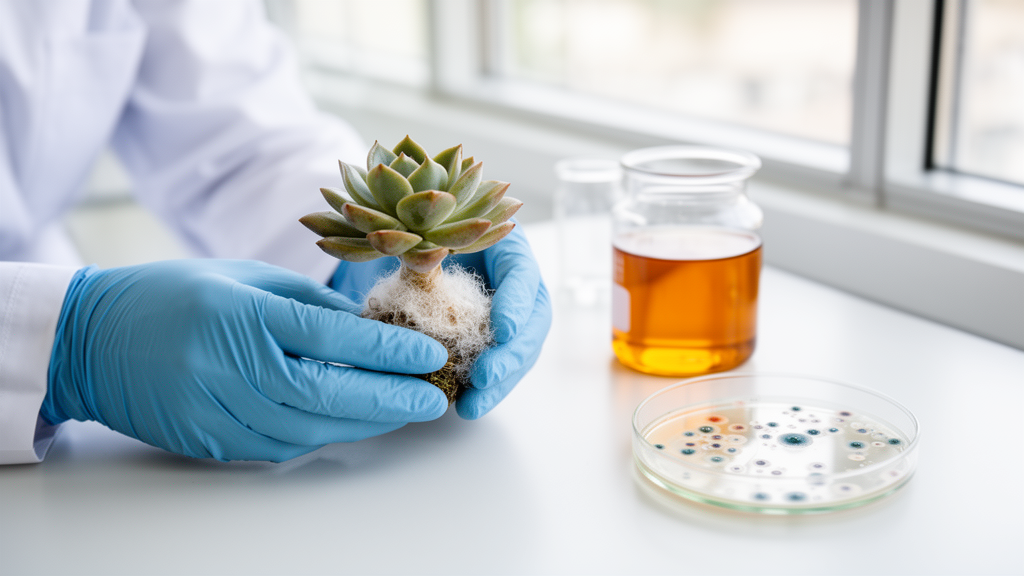
Deep inside the leaves of a hardy desert shrub growing in some of the harshest environments of North Africa and the Middle East, scientists have found a microscopic ally that could help medicine fight two of its most stubborn enemies: multidrug-resistant bacteria and cancer. Researchers have isolated an endophytic fungus from Deverra tortuosa, an aromatic perennial shrub adapted to sandy, rocky and nutrient-poor soils, and shown that its chemical arsenal can inhibit dangerous pathogens, dismantle biofilms, neutralize free radicals and selectively kill liver and breast cancer cells in the laboratory. The fungus, identified as Aspergillus niger, was recovered from every single leaf segment cultured during the isolation process, a striking signal that this organism is a faithful and abundant resident of the plant’s internal tissues.
Endophytic microorganisms live asymptomatically within plant tissues, forming symbiotic relationships with their hosts without causing visible harm. They colonize roots, stems, leaves, seeds and flowers, and their diversity is shaped by soil type, climate, geography and the physiological state of the plant. What makes endophytes from plants that survive in deserts or saline soils particularly interesting is that they frequently carry specialized stress-tolerance traits, and these traits often come packaged with an impressive capacity to produce bioactive secondary metabolites. Fungal endophytes in particular are prized for pharmaceutical bioprospecting because their biosynthetic machinery can generate structurally diverse compounds, including phenolics, flavonoids, terpenoids, alkaloids and peptides, many of which display antimicrobial, antioxidant, antiviral and anticancer properties. Despite the medicinal reputation of Deverra tortuosa, whose extracts have long been used in traditional medicine for their antimicrobial, anti-inflammatory and insecticidal effects, no fungal endophytes had previously been reported from the plant, leaving a significant gap in scientific knowledge.
The research team collected healthy leaves of D. tortuosa, cut them into small segments and subjected them to a rigorous surface sterilization protocol involving ethanol and sodium hypochlorite, followed by repeated rinses with sterile water. To confirm that the sterilization had eliminated surface contaminants, the researchers plated the final rinse water and imprinted segments onto growth medium, observing no microbial growth. The sterilized segments were then incubated on potato dextrose agar for 21 days, yielding five fungal isolates designated AA1 through AA5. Screening for antimicrobial potential singled out isolate AA1 as the most potent strain. Morphological examination revealed the classic features of Aspergillus niger: colonies that start white but quickly turn black as conidia form, hyaline septate hyphae, radiate conidial heads that split into columns, and globose, rough-walled, dark brown to black conidia. Molecular identification using the Internal Transcribed Spacer region confirmed the assignment with approximately 98 percent similarity, and the sequence was deposited in GenBank under accession number PX273401.1.
To harvest the fungus’s chemistry, the researchers grew A. niger in potato dextrose broth for 15 days and extracted the cell-free culture filtrate with ethyl acetate, obtaining a crude extract that was then subjected to a battery of phytochemical analyses. The results revealed a rich portfolio of bioactive substances. Flavonoid-equivalent content dominated at 496.5 micrograms per milliliter, a finding that immediately suggested strong antioxidant potential given the well-known ability of flavonoids to neutralize free radicals. Tannin-equivalent content followed at 260.7 micrograms per milliliter, hinting at antimicrobial and anti-inflammatory properties rooted in these polyphenols’ capacity to precipitate microbial proteins. Total phenolics measured 214.9 micrograms per milliliter, while alkaloid-equivalent content was comparatively modest at 26.4 micrograms per milliliter. Together, these classes of compounds form a chemical foundation for the biological activities that the extract would go on to demonstrate.
Gas chromatography–mass spectrometry pushed the chemical characterization further, tentatively identifying 25 compounds in the extract, spanning fatty acids, long-chain hydrocarbons, fatty alcohols, sterols, triterpenoids and aromatic compounds. Hexadecenoic acid emerged as the most abundant constituent at 7.7 percent of the total peak area, followed by docosene at 6.4 percent, isochiapin B at 5.5 percent, tris(2,4-di-tert-butylphenyl) phosphate at 5.3 percent and 4-nitrobenzaldehyde at 4.1 percent. Many of these molecules have documented biological activities of their own. Hexadecanoic acid, octadecenoic acid, isochiapin B, sitosterol and several long-chain fatty acids and alcohols have been associated with antimicrobial effects, likely through disruption of microbial membranes. The researchers emphasized that the biological assays were performed on the crude extract, meaning the detected metabolites may act individually, additively or synergistically, and that isolating and purifying individual compounds would be needed to pin down their specific contributions.
The antimicrobial results were the headline act. The extract inhibited every tested strain, including multidrug-resistant clinical isolates of Staphylococcus aureus, Klebsiella pneumoniae, Escherichia coli and Bacillus cereus, as well as the yeast Candida albicans. K. pneumoniae proved the most sensitive, with an inhibition zone of 32 millimeters, narrowly ahead of S. aureus at 31.6 millimeters and B. cereus at 29.6 millimeters. Minimum inhibitory concentrations told a consistent story: 62.5 micrograms per milliliter sufficed to completely inhibit S. aureus, B. cereus and K. pneumoniae, while C. albicans required 125 and E. coli, the least susceptible organism, needed 250 micrograms per milliliter. The strong performance against K. pneumoniae is particularly notable because Gram-negative bacteria are usually shielded by an outer membrane that acts as an effective permeability barrier. The authors suggest that lipophilic metabolites in the extract may interact with membrane lipids, increasing permeability and triggering leakage of intracellular contents, thereby overcoming a defense that defeats many conventional antibiotics.
Beyond killing planktonic cells, the extract attacked biofilms, the organized microbial communities encased in an extracellular matrix that make persistent infections so difficult to treat. Biofilm development is governed by quorum sensing, and interfering with adhesion, matrix production or signaling has become a promising strategy against chronic infections. In a microtiter plate assay, the A. niger extract reduced biofilm biomass in a concentration-dependent manner across all tested species. The strongest effect was seen against C. albicans, where biofilm formation dropped by up to 55.1 percent at half the minimum inhibitory concentration, while E. coli showed the lowest sensitivity, with inhibition ranging from 26.9 percent down to 7.2 percent as the concentration decreased. The researchers propose that fatty acids and their derivatives may disrupt microbial membranes and electron transport, while unsaturated fatty acids such as vaccenic acid can interfere with quorum sensing and biofilm development, and that oxidative stress signaling, which the extract’s antioxidants can modulate, also plays a role in biofilm regulation.
The extract also performed respectably as a radical scavenger. In the DPPH assay it achieved a half-maximal inhibitory concentration of 167.6 micrograms per milliliter, while the ABTS assay yielded an even better value of 137.8 micrograms per milliliter. The discrepancy between the two tests is chemically informative: DPPH is a bulky, sterically hindered radical dissolved in organic solvent, so it primarily measures lipophilic antioxidant activity and can underestimate hydrophilic compounds, whereas ABTS radicals react with both hydrophilic and lipophilic antioxidants and are more accessible. The stronger ABTS performance therefore fits well with the extract’s abundance of polar phenolics, flavonoids and tannins, whose hydroxyl groups donate electrons or hydrogen atoms to stabilize radicals and which can also chelate metals and achieve resonance stabilization.
Perhaps the most medically consequential findings concerned cancer. Using the MTT assay, the researchers tested the extract against two normal cell lines, WI-38 lung fibroblasts and Vero kidney cells, and two cancer lines, MCF-7 breast cancer cells and Hep-G2 liver cancer cells. Toxicity toward normal cells was low, with IC50 values of 269.4 and 396.8 micrograms per milliliter for WI-38 and Vero respectively, well above the 90 microgram per milliliter threshold generally used to classify a substance as noncytotoxic. Against the cancer cells, however, the extract was potent: at 500 micrograms per milliliter it inhibited 97.4 percent of MCF-7 cells and 98 percent of Hep-G2 cells, with IC50 values of 78.7 and 29.5 micrograms per milliliter respectively. Selectivity indices, calculated as the ratio of toxicity to normal versus cancer cells, ranged from 3.4 to 13.4, comfortably above the value of 2 usually considered indicative of safe, selective cytotoxicity. Hep-G2 liver cancer cells were the most sensitive, possibly owing to differences in metabolism, membrane permeability and oxidative stress response.
To connect chemistry to mechanism, the team turned to molecular docking, computationally screening the extract’s most abundant bioactive compounds against two protein targets: DNA gyrase subunit B, an essential bacterial enzyme, and estrogen receptor alpha, a driver of many breast cancers. Hexadecenoic acid bound the gyrase catalytic pocket with a docking score of −7.23 kilocalories per mole, outperforming the co-crystallized reference ligand’s score of −6.30, stabilized by a hydrogen-bond acceptor interaction with residue ARG144 at just 2.92 angstroms. Against estrogen receptor alpha, hexadecenoic acid again edged out the control ligand with a score of −6.35, mimicking the reference drug’s hydrogen-bond donor interaction with GLU353, while isochiapin B scored comparably to the control. The authors caution that docking on individual compounds complements but does not replace the crude-extract assays, since multiple constituents may act together. Even so, the convergence of broad-spectrum antimicrobial activity, antibiofilm effects, antioxidant capacity, selective anticancer activity and plausible molecular mechanisms marks this desert-derived fungus as a compelling new candidate for the ongoing search for natural weapons against drug-resistant infections and cancer.
Subject of Research: Bioactive metabolites from the endophytic fungus Aspergillus niger isolated from Deverra tortuosa and their antimicrobial, antibiofilm, antioxidant and anticancer activities
Article Title: Aspergillus niger as a New Endophytic Fungus From Deverra tortuosa: Phytochemical Profile, Molecular Docking, Antimicrobial, Antibiofilm, Antioxidant, and Anticancer Activities
Article References: Selim, S., Hashem, A. H., Abdelaziz, A. M., Sharaf, M. H., Al‐Mijalli, S. H., Aladhadh, M., Abdallah, E. M., Alruhaili, M. H., Gattan, H. S., Kashmiry, A. A., & Aufy, M. (2026). Aspergillus niger as a New Endophytic Fungus From Deverra tortuosa : Phytochemical Profile, Molecular Docking, Antimicrobial, Antibiofilm, Antioxidant, and Anticancer Activities. MicrobiologyOpen, 15(5), Article e70430. https://doi.org/10.1002/mbo3.70430
Image Credits: AI Generated
DOI: 10.1002/mbo3.70430
Keywords: endophytic fungi, Aspergillus niger, Deverra tortuosa, multidrug-resistant bacteria, biofilm, quorum sensing, antioxidant, anticancer, GC-MS, molecular docking, flavonoids, natural products
News Source: Roger Howard. (October 9, 2026). Desert Plant Fungus Yields Extract That Kills Superbugs and Cancer Cells. Scienmag.