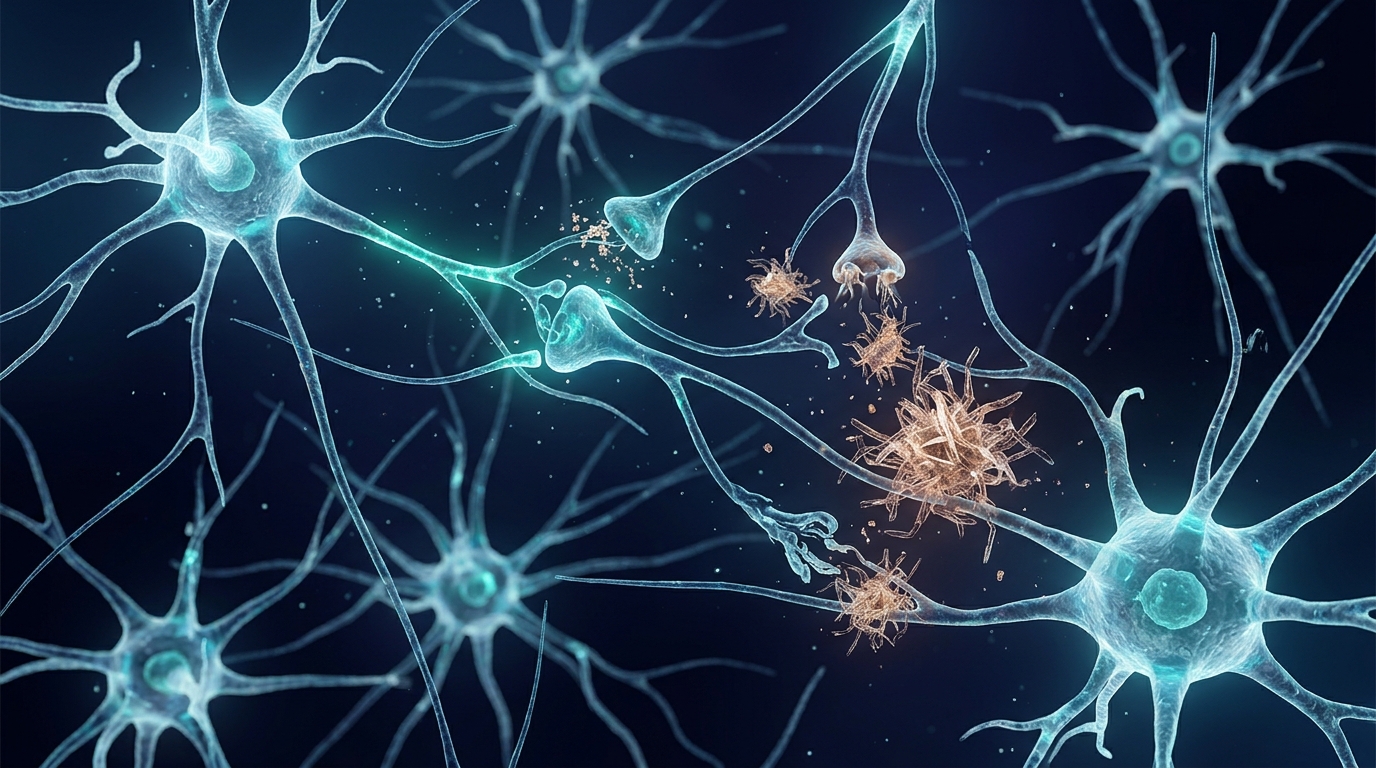
Loss of the cell adhesion molecule CADM3 worsens key pathological features of Alzheimer’s disease, according to a brief report published in Cellular & Molecular Biology Letters. The study, led by Sunyoung Park and Dong-Gyu Jo with colleagues in South Korea and Singapore, found that CADM3 expression was reduced in postmortem human Alzheimer’s brains and in transgenic mouse models of the disease. When the researchers genetically removed CADM3 from mice that also carry Alzheimer’s-related mutations, amyloid deposition, microglial activation, and disruption of synaptic genes all became more severe.
The team crossed Cadm3-deficient mice with 5xFAD mice, a transgenic strain that accumulates amyloid beta plaques because of mutations in the amyloid precursor protein and presenilin genes. In the resulting animals, the absence of CADM3 significantly increased levels of β-site APP cleaving enzyme 1, the enzyme responsible for the amyloidogenic cleavage step, as well as the C99 fragment of APP and the Aβ42 peptide. These molecular changes point toward greater production of the aggregation-prone form of amyloid beta when CADM3 is missing.
Beyond the amyloid measurements, the researchers assessed neuroinflammation and synaptic gene expression in the double-mutant mice. Microglial activation, an inflammatory response associated with plaque burden, was exacerbated by CADM3 loss. Synaptic gene dysregulation also intensified, consistent with the idea that synaptic stability and amyloid processing are linked through shared molecular regulators rather than proceeding as fully independent disease processes.
CADM3 belongs to the family of cell adhesion molecules that help maintain contacts between cells, and the study localized the protein to the plasma membrane of synaptic compartments in cultured neurons. This synaptic enrichment suggests a physical position from which CADM3 could influence both the structural integrity of synapses and the processing of APP, although the report describes the localization as part of the characterization of the molecule rather than a demonstration of mechanism in living brain tissue.
The human evidence came from analysis of CADM3 expression in postmortem Alzheimer’s disease brains, where levels were reduced. The authors frame this reduction as motivation for investigating CADM3 as a potential integrative regulator connecting synaptic instability with amyloidogenic processing, a connection they note has remained poorly understood in the Alzheimer’s field.
The conclusions are deliberately framed as suggestive rather than definitive. Their findings, the authors write, suggest that CADM3 modulates the intersection between synaptic adhesion and amyloid pathology. Because the work is presented as a brief report using postmortem human tissue and transgenic mice, it does not establish CADM3 as a therapeutic target in patients, and the available version is an early shared version subject to further edits before the final Version of Record appears.
What the study adds is a specific molecular candidate at a junction that Alzheimer’s research has struggled to connect. Synaptic dysfunction and amyloid accumulation are defining features of the disease, but the molecular regulators that tie them together have been difficult to identify. By showing that removing a single synaptic adhesion molecule increases both the enzyme that generates amyloid beta and the resulting Aβ42 burden, the report provides evidence that the two processes can be influenced through a shared point of control. Whether restoring CADM3 expression could reverse any of these changes was not addressed in the report.
Subject of Research: The role of the synaptic cell adhesion molecule CADM3 in amyloid and synaptic pathology in Alzheimer's disease
Article Title: CADM3 deficiency exacerbates amyloid and synaptic pathology in Alzheimer’s disease
Article References: Park, S., Lee, W., Kim, J. H., Kim, H. K., Cho, H., Lim, K., Han, S., Lai, M. K. P., Arumugam, T. V., Kim, S. H., & Jo, D.-G. (2026). CADM3 deficiency exacerbates amyloid and synaptic pathology in Alzheimer’s disease. Cellular & Molecular Biology Letters. https://doi.org/10.1186/s11658-026-01042-3
Image Credits: AI Generated
DOI: 10.1186/s11658-026-01042-3
Keywords: Alzheimer's disease, CADM3, amyloid beta, 5xFAD mice, BACE1, synaptic dysfunction, microglial activation, APP processing, cell adhesion molecules, Aβ42, neuroinflammation, postmortem brain analysis
News Source: Cassandra Pierce. (November 4, 2026). Loss of CADM3 worsens amyloid buildup and synaptic damage in Alzheimer’s mice. Scienmag.