While the National Science Foundation’s Karl G. Jansky Very Large Array (VLA) and the Atacama Large Millimeter/submillimeter Array (ALMA) frequently reveal important new facts about objects far beyond our own Milky Way Galaxy — at distances of many millions or billions of light-years — they also are vital tools for unraveling much closer mysteries, right here in our own Solar System. A pair of recent scientific papers illustrate how these telescopes are helping planetary scientists understand the workings of the Solar System’s largest planet, Jupiter, and its innermost moon Io.
Credit: Moeckel, et al., Bill Saxton, NRAO/AUI/NSF
While the National Science Foundation’s Karl G. Jansky Very Large Array (VLA) and the Atacama Large Millimeter/submillimeter Array (ALMA) frequently reveal important new facts about objects far beyond our own Milky Way Galaxy — at distances of many millions or billions of light-years — they also are vital tools for unraveling much closer mysteries, right here in our own Solar System. A pair of recent scientific papers illustrate how these telescopes are helping planetary scientists understand the workings of the Solar System’s largest planet, Jupiter, and its innermost moon Io.
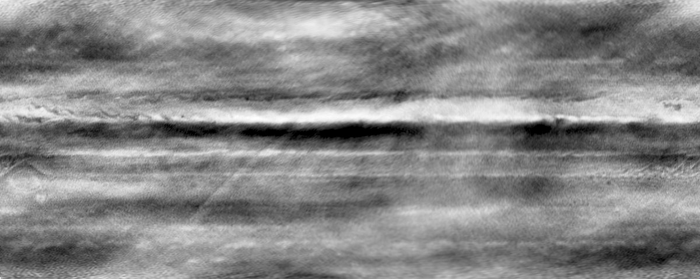
Jupiter’s atmosphere is complex and dynamic, and changes rapidly. To study the giant planet’s atmosphere at different depths, scientists combined observations made with instruments aboard NASA’s Juno spacecraft, in orbit around Jupiter, with observations with the VLA. They collected data about the distribution of the trace gas ammonia at different levels in the atmosphere to help determine the vertical structure of the atmosphere. These observations needed to be sufficiently detailed to combine Juno’s long wavelength observations with the VLA’s high-frequency resolution to understand vertical transport in the atmosphere. The spatial resolution of the ground-based VLA observations was comparable to that of the instrument aboard the spacecraft orbiting the planet. These observations produced the highest-resolution radio image yet made of Jupiter. This technique is helping the scientists advance their understanding of Jupiter’s deep atmosphere.
The paper is here.
Io, whose interior constantly is heated by strong gravitational tidal forces, is the most volcanically-active body in our Solar System. The moon has a tenuous atmosphere primarily composed of Sulphur Dioxide (SO2), which comes from eruptions of its many volcanoes and sublimation of its SO2 surface frost. Scientists have used ALMA to study the trace gases of Sodium Chloride (NaCl — table salt) and Potassium Chloride (KCl) in the atmosphere. They found that these compounds are largely confined in extent and are at high temperatures, indicating that they, too, are expelled by volcanoes. They also found that they are in different locations from where the SO2 is emitted, which suggests that there may be differences in the subsurface magma or in the eruptive processes between the volcanoes that emit SO2 and those that emit NaCl and KCl.
The paper is here.
The National Radio Astronomy Observatory is a facility of the National Science Foundation, operated under cooperative agreement by Associated Universities, Inc.
###
Journal
The Planetary Science Journal
Method of Research
Observational study