Over generations, a small North American frog has learned how to survive in a world that’s getting increasingly saltier. But new research from the University of Missouri suggests that adaptation comes with an unexpected tradeoff.
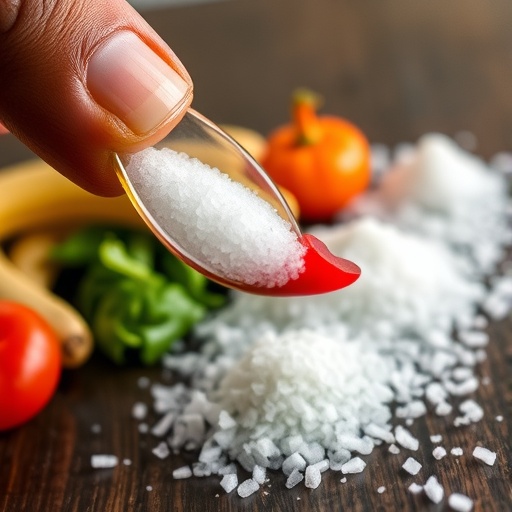
At Mizzou, scientists studying how wildlife responds to environmental changes are seeing firsthand the impact of rising freshwater salt levels across the United States. Largely driven by road deicers, mining, runoff and seawater intrusion, the shift can be dramatic and deadly for animals that rely on freshwater habitats.
Wood frogs, which return to the same ponds year after year to breed, often lay their eggs near roads and parking lots. That fidelity makes them especially likely to encounter salt runoff — and makes them an ideal model for Mizzou researchers studying how evolution plays out under environmental stress.
Now, Rick Relyea and colleagues have found that while wood frogs can evolve to tolerate salty water, that adaptation may come at a cost. Those same populations become more vulnerable to ranavirus, a common and often fatal disease affecting amphibians, reptiles and fish.
“We know these frogs can handle a saltier freshwater habitat,” Relyea, director of Mizzou’s Johnny Morris Institute of Fisheries, Wetlands and Aquatic Systems, said. “But when disease enters the picture, that advantage can quickly disappear.”
A growing environmental challenge
Salt pollution is no longer limited to cold, urban regions. For decades, salt levels in streams, rivers, wetlands, lakes and even groundwater have been creeping upward nationwide.
Even modest increases can disrupt basic biological functions of wood frogs, which absorb water directly through their skin. Previous studies have shown that some populations have adapted to these conditions over time. This new research examines what adaptation means when animals face other stressors, especially disease.
“Evolution can help these frogs survive one challenge,” said Relyea, who also holds the William J. Rucker Professorship in Fisheries and Wildlife at Mizzou’s College of Agriculture, Food and Natural Resources. “But that doesn’t mean it prepares them for every challenge.”
To explore the connection between salt exposure and disease, researchers studied tadpoles from nine wood frog populations living in ponds with dramatically different salt levels — ranging from relatively pristine water to concentrations hundreds of times higher than natural levels.
They found that tadpoles from the saltiest environments died at significantly higher rates after exposure to ranavirus. In other words, the same traits that help these frogs survive polluted water leave them less able to withstand certain infections.
Among the tadpoles that did survive, researchers found lower levels of the virus in their bodies, suggesting that some tadpoles carry traits that help fight off ranavirus infection.
The effect did not extend to all pathogens. Frogs from salt-adapted populations were no more likely than others to be infected by trematodes, a group of parasitic worms.
“That contrast is important,” Relyea said. “Adaptation isn’t simply good or bad. It reshapes how animals respond to different challenges.”
The hidden cost of survival
The findings highlight how environmental pressures can interact in subtle — and sometimes invisible — ways.
“From the outside, these frogs may look fine,” Relyea said. “It’s only when they’re hit with disease that the hidden costs of evolved salt tolerance show up.”
With continued road salt use and expanding development, freshwater habitats are likely to keep getting saltier. Relyea said more research is needed to understand how widespread these effects may be and whether other species face similar tradeoffs.
“If we want to better protect wildlife, we have to understand not just whether species can adapt — but what that adaptation costs them,” he said.
The study, “Salt in the wound: assessing pathogen susceptibility in amphibian populations across a gradient of salt pollution,” was published in the journal Ecology and Evolution. Co-authors are Jason T. Hoverman, Devin K. Jones and Melissa Lech from Purdue University; Jessica Hua, Bryon Tuthill and Isabela Tuthill from the University of Wisconsin, Madison; and Brian Mattes and Candace Schermerhorn from Rensselaer Polytechnic Institute.
Journal
Ecology and Evolution
DOI
10.1002/ece3.73598
Article Title
Salt in the Wound: Assessing Pathogen Susceptibility in Amphibian Populations Across a Gradient of Salt Pollution
Media Contact
Eric Stann
University of Missouri-Columbia
Office: 573-882-3346
Journal
Ecology and Evolution
DOI
10.1002/ece3.73598
Journal
Ecology and Evolution
DOI
10.1002/ece3.73598
Article Title
Salt in the Wound: Assessing Pathogen Susceptibility in Amphibian Populations Across a Gradient of Salt Pollution
Tags
/Life sciences
/Applied sciences and engineering/Environmental sciences/Ecology
/Applied sciences and engineering/Environmental sciences/Environmental chemistry/Surface water acidification
/Applied sciences and engineering/Environmental sciences/Environmental chemistry/Environmental toxicology
/Applied sciences and engineering/Environmental sciences/Environmental chemistry
/Applied sciences and engineering/Environmental sciences/Ecology/Aquatic ecology
/Applied sciences and engineering/Environmental sciences/Ecology/Aquatic ecology/Freshwater ecology
/Applied sciences and engineering/Environmental sciences/Ecology/Aquatic ecology/Aquatic ecosystems
/Life sciences/Evolutionary biology
/Life sciences/Genetics
/Physical sciences
/Physical sciences/Chemistry
/Physical sciences/Chemistry/Chemical compounds
/Physical sciences/Chemistry/Chemical compounds/Salts
/Physical sciences/Chemistry/Chemical compounds/Water
/Life sciences/Organismal biology
/Life sciences/Organismal biology/Anatomy
/Life sciences/Organismal biology/Anatomy/Immune system
/Life sciences/Organismal biology/Anatomy/Immune system/Adaptive immune system
/Life sciences/Organismal biology/Animals
/Life sciences/Organismal biology/Animals/Vertebrates
/Life sciences/Organismal biology/Animals/Vertebrates/Amphibians
/Life sciences/Organismal biology/Animals/Vertebrates/Amphibians/Frogs
bu içeriği en az 2000 kelime olacak şekilde ve alt başlıklar ve madde içermiyecek şekilde ünlü bir science magazine için İngilizce olarak yeniden yaz. Teknik açıklamalar içersin ve viral olacak şekilde İngilizce yaz. Haber dışında başka bir şey içermesin. Haber içerisinde en az 12 paragraf ve her bir paragrafta da en az 50 kelime olsun. Cevapta sadece haber olsun. Ayrıca haberi yazdıktan sonra içerikten yararlanarak aşağıdaki başlıkların bilgisi var ise haberin altında doldur. Eğer yoksa bilgisi ilgili kısmı yazma.:
Subject of Research:
Article Title:
News Publication Date:
Web References:
References:
Image Credits:
Keywords