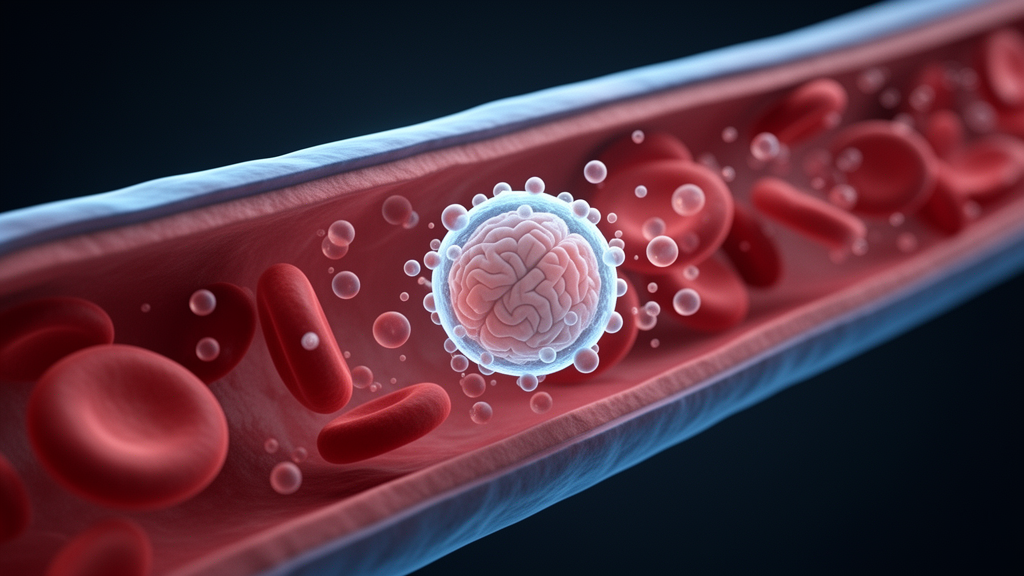
Diagnosing diseases of the brain has always been an awkward business. Neuroimaging can reveal structure but often misses the earliest molecular changes, while surgical biopsy is far too invasive for screening, and cerebrospinal fluid, though biochemically rich, demands a lumbar puncture that many patients are unwilling to undergo. A comprehensive review published in Frontiers in Neurology by researchers at Shandong University of Traditional Chinese Medicine argues that a far smaller actor may resolve this impasse: extracellular vesicles, lipid-wrapped nanoparticles released by virtually every cell in the body, including neurons, astrocytes and microglia deep behind the blood–brain barrier.
The appeal of these vesicles lies in their biology. Because they carry a selective cargo of proteins, lipids and non-coding RNAs that mirror their parent cell, vesicles shed by diseased neurons act as molecular messengers of brain pathology. Their lipid bilayer protects this cargo from enzymatic degradation in the bloodstream, allowing long-term biobanking, while their membranes can fuse with biological barriers and slip across the blood–brain barrier into peripheral circulation. Once there, they can be harvested from a simple blood draw, cerebrospinal fluid, urine or saliva, turning what was once inaccessible central pathology into a minimally invasive liquid biopsy.
The review, which searched PubMed, Web of Science and Embase from database inception to January 2026, distilled roughly 26 studies into primary clinical biomarker evidence, supported by about 15 mechanistic investigations. Alzheimer’s disease features most prominently. Pathological amyloid-beta plaques and phosphorylated tau tangles begin accumulating 15 to 20 years before symptoms appear, making early detection critical. Longitudinal work by Kapogiannis and colleagues in the Baltimore Longitudinal Study of Aging showed that neuron-derived vesicles from people who later developed Alzheimer’s carried elevated p-tau181, p-tau231 and phosphorylated IRS-1, with a multiplexed model achieving an area under the curve of 0.896 in training and 0.800 in testing cohorts.
Subsequent studies strengthened the case. Jia and colleagues found that Aβ42, total tau and p-tau181 in immunoenriched plasma vesicles performed comparably to established cerebrospinal fluid biomarkers, with a combined validation AUC of 0.980 for distinguishing Alzheimer’s patients from healthy controls. Beyond the canonical toxic proteins, vesicle-borne synaptic proteins such as synaptopodin and synaptophysin decreased in both Alzheimer’s and frontotemporal dementia, and importantly correlated with cognitive scores, whereas Aβ42 and p-tau181 did not. A p-tau396 signal that rises in Alzheimer’s but stays at baseline in frontotemporal dementia offers a potential differential marker, while declines in the complement regulator CD59 in astrocyte-derived vesicles and shifts in lysosomal proteins such as cathepsin D point to neuroinflammation and endolysosomal dysfunction years before clinical onset.
Parkinson’s disease tells a parallel story built around α-synuclein, the protein whose intracellular aggregation defines the disorder. Jiang and colleagues reported that α-synuclein in serum neuron-derived vesicles was approximately two-fold higher in Parkinson’s patients than in controls, achieving an AUC of 0.86, and, strikingly, was already elevated in people with rapid eye movement sleep behavior disorder, a prodromal condition. Adding clusterin to form an α-synuclein-to-clusterin ratio pushed differential diagnostic accuracy to 0.980 against other proteinopathies and 0.940 against multiple system atrophy. A later meta-analysis confirmed elevated total α-synuclein across plasma vesicle studies, and proteomic profiling by Kitamura and colleagues identified vesicle-associated apolipoprotein A1 as strongly and negatively correlated with Hoehn and Yahr disease stage.
Non-coding RNAs add a second analytical dimension. In cerebrospinal fluid vesicles, a miR-153 and miR-409-3p combination reached an AUC of 0.990 for Parkinson’s discrimination, while a serum panel of miR-19b, miR-24 and miR-195 achieved 0.946. Bioinformatic screening by He and colleagues went further, mapping serum vesicle microRNAs onto Hoehn–Yahr stages: miR-374a-5p and miR-374b-5p rose across all active phases, miR-199a-3p fell specifically at stage II, miR-28-5p peaked at stage III, and miR-22-5p and miR-151a-5p diverged at stage IV, hinting at non-invasive molecular staging of a disease currently assessed largely by clinical examination.
The review extends this logic across the wider neurological spectrum. In acute ischemic stroke, vesicle SIRT2 achieved an AUC of 0.838, miR-134 correlated with both stroke severity scores and infarct volume, and miR-422a distinguished acute from subacute phases with an AUC of 0.957, while a five-circular-RNA brain-vesicle panel reached 0.921 with 95 percent sensitivity. In glioma, where tissue diagnosis currently requires surgery, vesicle EGFRvIII transcripts detected high-grade tumors with roughly 80 percent accuracy, and a three-circular-RNA signature distinguished high-grade astrocytoma from controls with perfect accuracy in a small single-center cohort. In multiple sclerosis, vesicle myelin oligodendrocyte glycoprotein rose during relapses, and a miR-122-5p and miR-196b-5p panel separated relapsing patients from remission with an AUC of 0.866. In Huntington’s disease, mutant huntingtin was detectable in plasma neuron-derived vesicles, and a combined model of tRF-Gly-GCC, miR-27a-3p and neurofilament light chain distinguished premanifest carriers with an AUC of 0.908. In amyotrophic lateral sclerosis, vesicle TDP-43 separated patients from controls with AUCs of 0.94 to 0.99 across two independent cohorts.
Yet the review is notably candid about the field’s unresolved problems. Signals overlap across diseases: miR-21 rises both in glioma and in the subacute phase of stroke, and neurofilament light chain climbs in Alzheimer’s, ALS, Huntington’s and stroke alike, suggesting these molecules may reflect shared processes such as neuroinflammation and axonal injury rather than specific entities. Attribution is equally thorny. The L1CAM immunocapture technique widely used to isolate neuron-derived vesicles from blood was challenged by Norman and colleagues, who found L1CAM mostly in soluble protein fractions, though a later single-vesicle study found L1CAM-positive vesicles co-expressing neuronal markers in 30 to 63 percent of cases. Blood vesicles are also overwhelmingly derived from blood cells and endothelium, so CNS signals may be diluted or confounded by peripheral contributions.
Standardization and validation gaps loom just as large. Pre-analytical factors such as fasting, platelet activation during venipuncture, hemolysis, lipoprotein contamination and freeze–thaw cycles can all distort vesicle measurements, and isolation techniques trade purity against yield. Although a systematic review of 471 vesicle-related clinical trials found that nearly half assess diagnostic applications, only 11 percent examined vesicle subpopulations, and reporting of isolation methods remains incomplete. Exceptional results, such as 100 percent accuracy in small cohorts, may reflect overfitting rather than clinical readiness. The authors point to the urinary ExoDx Prostate assay, which earned FDA Breakthrough Device Designation after prospective validation, as a template, and call for standardized MISEV2023-compliant workflows, covariate adjustment, and prospective multicenter validation before brain-derived vesicle panels can move from promising research candidates to clinically deployable diagnostics.
Subject of Research: Extracellular vesicles as liquid biopsy biomarkers for diagnosing central nervous system diseases
Article Title: Utility of extracellular vesicles in the diagnosis of central nervous system diseases
Article References: Wang, M., Yang, J., Gao, C., Qu, S., Mi, H., Guo, Y., Gui, T., & Gai, Z. (2026). Utility of extracellular vesicles in the diagnosis of central nervous system diseases. Frontiers in Neurology, 17, Article 1959745. https://doi.org/10.3389/fneur.2026.1959745
Image Credits: AI Generated
DOI: 10.3389/fneur.2026.1959745
Keywords: extracellular vesicles, liquid biopsy, blood-brain barrier, Alzheimer's disease, Parkinson's disease, biomarkers, neurodegenerative disease, stroke, glioma, multiple sclerosis, amyotrophic lateral sclerosis, exosomes
News Source: Cassandra Pierce. (October 19, 2026). Tiny Brain Vesicles in Blood Could Transform Diagnosis of Neurological Disease. Scienmag.