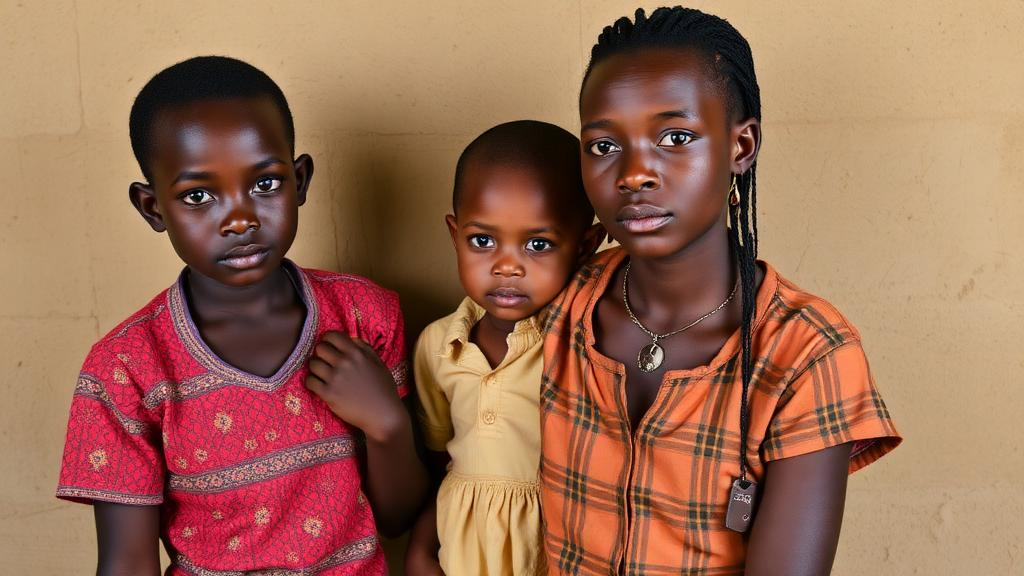
Losing a child can leave a lasting mark on a family’s reproductive history, even as child survival improves and the number of children women have generally declines. A new analysis of Malawi Demographic and Health Survey data suggests that the death of a child under age five remains strongly associated with having more children, with the effect spanning reproductive ages and three decades of social and health change. The researchers call the pattern a “ghost of mortality”: past bereavement continues to shape later pregnancies, births and family size long after the immediate crisis of losing a child has passed.
The study pooled data from six Malawi Demographic and Health Surveys conducted between 1992 and 2024. Using survey-weighted Poisson regression, the team examined whether women who had experienced one or more under-five deaths had higher parity, meaning the total number of children they had ever borne, than women whose children had all survived. They also tested whether the association varied by age and historical period, and separately examined complete birth histories to determine whether women who lost a child subsequently went on to have another baby.
Each additional under-five death was associated with a 13.9% higher incidence rate of parity, with an incidence rate ratio of 1.139 and a p-value below 0.001. The relationship was much stronger when women were grouped by whether they had experienced child loss at all. Compared with women reporting no loss, those with one death had an incidence rate ratio of 1.788 for parity, while those with two or more losses had a ratio of 2.637. In practical terms, the models indicate that cumulative bereavement is linked not merely to a small statistical shift, but to markedly different reproductive histories.
Age-specific models revealed an important pattern. Relative differences in parity were greatest among younger women, meaning the association between child loss and additional births was particularly pronounced earlier in the reproductive life course. Absolute differences, however, increased with age, reflecting the additional time available for women to have further pregnancies. The distinction is technically significant: relative measures emphasize how many times larger one rate is than another, whereas absolute margins describe the estimated number of additional children. Together, the results suggest that loss can be associated with both an elevated intensity of childbearing and a longer period during which births may occur.
The complete birth histories offered a more direct view of what happened after a loss. Among women who had experienced at least one under-five death, 85.5% subsequently had another birth. This finding does not mean that every child death was followed by another pregnancy, nor does it establish that additional births were replacements in a purely mechanical sense. People’s reproductive decisions can reflect economic conditions, family expectations, social norms, maternal health, partner preferences, access to contraception and the timing of bereavement. Still, the high proportion of subsequent births is consistent with the broader parity analysis and shows that child loss remained closely connected to continued childbearing.
The findings also reveal that progress in child survival has not erased the relationship between mortality and fertility. Although relative differences were smaller in more recent survey periods, the association persisted across age groups and historical periods. This matters because Malawi has experienced substantial reductions in under-five mortality, creating a different demographic environment from the high-mortality settings in which replacement fertility was most often discussed. Even so, the new results indicate that the demographic imprint of a child’s death has not vanished with improved survival rates.
Several mechanisms could plausibly link child loss to later births. One possibility is “replacement,” in which parents have another child after a loss. Another is insurance: additional children may be intended to protect a family against future bereavement, although children are not interchangeable with the specific child who died. Social networks, community responses to grief, the roles expected of mothers and fathers, and the perceived security of larger families may also influence the decision. The survey data identify these patterns at the population level, but they do not directly establish which explanation dominates or whether every additional birth was intended as a replacement.
From a public-health perspective, the results argue against treating child death as a discrete event that ends once a bereaved family leaves the clinic or community. Reproductive-health services need to remain available during and after loss, with nonjudgmental support for women and couples deciding whether and when to have another child. Counseling, access to contraception, maternal mental-health care, social support and follow-up after a child’s death are all relevant components. The aim is not to tell families how many children they should have, but to ensure that reproductive decisions after loss are informed, voluntary and supported.
The study used publicly available, fully de-identified survey data, and its statistical approach accounts for survey sampling weights while allowing the researchers to compare age groups, loss categories and survey periods. Its findings do not prove that child loss causes higher parity; women facing different health risks, poverty levels or family circumstances may differ in both child survival and fertility. But the size and persistence of the observed associations, together with the birth-history result, provide compelling evidence that under-five death remains an important factor shaping reproductive lives in Malawi. As survival improves, the demographic “ghost” of child loss may become less common, yet it has not vanished from the country’s birth histories.
Subject of Research: Association between under-five child loss and women’s parity in Malawi from 1992 to 2024
Article Title: The ghost of mortality: child loss and parity in Malawi, 1992–2024
Article References: Kachola, S. D., Mwandama, R., Chipala, G. A., & Chirwa, G. C. (2026). The ghost of mortality: child loss and parity in Malawi, 1992–2024. BMC Public Health. https://doi.org/10.1186/s12889-026-29732-9
Image Credits: AI Generated
DOI: 10.1186/s12889-026-29732-9
Keywords: Malawi, child loss, under-five mortality, fertility, parity, replacement fertility, demography, Demographic and Health Surveys, family planning, maternal health, ghost, mortality
News Source: Ophelia Keating. (October 19, 2026). Malawi’s Lost Children Still Shape Mothers’ Births Decades On. Scienmag.