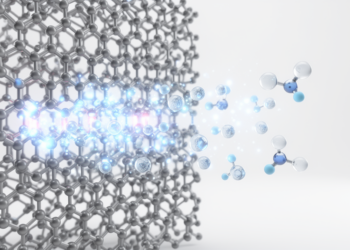
Defective UiO-66 Catalyst Converts Methane to Acetic Acid
Researchers developed a defective UiO-66 catalyst that converts methane to acetic acid with 84% selectivity under mild conditions.
Researchers developed a defective UiO-66 catalyst that converts methane to acetic acid with 84% selectivity under mild conditions.

A 2025 review in Catal details six advanced structural strategies for ultrafine platinum group metal nanostructures that enhance fuel cell ...

A synthesized lithium, zirconium, and nickel multi-metal oxide nanocomposite exhibited concentration-dependent in vitro cytotoxicity against cultured HepG2 liver carcinoma cells ...

Researchers designed and simulated a compact two-dimensional photonic crystal multiplexer operating at 1550 nanometers that demonstrates high data rates and ...
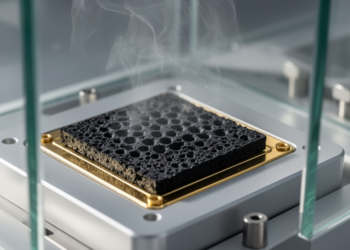
Tuning the acid hydrolysis duration of lavender straw nanocellulose produces mesoporous biochar with abundant oxygen vacancies and natural calcium doping ...

A new study shows that engineering surface defects in Ru-Ceria catalysts enhances methane dry reforming efficiency under photo-thermal conditions by ...

Hollow nickel sulfide spheres modified with electron-beam-induced sulfur vacancies achieved a low overpotential of 74.2 millivolts at 10 milliamperes per ...
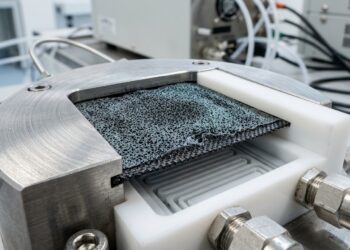
A comprehensive scientific review outlines how atomic-scale surface functionalization of two-dimensional nanomaterials enables sustainable electrocatalytic urea synthesis by directing carbon-nitrogen ...

A new review details how doped, defective, and metal-decorated carbon catalysts selectively convert oxygen to hydrogen peroxide as a sustainable ...

A new review in Ionics summarizes how defect engineering, through surface delithiation and bulk vacancy modulation, can improve the air ...

A defect-and-entropy co-engineered high-entropy layered double hydroxide cuts the oxygen evolution overpotential to 256 mV at 10 mA/cm2 and runs ...

Adjusting the nitrogen-to-boron ratio in sawdust-derived biochar boosted sulfamethoxazole degradation rates 2.35-fold by shifting the material from adsorption-driven to catalysis-driven ...

A new review outlines how atomically precise catalyst interfaces, from dopants and vacancies to curved surfaces and local electric fields, ...
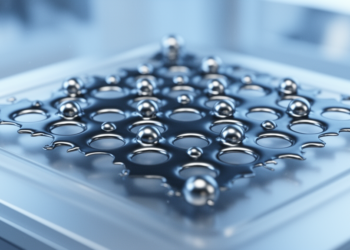
A review finds that defects in liquid-metal-derived two-dimensional materials arise from coupled oxidation, fluid dynamics, printing, and transfer, creating opportunities ...
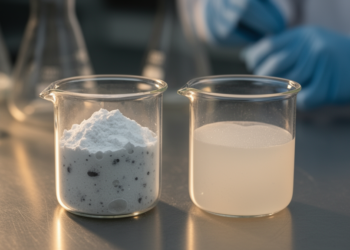
A review finds that defect formation, removal opportunities and verification methods differ across hydrothermal, sol–gel and CVD routes for high-purity ...

Researchers in Pakistan have coated cotton fabric with a defect-engineered g-C3N4/Zn-doped TiO2 heterojunction that degrades 98 percent of a model ...

Researchers engineered deliberate structural defects into a nickel metal-organic framework, boosting glucose-to-lactic acid conversion and enabling raw biomass feedstocks such ...

Researchers in India show that zinc substitution in lead-free bismuth sodium titanate ceramics stabilizes a pseudo-cubic structure, deepens relaxor behavior, ...

A comprehensive review details how defect engineering, phase control, and multicomponent design turn transition metal dichalcogenides into broadband electromagnetic wave ...
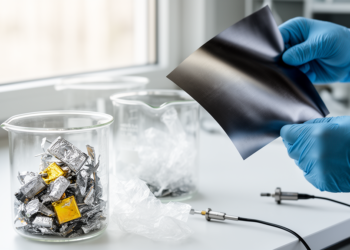
Researchers co-pyrolyzed spent lithium-ion battery cathodes and plastic waste into defect-engineered carbon nanotube absorbers that block microwaves at ultrathin thicknesses.