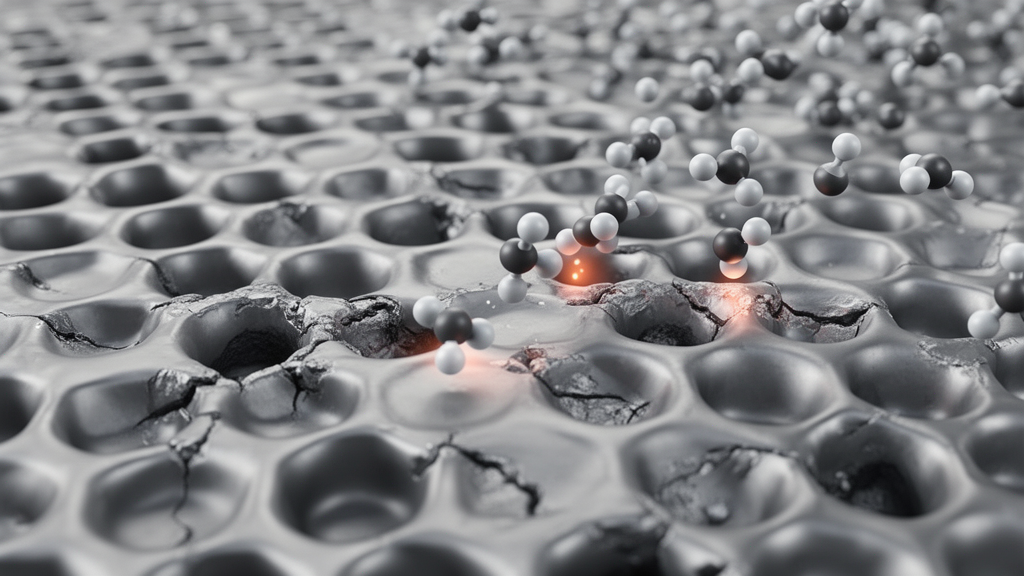
Published in the journal Carbon Neutrality, the study reveals that controlling the duration of hydrothermal self-assembly allows for the precise manipulation of surface atomic disorder, which directly correlates with enhanced catalytic performance and stability. This work provides a theoretical foundation for designing next-generation catalysts that utilize solar energy to drive energy-intensive chemical processes, potentially reducing carbon footprints while fixing solar energy.
The study focuses on the methane dry reforming (MDR) reaction, a process that converts methane and carbon dioxide into hydrogen and carbon monoxide. However, the reaction typically requires harsh reaction conditions. The research team investigated how photo-thermal catalysis (PTC) could mitigate these challenges by using renewable solar energy as a power source. In this system, short-wavelength light triggers the photoelectric effect, while long-wavelength light increases temperature through phonon vibrations, creating a dual mechanism that enhances catalytic activity compared to purely thermal systems.
To achieve superior performance, the authors synthesized a series of Ru-Ceria catalysts with varying defect structures by adjusting the duration of hydrothermal self-assembly treatment. The catalysts were designated as 1H, 12H, and 24H, corresponding to self-assembly times of 1, 12, and 24 hours, respectively. High-resolution transmission electron microscopy (HR-TEM) confirmed that as the self-assembly time increased, the ceria crystals grew and elongated along the [110] facet, forming nanorods with average lengths of 12.6 nm, 26.9 nm, and 56.7 nm. This growth process resulted in a decrease in the proportion of the [110] facet and a more pronounced long-range atomic order in the longer-treated samples.
Characterization revealed a distinct difference between surface and bulk defects. The 1H catalyst, with the shortest treatment time, exhibited the highest concentration of surface defects due to incomplete atomic ordering. In contrast, the 24H catalyst displayed the most bulk-phase defects, as indicated by electron paramagnetic resonance (EPR) signals for oxygen vacancies. The researchers noted that surface defects are more directly associated with the catalytic reaction, whereas bulk defects influence the material’s internal structure. This distinction is critical because the surface serves as the primary light-responsive region in photo-thermal catalytic systems.
X-ray photoelectron spectroscopy (XPS) analysis showed that the 1H catalyst had the highest proportion of metallic ruthenium (Ru0) and cerium in the +3 oxidation state (Ce3+). The high Ru0 content indicates a more filled 4d orbital state, which is advantageous for the dissociation of C-H bonds in methane, a step widely considered the rate-determining step in MDR. Additionally, the high Ce3+ concentration serves as a semi-quantitative indicator of surface oxygen vacancies, which facilitate the adsorption of carbon dioxide. The coupling of these sites at the Ru-O-Ce interface enables the efficient interaction between methane dissociation and carbon dioxide adsorption.
Optical property measurements demonstrated that the surface defect structure significantly influences charge carrier dynamics. Steady-state and transient photoluminescence spectroscopy showed that the 1H catalyst, with its disordered surface atoms, exhibited longer photogenerated carrier lifetimes and lower recombination rates. This suggests that surface defects act as electron traps, preventing the rapid recombination of electron-hole pairs and allowing carriers to migrate to active sites. Photoelectric current experiments further confirmed that the 1H catalyst was more prone to drive carrier migration upon light excitation, highlighting the importance of surface disorder in light utilization efficiency.
Catalytic performance evaluations under both thermal (TC) and photo-thermal (PTC) conditions at 300 °C and 2.9 W·cm−2 revealed that the 1H catalyst achieved the highest formation rates for hydrogen and carbon monoxide. Under TC conditions, a linear correlation was observed between product formation rates and the exposed proportion of Ru0. However, under PTC conditions, this correlation weakened, indicating that other factors influenced the reaction. The researchers proposed that the enhanced utilization of photogenerated carriers by surface defects played a crucial role in the PTC system. A weighted analysis incorporating both Ru0 content and oxygen vacancy concentration restored a strong linear fit, confirming the synergistic effect of these structural features.
Stability tests over 20 hours showed that the 1H catalyst maintained its activity with a slight increase, while the 24H catalyst exhibited slight deactivation. Post-reaction characterization revealed that the 24H catalyst suffered from carbon deposition due to excessive methane dissociation without sufficient gasification of carbon species. In contrast, the 1H catalyst retained its defect-rich structure and showed no significant carbon accumulation. The higher reactivity of lattice oxygen in the 1H catalyst facilitated the gasification of surface carbon species through the Mars-van Krevelen mechanism, thereby preventing catalyst deactivation.
In situ diffuse reflectance infrared Fourier transform spectroscopy (DRIFTs) identified key intermediate species during the reaction. The 1H catalyst displayed the strongest signals for adsorbed carbonate (CO3*) and hydrocarbon (CHx*) species, confirming its superior ability to adsorb carbon dioxide and dissociate methane. Under PTC conditions, the intensity of these signals increased, indicating that light irradiation enhanced both reactant adsorption and dissociation. The study also found that light promoted the formation of hydrogen by enhancing the filling of Ru 4d orbitals, which accelerated the H-H bond formation step.
The research concludes that targeted surface defect engineering is a rational strategy for improving the light utilization efficiency of photo-thermal catalysts. By creating a disordered surface atomic arrangement, the catalysts can more effectively separate and utilize photogenerated charge carriers. This approach not only enhances the initial catalytic activity but also improves long-term stability by promoting the removal of carbon deposits. The findings provide valuable insights for the design of efficient catalysts for solar-driven chemical processes, contributing to the broader goal of carbon neutrality.
The study, published in Carbon Neutrality, is an original article that systematically characterizes the physicochemical properties of the synthesized Ru-Ceria catalysts to establish structure-function relationships. The research team utilized a combination of bulk and surface structural characterizations, including X-ray diffraction, Raman spectroscopy, and electron paramagnetic resonance, to distinguish between different types of defect sites. These methods allowed the authors to quantify how the self-assembly duration influenced the crystallinity and lattice constants of the ceria support. The findings indicate that prolonged self-assembly leads to a larger lattice constant, a shift observed in the XRD patterns towards lower angles, which is attributed to bulk-phase defects induced during nucleation and growth. This structural evolution is further supported by Raman spectra, where the F2g peak shifts to higher wavenumbers as the self-assembly time increases, consistent with the occurrence of these internal defects.
Atomic-resolution transmission electron microscopy combined with energy-dispersive X-ray spectroscopy mapping confirmed that the ruthenium species are atomically dispersed on the catalyst surface. This single-atom dispersion is a critical structural feature, as it forms the basis for the catalytic activity of the Ru-Ceria system. The absence of detectable ruthenium-related signals in the XRD patterns and Raman spectra is consistent with this atomic dispersion, suggesting that the metal sites are isolated rather than forming larger clusters. The study highlights that the preparation method effectively produces these single-atom structures, which are essential for the specific electronic interactions described in the paper.
The electronic structure of the catalysts was further probed using in situ irradiation X-ray photoelectron spectroscopy to understand the behavior of charge carriers under light exposure. When light was irradiated onto the catalyst surfaces, the proportion of metallic ruthenium increased for all three samples, indicating that photoelectrons transferred to the ruthenium sites. This transfer enhances the electronic filling state of the ruthenium 4d orbitals, which is directly linked to the improved ability to dissociate methane. Simultaneously, the proportion of Ce3+ increased, and the binding energy of oxygen 2p orbitals decreased, suggesting that photogenerated electrons migrate from negatively charged oxygen centers to adjacent positively charged ruthenium and cerium centers. This migration process is fundamental to the photo-thermal catalytic mechanism, as it facilitates the activation of reactants at specific active sites.
The study also examined the chemical properties of the catalysts through hydrogen programmed reduction and carbon dioxide programmed desorption experiments. The 1H catalyst exhibited the lowest temperature for the reduction signal of ruthenium sites, at 105 °C, which is attributed to its defect-rich characteristic. The weaker ruthenium-oxygen coordination strength in this sample makes it easier for ruthenium to lose coordinated oxygen atoms during the reduction process. In contrast, the 24H catalyst, with its long-range ordered atomic structure, showed a higher resistance to oxygen release. The carbon dioxide desorption experiments revealed that the 1H catalyst had the highest desorption temperature and adsorbed carbon dioxide content, indicating a stronger interaction with the reactant. A unique weak chemisorbed carbon dioxide signal was observed at around 250 °C for the 1H catalyst, suggesting a higher concentration of adsorbed reactants during the reaction. These chemical properties, combined with the enhanced methane dissociation capacity, form the basis for the superior catalytic performance observed in the photo-thermal system.
The operando experiments provided insights into the dynamic changes in intermediate species during the reaction. The in situ diffuse reflectance infrared Fourier transform spectroscopy identified the presence of b-carbonate, hydrocarbon, and carboxyl species on the catalyst surface. The intensity of these signals varied with the defect structure and the presence of light, confirming that the surface defects play a crucial role in the adsorption and transformation of reactants. The study established a linear correlation between the signal intensity of these intermediates and the catalytic performance, linking the microscopic surface processes to the macroscopic reaction rates. This correlation helps to elucidate the mechanism by which surface defect engineering enhances the efficiency of the methane dry reforming reaction under photo-thermal conditions.
Subject of Research: Photo-thermal catalytic methane dry reforming using defect-engineered Ru-Ceria catalysts
Article Title: Defect engineering based on lattice plane oriented growth in Ru-Ceria system for photo-thermal catalytic methane dry reforming
Article References: Zhang, Z.-Y., Su, D.-M., Li, R.-T., Feng, C.-Y., Luo, L., Yang, G.-D., & Xie, T. (2026). Defect engineering based on lattice plane oriented growth in Ru-Ceria system for photo-thermal catalytic methane dry reforming. Carbon Neutrality, 5(1), Article 2. https://doi.org/10.1007/s43979-025-00155-6
Image Credits: AI Generated
DOI: 10.1007/s43979-025-00155-6
Keywords: methane dry reforming, photo-thermal catalysis, Ru-Ceria catalysts, defect engineering, solar energy, carbon neutrality, catalytic stability, surface defects, hydrogen production, ceria nanorods, Defect, engineering
News Source: Denise Maddox. (November 9, 2026). Surface Defects Enhance Methane Reforming in Ru-Ceria Catalysts. Scienmag.