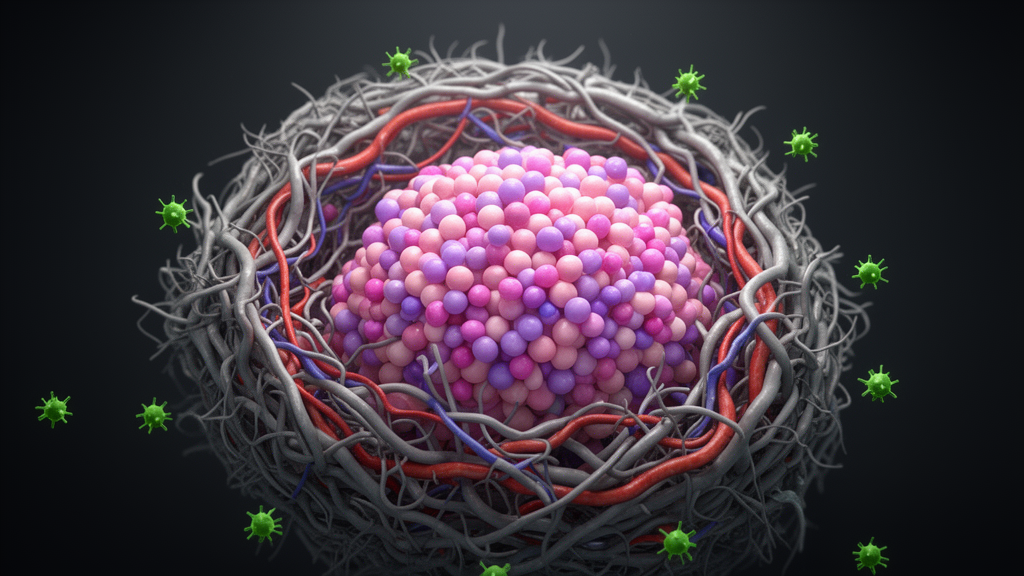
An orthotopic syngeneic mouse study found that implanting A20 B-cell lymphoma cells inside the brain was associated with a more suppressive tumor immune environment than implanting the same cells beneath the skin. Intracranial tumors had more exhausted T cells, fewer cytotoxic CD8+ T cells, greater regulatory T-cell expansion and reduced CD4+ T-cell activation, while dendritic cells and macrophages showed increased expression of immunoregulatory markers.
Researchers implanted A20 parental or GFP-expressing lymphoma cells into female BALB/c mice and compared those tumors with subcutaneous A20 tumors in the same strain. Brain tumors were introduced stereotactically into the right caudate putamen, whereas peripheral tumors were injected into the flank. At necropsy, investigators collected tumors with the deep cervical or inguinal tumor-draining lymph nodes, respectively. Flow cytometry, immunohistochemistry, immunofluorescence and histology assessed immune-cell populations, activation and exhaustion markers, regulatory molecules, vascular structures and tumor morphology. The work was a controlled animal study rather than a clinical investigation.
The intracranial model produced macroscopic lesions containing large atypical lymphoid cells with perivascular growth extending beyond the main tumor mass, a histological pattern resembling features described in human primary central nervous system lymphoma. Across A20-GFP-positive mice, the overall tumor take rate was 70%, or 26 of 37 animals, ranging from 43% after injection of 5 × 10^4 cells to 91% after 1 × 10^6 cells. For the parental line, the overall take rate was 76%, or 38 of 49 mice. A dose of 1 × 10^6 cells produced the most consistent take rate and was used in subsequent experiments.
Tumor-draining lymph nodes associated with intracranial tumors contained fewer central-memory and effector-memory CD8+ T cells, and their CD8+ T-cell population showed lower proliferation than the corresponding population in nodes draining subcutaneous tumors. The nodes also had higher proportions of CD25-positive, FOXP3-positive regulatory CD4+ T cells. CD4+ T cells in intracranial tumor-draining nodes had higher expression of the activation markers CD69 and OX40, but no significant differences in memory subsets, proliferation or exhaustion markers were reported for that population.
Dendritic-cell composition also differed between the lymph-node environments. Nodes draining intracranial tumors had fewer XCR1-positive dendritic cells and more DC2 cells than those draining subcutaneous tumors. Expression of the co-stimulatory molecules CD40 and CD86 did not differ significantly between locations. In contrast, migratory CCR7-positive, DC1 and XCR1-positive dendritic-cell subsets in intracranial tumor-draining nodes showed higher CD200 and PD-L1 expression. The measured pattern therefore involved dendritic-cell composition and immunoregulatory marker expression rather than a complete absence of dendritic cells or loss of all co-stimulatory markers.
The strongest differences were found within the tumors. Compared with subcutaneous tumors, intracranial tumors contained higher frequencies of PD-1-positive, TIM-3-positive CD4+ and CD8+ T cells, with each comparison reported at p < 0.0001. They also had more regulatory CD4+ T cells, fewer CD107a-positive, granzyme-B-positive cytotoxic CD8+ T cells and lower frequencies of activated CD4+CD69+OX40+ cells. Ki67 measurements indicated greater proliferation in both CD4+ and CD8+ T-cell compartments in subcutaneous tumors. These observations separate the lymph-node response, which included increased CD4+ activation, from the more suppressive phenotype measured after T cells entered intracranial tumors.
Dendritic-cell changes within the tumor site were more complex than those in draining lymph nodes. Intracranial tumors had expanded DC2 populations and reduced DC1 populations, while XCR1-positive cells were enriched relative to subcutaneous tumors. CD40 and CD86 expression was elevated on DC2 cells but reduced on migratory CCR7-positive dendritic cells in intracranial tumors. Most dendritic-cell subsets also had higher CD200 and PD-L1 expression. Macrophages followed a similar pattern: intracranial tumor macrophages had higher PD-L1 and lower CD40 expression than their subcutaneous counterparts. The measurements thus linked the suppressive phenotype to changes across dendritic cells, macrophages and T cells.
Blood-vessel architecture also differed within intracranial tumors. CD31-positive endothelial cells formed enlarged, dilated vessels in the tumor core, whereas capillary morphology at the tumor edge resembled that in normal brain. The number of CD31-positive structures did not differ significantly among normal brain, tumor periphery, border and core, suggesting that vessel dilation rather than increased vessel count was the principal measured difference. The authors stated that these vascular changes could affect immune-cell trafficking, localization and function, but the study did not directly establish that connection.
The findings come from a single syngeneic A20 mouse model, which does not reproduce the full biological and genetic complexity of human primary central nervous system lymphoma. Immune responses were assessed at one endpoint, limiting analysis of when immune dysfunction developed. The experiments also did not define the molecular mechanisms responsible for dendritic-cell checkpoint upregulation, directly test dendritic-cell antigen-presenting capacity or use ex vivo functional assays to measure T-cell cytotoxicity. The results therefore support a biological association between CNS localization and a suppressive immune environment in this model; they do not demonstrate improved treatment or clinical benefit in patients.
Subject of Research: CNS lymphoma location and tumor immune dysfunction in a syngeneic mouse model
Article Title: CNS localization drives a profoundly immunosuppressive microenvironment in B‑cell lymphoma
Article References: Niemi, J., Badillo-Godinez, O., & Hellström, M. (2026). CNS localization drives a profoundly immunosuppressive microenvironment in B‑cell lymphoma. Scientific Reports, 16(1), Article 32072. https://doi.org/10.1038/s41598-026-75330-5
Image Credits: AI Generated
DOI: 10.1038/s41598-026-75330-5
Keywords: primary CNS lymphoma, A20 mouse model, tumor microenvironment, T-cell exhaustion, regulatory T cells, dendritic cells, PD-L1, CD200, immune suppression, orthotopic model, localization, drives
News Source: Nathaniel Bowman. (October 20, 2026). Syngeneic mouse study links CNS lymphoma location to broader immune dysfunction. Scienmag.