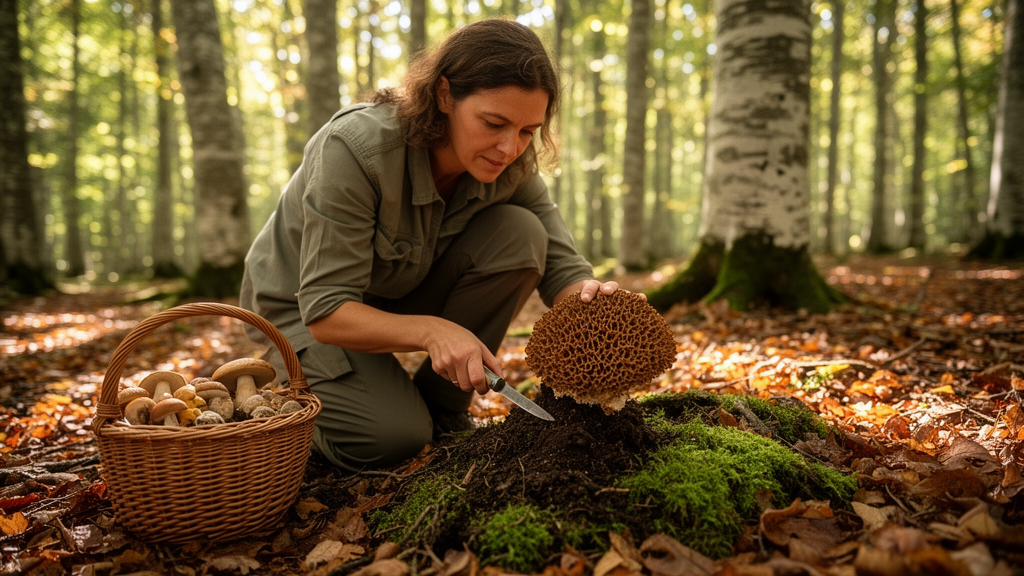
An Italian field survey combined with literature records documents the nomenclature, habitat associations and geographic distribution of 15 medicinal mushroom taxa. The study covered fresh basidiomata collected during periodic observations from 2021 through 2025 in selected Italian regions and supplemented those observations with published data for other parts of the country.
The research focused on taxa of applied interest that are marketed in mushroom-based products. It included Agaricus bisporus, Auricularia auricula-judae, Ganoderma lucidum, Grifola frondosa, Hericium erinaceus, Inonotus obliquus, Laetiporus sulphureus, Pleurotus ostreatus, Schizophyllum commune and Trametes versicolor, together with Pleurotus nebrodensis and four varieties of P. eryngii: var. eryngii, var. elaeoselini, var. ferulae and var. thapsiae.
Field observations were conducted weekly or fortnightly, with monthly observations during summer, in forest ecosystems, urban areas, public and private gardens, and botanical gardens. The authors investigated Puglia, Calabria, Emilia-Romagna, Sardegna, Sicilia and Toscana, collecting fresh basidiomata from meadows, pastures, and living or dead plants. Distribution information for other Italian regions came from the 2005 Checklist of Basidiomycota and cited studies, so the dataset combined recent observations with previously published records rather than representing a new nationwide survey conducted in every region.
Fruit bodies were identified through their macroscopic and microscopic characteristics. Macroscopic observations included pileus, flesh, lamellae, stipe, growth pattern, colour and spore-print characteristics. Microscopic examination covered spores, basidia, asci, cystidia, pileipellis and stipe-surface structures, using distilled water, immersion oil and reagents including Melzer’s reagent, potassium hydroxide, ammoniated Congo red and Cotton blue-lactic acid. Dried specimens were deposited in the Fungarium of the Herbarium SAF at the University of Palermo under the codes SAFMM01 through SAFMM15.
The habitat records were assigned to EUNIS terrestrial habitat categories and covered settings including Mediterranean xeric grasslands, permanent meadows and pastures, coastal dune forests, deciduous and evergreen broadleaf woods, beech and chestnut forests, conifer forests, riparian woodland, hedgerows, plantations, parks and gardens. Commonly reported hosts included oak, beech, chestnut, olive, birch and several other broadleaf and conifer trees. Some medicinal taxa were also recorded on ornamental trees, plants used in reafforestation and fruit trees.
Specific associations were reported for several taxa. Ganoderma lucidum occurred on stumps of holm oak, sweet chestnut and olive, while Grifola frondosa was recorded on stumps of holm oak and sweet chestnut. Hericium erinaceus occurred on dead and living sessile oak, and Inonotus obliquus was reported from trunks of living birch. The four P. eryngii varieties and P. nebrodensis were categorized as terricolous saprotrophs associated with rotting roots of Apiaceae: Eryngium campestre and E. maritimum for var. eryngii, Elaeoselinum asclepium for var. elaeoselini, Ferula communis for var. ferulae and Thapsia garganica for var. thapsiae.
Ecologically, six taxa were classified as terricolous saprotrophs, five as saprotrophs on wood and four as parasites that also act as saprotrophs after their hosts die. Eight taxa were described as very frequent in Italy: A. bisporus, A. auricula-judae, G. lucidum, L. sulphureus, P. eryngii var. eryngii, P. ostreatus, S. commune and T. versicolor. Hericium erinaceus had sporadic records in 11 regions. Pleurotus nebrodensis was described as rare, endangered and endemic to Sicilia, where it was associated with rotting roots of Prangos ferulacea. Inonotus obliquus was listed for Emilia-Romagna, Lombardia, Piemonte, Sicilia, Trentino-Alto Adige and Valle d’Aosta in association with Betula pendula and B. aetnensis.
The authors placed the taxonomic findings in the context of commercial misidentification and declining expertise in fungal taxonomy. They noted that some products labelled G. lucidum had sequences showing 100% and 99% homology with G. resinaceum and G. sichuanense, respectively. Separately, material examined from Asia under the name P. nebrodensis had been assigned to P. eryngii subsp. tuoliensis. The study’s taxonomic and habitat compilation was intended to support clearer species identification, better-informed ecological and conservation work, and development of a certified domestic supply chain with traceable origin and controlled production practices.
The work has clear geographic and methodological limits: recent field sampling covered six regions, while records for the remaining regions came from older literature and checklist data. It compiled occurrence, habitat and host information rather than measuring population trends or testing the clinical effects of mushroom products. Its principal contribution is therefore a descriptive, field-based and literature-supported overview of nomenclature, ecological categories and reported Italian distributions for 15 medicinal mushroom taxa.
Subject of Research: Taxonomy, habitat associations and Italian distribution of 15 medicinal mushroom taxa
Article Title: Taxonomy, habitat and distribution of medicinal mushrooms: key points for their characterization and exploitation
Article References: Cirlincione, F., Cicero, I., Balenzano, G., & Gargano, M. L. (2025). Taxonomy, habitat and distribution of medicinal mushrooms: key points for their characterization and exploitation. Italian Botanist, 20, 77-87. https://doi.org/10.3897/italianbotanist.20.165144
Image Credits: AI Generated
DOI: 10.3897/italianbotanist.20.165144
Keywords: medicinal mushrooms, fungal taxonomy, Italy, habitat classification, mushroom distribution, species identification, mushroom products, mycology, field surveys, Taxonomy, habitat, distribution
News Source: Roger Howard. (October 20, 2026). Italian survey maps taxonomy, habitats and distribution of 15 medicinal mushroom taxa. Scienmag.