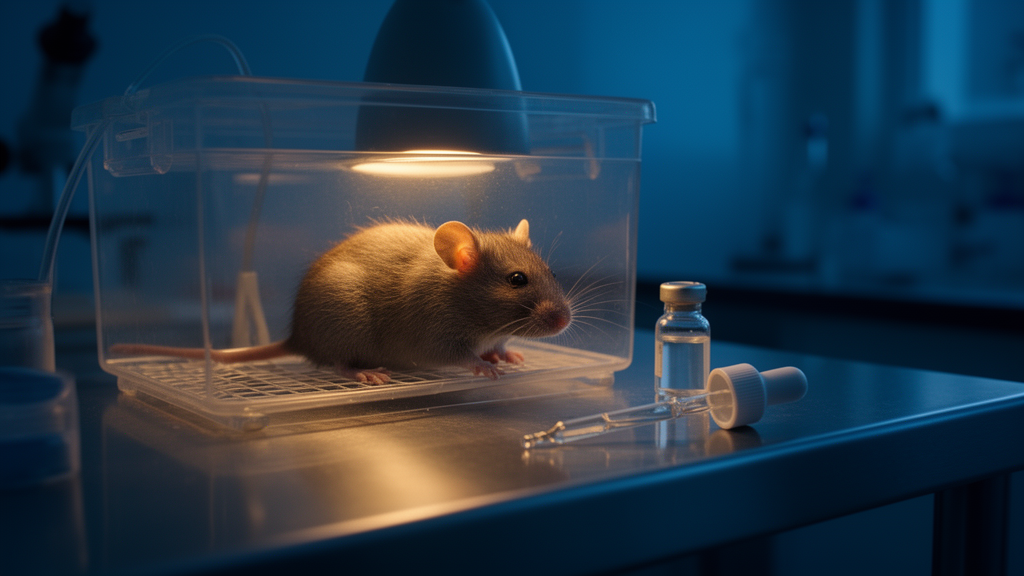
Exposure to even dim artificial light at night during pregnancy can disturb maternal and fetal outcomes in mice, and melatonin supplementation only partially corrects the damage, according to a study published in Cell Biology and Toxicology. The research, led by Jiali Wang, Wenli Wang, Jufeng Zhang, Ruoyan Huang, Qingwen Hu and Jian Xu, examined how low-level artificial light at night (L-ALAN) affects the maternal-placental-fetal interface and whether restoring melatonin can counteract the disruption.
Pregnant C57BL/6J mice were exposed to a faint 2-lux light during the night, with or without daily melatonin supplementation at 10 mg/kg/day given intragastrically. The animals were assessed either at embryonic day 16.5 or after natural delivery. The researchers measured maternal serum and placental melatonin levels, tracked a range of maternal and fetal outcomes, and used morphological analysis, circadian-omics and RT-qPCR to evaluate structural and functional changes across maternal, placental, decidual and fetal tissues.
The results were striking. Exposure to the dim nighttime light reduced the nocturnal peaks of melatonin in both maternal serum and placental tissue. It also lowered gestational weight gain, disturbed the ratio of progesterone to estradiol, reduced maternal liver and spleen indices, and cut placental and fetal weights. Offspring survival declined as well, indicating that the effects of nighttime light extended beyond the mother to the developing young.
Structural and functional markers in the placenta and decidua were also impaired. The study found impaired architecture and function at the maternal-fetal interface under the dim light regime.
The study went further by examining circadian biology at the molecular level. Using Jonckheere-Terpstra-Kendall (JTK)-CYCLE analysis, the researchers evaluated rhythmicity in core circadian clock genes. L-ALAN exposure disrupted the normal cyclic expression of these genes across the maternal, placental, decidual and fetal tissues, and it increased inflammatory cytokines in the same compartments. This combination of broken clock-gene rhythms and inflammatory activation provides a mechanistic picture of how light at night may undermine pregnancy.
Melatonin supplementation partially attenuated several of these alterations, but not all of them. Maternal organ indices, fetal weights and fetal liver inflammatory responses were not significantly restored by the treatment. In other words, while supplemental melatonin could rescue some measures of placental and decidual function and dampen certain inflammatory changes, it could not fully reverse the growth restriction in fetuses or the inflammatory responses in fetal liver tissue.
The authors summarize the mechanism as follows: gestational L-ALAN exposure suppressed circulating and placental melatonin secretion, induced gestational hormonal and metabolic dysfunctions and decreased placental and fetal weights. Impaired architecture and function at the maternal-fetal interface, secondary to circadian rhythm disturbances and inflammatory activation, underlies these detrimental effects. Melatonin supplementation partially attenuated selected L-ALAN-associated alterations, but the rescue was incomplete.
An important caveat shapes how these findings should be interpreted. The C57BL/6J mouse strain exhibits deficient pineal melatonin synthesis, meaning these animals rely heavily on peripheral sources of the hormone, particularly circulating and placental melatonin.
The article was published open access on 22 October 2026 and is shared as an accepted manuscript subject to further editorial revision before the final version of record.
What the work adds to the field is a detailed map of where dim nighttime light acts during pregnancy: at the level of circulating and placental melatonin, at the rhythmic expression of clock genes across the maternal-fetal axis, at inflammatory signaling in placental, decidual and fetal tissues, and ultimately at outcomes such as fetal weight and offspring survival. It also clarifies the limits of melatonin as an intervention, showing that partial rescue is possible but that some consequences of circadian disruption, particularly those affecting fetal growth and fetal liver inflammation, resist supplementation in this model.
Subject of Research: Effects of low-level artificial light at night and melatonin supplementation on maternal-fetal outcomes in pregnant mice
Article Title: Effects of exposure to low-level artificial light at night and melatonin supplementation on maternal‑fetal outcomes in pregnant mice: Insights from placental and decidual pathways
Article References: Wang, J., Wang, W., Zhang, J., Huang, R., Hu, Q., & Xu, J. (2026). Effects of exposure to low-level artificial light at night and melatonin supplementation on maternal‑fetal outcomes in pregnant mice: Insights from placental and decidual pathways. Cell Biology and Toxicology. https://doi.org/10.1007/s10565-026-10312-x
Image Credits: AI Generated
DOI: 10.1007/s10565-026-10312-x
Keywords: artificial light at night, melatonin, pregnancy, placenta, circadian rhythm, mice study, fetal development, inflammation, decidua, maternal-fetal interface, C57BL/6J, reproductive biology
News Source: Harold Sullivan. (October 29, 2026). Nighttime Light Exposure Disrupts Pregnancy in Mice, Melatonin Offers Partial Rescue. Scienmag.