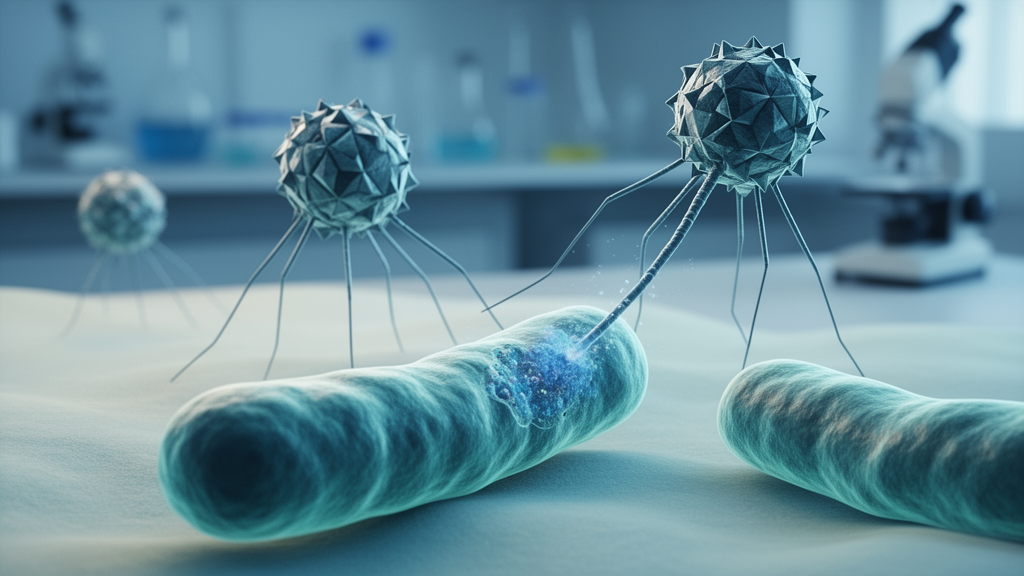
Livestock farming accounts for roughly 50 to 80 percent of total antibiotic consumption in many developing and developed countries, a level of use that has driven the emergence and spread of bacteria resistant to most available drugs. A new review published in the journal Discover Viruses examines whether bacteriophages—the viruses that infect and kill specific bacteria—can serve as a practical alternative to antibiotics for controlling bacterial infections in cattle, small ruminants, swine and poultry. The authors, Sarishti Dahiya, Naina Sharma and Kiran Nehra, synthesize studies published mainly between 2000 and 2025 and conclude that phage therapy shows considerable promise, while stressing that most of the supporting evidence still comes from laboratory experiments and controlled animal studies rather than large-scale field trials.
The scale of the resistance problem framed in the review is substantial. Antibiotic resistance exceeding 50 percent has been reported in several livestock species, with prevalence rising from 0.13 to 0.34 in pigs and from 0.12 to 0.23 in cattle. Resistance has been documented against major antibiotic classes commonly required in veterinary medicine, including chloramphenicol, aminoglycosides, sulfonamides, tetracyclines, penicillins and beta-lactams. The authors attribute much of this to inappropriate usage, such as incorrect dosing or administering antibiotics for ailments that are not bacterial. Many resistant strains have also acquired the ability to form biofilms, layers of bacteria embedded in a protective matrix that hinder drug penetration, further complicating treatment.
Bacteriophages are the most prevalent biological entities on Earth, with an estimated total population of roughly 10 to the power of 32 particles. They occur wherever their bacterial hosts live: in aquatic systems at concentrations of 10 to the power of 4 to 10 to the power of 8 virions per millilitre, and in soil at around 10 to the power of 9 virions per gram. This ubiquity means phages can be readily isolated from soil, sewage, water bodies, food products and animal surfaces, increasing the likelihood of finding isolates active against diverse pathogens. Unlike broad-spectrum antibiotics, phages are host-specific, targeting particular bacteria without disturbing beneficial microflora, and some can penetrate or degrade the biofilm layers that shield resistant bacteria from drugs.
The therapeutic use of phages predates antibiotics. Their antibacterial activity was first observed by Ernest Hankin in the late nineteenth century, who noted the bactericidal action of river water against Vibrio cholerae, and was later characterized independently by Frederick Twort and Felix d’Herelle. The first clinical phage paper, published in Belgium in 1921, reported rapid improvement in a patient with skin necrosis treated with staphylococcal phages. Interest declined in Western countries after sulfonamides and penicillin emerged in the 1930s and 1940s, but phage therapy continued in the Soviet Union and Eastern Europe, particularly Russia and Georgia. Renewed Western interest followed growing antibiotic resistance; in 1981, Smith and Huggins showed that phage mixtures could outperform some antibiotics in animal models, and food-safety phage products such as ListShield and EcoShield later received regulatory approvals.
Mechanistically, therapeutic phages are most often tailed, double-stranded DNA viruses. Infection begins with adsorption, a highly specific molecular recognition of bacterial surface structures such as lipopolysaccharides, teichoic acids, outer membrane proteins or fimbriae. After the viral genome is injected, lytic phages hijack the host’s transcriptional and translational machinery to build new virions, which are released when holin-endolysin systems lyse the cell. Temperate phages, which integrate into the host genome, are generally avoided in therapy because of the risks of lysogenic conversion and horizontal transfer of virulence or resistance genes. Phages also replicate at the infection site in proportion to bacterial density—an auto-dosing capability that can reduce the amount needed, provided the host immune system does not clear them prematurely.
The review outlines several phage-based strategies. Monophage therapy uses a single strain, while phage cocktails combine multiple phages for broader coverage and lower resistance risk. In one controlled poultry study, oral administration of a three-phage cocktail reduced Salmonella enteritidis levels by 3.5 log units, and mixing the cocktail with feed cut mortality in laying hens infected with Salmonella gallinarum from 30 percent to 5 percent. Phage-derived enzymes offer another route: endolysins break down bacterial peptidoglycan, and depolymerases degrade capsules and biofilms. In vitro, the endolysins LambdaSA2 and B30 showed strong lytic activity against streptococcal mastitis pathogens, and the depolymerase Dpo7 disrupted Staphylococcus aureus biofilms synergistically with its parent phage. In a murine infection model with a bovine-derived Klebsiella pneumoniae strain, the depolymerase dep1011 improved survival rates compared with untreated controls.
Combination approaches are also under investigation. Phage-antibiotic synergy can produce additive or synergistic killing, and an in vitro study reported that phage P22 combined with ceftriaxone and ciprofloxacin inhibited drug-resistant Salmonella typhimurium. In an in vivo trial in young calves, bacteriophages specific for pathogenic Escherichia coli, given with Lactobacillus probiotics, shortened the duration of diarrhoea within 24 to 48 hours and activated immune responses. Genetically engineered phages extend the toolkit further: a CRISPR/Cas9-modified phage killed Staphylococcus aureus cells within eight hours in vitro, and CRISPR-Cas9 phagemids targeting E. coli O157:H7 achieved reductions of over 3.7 log10 in laboratory tests and rumen simulation models. Phages conjugated with the photosensitizer Rose Bengal have enabled light-activated photodynamic killing of Gram-negative bacteria at low concentrations, though these delivery systems have so far been evaluated mainly in vitro or in model organisms.
Species-specific results in live animals are mixed but frequently encouraging. In piglets experimentally challenged with E. coli, orally delivered microencapsulated phage A221 increased daily weight gain, reduced bacterial presence in the jejunal lymph nodes, caecum and spleen, and alleviated intestinal damage, performing comparably to standard antibiotics in one report. In newborn lambs infected with E. coli K99, prophylactic and therapeutic phage treatment reduced gut bacterial loads to levels similar to antibiotics and raised IgM and IgG responses. In swine, a phage cocktail against antibiotic-resistant E. coli significantly decreased bacterial loads and improved faecal scores in suckling piglets, though it did not affect body weight. In poultry, phage supplementation of broiler diets has been associated with improved growth, feed efficiency and gut microbiota, although a 2025 study of phage SEpBS-1 against Salmonella in broilers produced reductions that were modest and not statistically significant.
Significant obstacles remain before routine veterinary adoption. Phages’ narrow host ranges require precise pathogen identification and tailored selection; bacteria can evolve phage resistance, although estimated mutation frequencies are lower than for antibiotic resistance; and the immune system can neutralize phages, with repeated administration inducing anti-phage antibodies. Phage activity can fall sharply in complex matrices—in raw milk, proteins and fat globules interfere with phage adsorption to S. aureus. There are no standardized dosing, delivery or storage protocols, regulatory frameworks remain fragmented and slow, and commercial investment is thin, with only a handful of companies such as Proteon Pharmaceuticals, PhageLab and Cytophage Technologies marketing livestock phage products like BAFASAL, INSPKTOR and AviPhage. A notable human randomized trial, Phagoburn, yielded unclear findings due to formulation problems and delayed administration, underscoring the difficulty of generating robust clinical data.
The review’s overall verdict is measured. Phage therapy cannot currently replace antibiotics, most researchers maintain, but may be used alongside them or reserved for infections resistant to all other options, even as a parallel view in the scientific community argues for expanding phage therapy’s role as multidrug-resistant infections escalate. The authors call for large-scale field trials in livestock systems, stable phage formulations, optimized delivery strategies and clear regulatory standards. Within those limits, the accumulated evidence—from mastitis phages lysing over 80 percent of Staphylococcus strains in vitro to reduced Salmonella colonization in experimentally challenged pigs—supports continued development of phage-based interventions as a targeted, microbiome-sparing complement to conventional antimicrobials in animal health.
Subject of Research: Bacteriophage therapy as an alternative to antibiotics for bacterial infections in livestock
Article Title: Bacteriophages as emerging-therapeutic agents for overcoming antibiotic resistance in livestock infections
Article References: Dahiya, S., Sharma, N., & Nehra, K. (2026). Bacteriophages as emerging-therapeutic agents for overcoming antibiotic resistance in livestock infections. Discover Viruses, 3(1), Article 11. https://doi.org/10.1007/s44370-026-00048-x
Image Credits: AI Generated
DOI: 10.1007/s44370-026-00048-x
Keywords: bacteriophages, phage therapy, antimicrobial resistance, livestock, antibiotics, biofilms, endolysins, CRISPR, veterinary medicine, poultry, swine, cattle
News Source: William Thompson. (October 29, 2026). Viruses That Eat Bacteria Offer Livestock a Tool Against Antibiotic Resistance. Scienmag.