


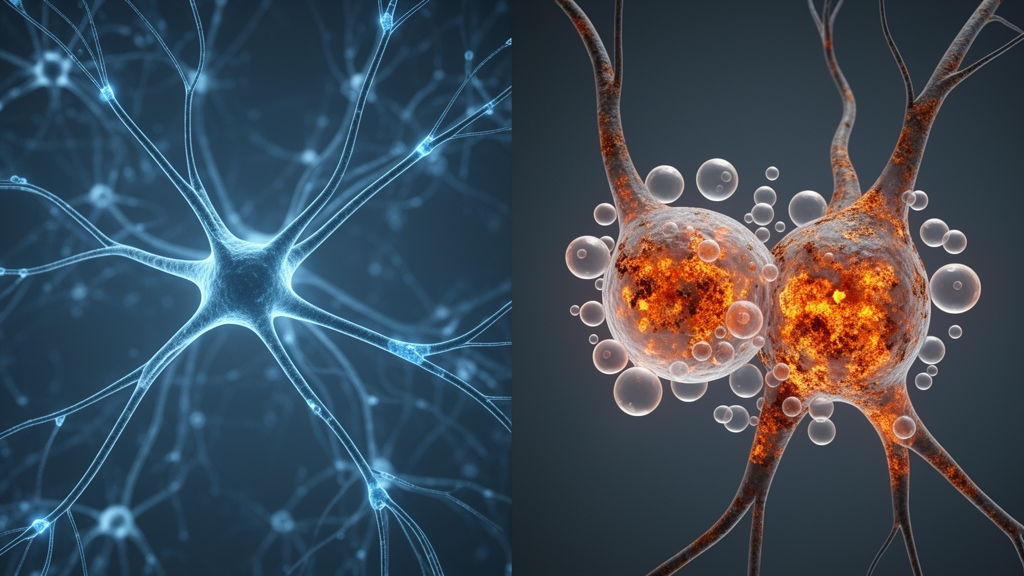
In a study published in Cellular and Molecular Neurobiology, researchers report that inhibiting the acid sphingomyelinase (ASM)–ceramide pathway reduces neuronal ferroptosis after ischemic brain injury, and that the approved antidepressant desipramine, a validated ASM inhibitor, shows protective effects in mouse and cell models of ischemic stroke. The work, published online on 5 October 2026 as an open-access original research article, proposes drug repurposing of desipramine as a potential therapeutic strategy for ischemic stroke, though the findings so far come from animal and cellular models rather than human trials.
In both settings, the injury triggered a marked accumulation of ceramide inside neurons. The authors attribute this buildup predominantly to ASM.
Ceramide had already been an object of suspicion in stroke biology. The authors note that emerging evidence indicates ceramide levels are elevated in serum and brain tissue of ischemic stroke patients and animal models, but that the precise role of ceramide and the mechanisms regulating it in ischemic brain injury remained undefined. The new study addresses that gap by manipulating the ASM–ceramide axis genetically and pharmacologically.
When the researchers knocked down ASM or inhibited it with desipramine, neuronal ceramide production dropped significantly. Desipramine treatment also markedly decreased cerebral infarct volume in the mice, ameliorated neurological deficits and reduced neuronal death both in vivo and in vitro. According to the abstract, desipramine or ASM knockdown effectively suppressed ferroptosis induced by cerebral I/R, by OGD/Re, and even by RAS-selective lethal 3 (RSL3), a chemical ferroptosis inducer, in parallel with reduced ASM activity and lower ceramide levels.
The converse experiment strengthened the causal interpretation: when the team supplemented the OGD/Re-treated neurons with exogenous ceramide, ferroptosis increased. This suggests ceramide is not merely a byproduct of injury but an active driver of the ferroptotic process in these models.
The study also traced a mechanistic chain linking ceramide to ferroptosis through mitochondria. Ceramide accumulation exacerbated mitochondrial damage and downregulated sirtuin 3 (Sirt3), a deacetylase located in mitochondria. Reduced mitochondrial Sirt3 activity was associated with enhanced acetylation of GPX4 after OGD/Re, along with reduced total GPX4 abundance.
Taken together, the authors propose a model in which the ASM–ceramide axis drives neuronal ferroptosis in ischemic stroke through downregulation of mitochondrial Sirt3 and the accompanying increase in GPX4 acetylation. In this framework, desipramine exerts neuroprotective effects against ischemic brain injury by inhibiting ASM activity at the top of the cascade, thereby preserving ceramide-sensitive mitochondrial function and GPX4-dependent antiferroptotic defense.
Several caveats frame the significance of these results. All mechanistic and efficacy findings derive from a mouse I/R model and OGD/Re neuronal injury models; the abstract reports no human clinical testing of desipramine for stroke. The article was also shared early as a peer-reviewed, accepted manuscript that is subject to further edits before the final version of record. Even so, the identification of a druggable upstream enzyme, ASM, and the repurposing candidate desipramine offer a concrete starting point for preclinical development aimed at limiting neuronal loss after ischemic stroke.
Subject of Research: The role of the acid sphingomyelinase–ceramide pathway in neuronal ferroptosis after ischemic stroke and the protective effect of desipramine in mouse and cell models.
Article Title: Targeting Acid Sphingomyelinase-Ceramide Axis Suppresses Neuronal Ferroptosis in Ischemic Stroke: Therapeutic Potential of Desipramine
Article References: Wang, Y., Gu, C.-Y., Fang, L.-C., Zheng, R., Sun, H.-W., Zhang, H.-L., & Liu, L.-J. (2026). Targeting Acid Sphingomyelinase-Ceramide Axis Suppresses Neuronal Ferroptosis in Ischemic Stroke: Therapeutic Potential of Desipramine. Cellular and Molecular Neurobiology. https://doi.org/10.1007/s10571-026-01835-2
Image Credits: AI Generated
DOI: 10.1007/s10571-026-01835-2
Keywords: ischemic stroke, ferroptosis, ceramide, acid sphingomyelinase, desipramine, GPX4, Sirt3, drug repurposing, neuroprotection, middle cerebral artery occlusion, mitochondria, preclinical study
News Source: Cassandra Pierce. (October 29, 2026). Desipramine Blocks Neuronal Ferroptosis in Ischemic Stroke Mouse Model. Scienmag.



