


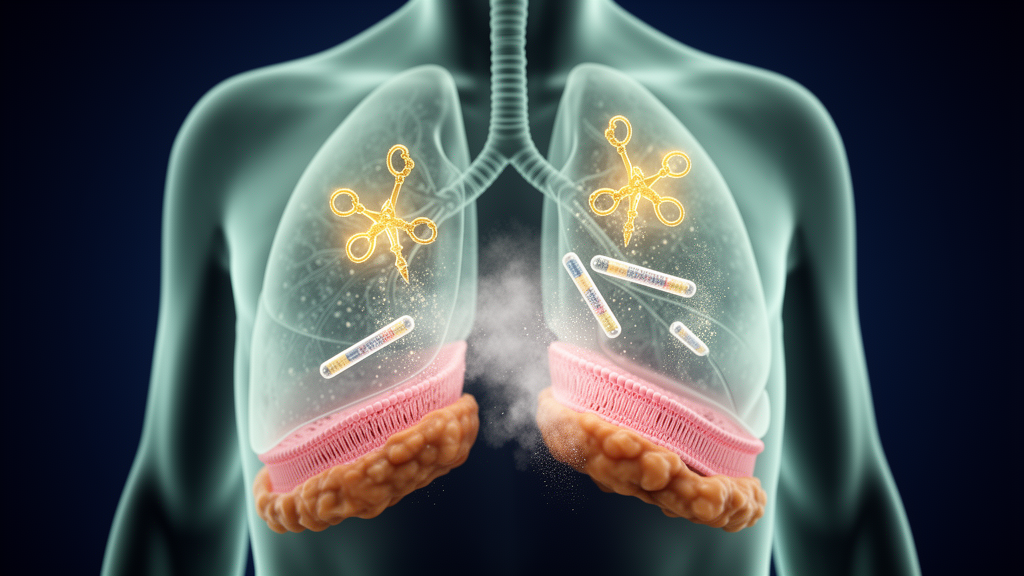
A review published in Discover Viruses examines how CRISPR-based antivirals could be developed against respiratory viral infections, from seasonal influenza and respiratory syncytial virus (RSV) to SARS-CoV-2. The author, Piyush Baindara with co-author Roy Dinata, synthesizes preclinical evidence from cell culture, primary human airway models, and animal lungs, and concludes that programmable CRISPR effectors—particularly RNA-targeting Cas13 systems—can suppress viral replication in laboratory and animal settings, while the decisive barriers to clinical use are pulmonary delivery, off-target activity, immune responses, and regulatory requirements rather than target selection.
The review frames the need against a heavy disease burden. Seasonal influenza is estimated to cause 290,000 to 650,000 deaths annually worldwide, with billions of infections and millions of severe cases each year. RSV and SARS-CoV-2 continue to drive significant morbidity and mortality among infants, older adults, and immunocompromised people. Existing small-molecule options are described as narrow in scope: neuraminidase and polymerase inhibitors for influenza show variable benefits under resistance pressure, and influenza viruses can acquire baloxavir resistance through substitutions at the PA active site, with such markers already detected in circulating A and B strains. Ribavirin remains the only licensed small-molecule treatment for severe RSV, with important safety and logistical limits, while SARS-CoV-2 has demonstrated the capacity to evolve under therapeutic and immune pressure.
CRISPR antivirals work by directing programmable nucleases to essential viral sequences. RNA-targeting Cas13 effectors bind viral RNA through guide RNAs and cleave it, reducing viral genome copies and transcript levels in infected cells; this approach has shown activity against influenza viruses and coronaviruses. Studies in primary human airway epithelial cultures and lung organoids report that Cas13-based systems can robustly suppress SARS-CoV-2 when delivered via optimized lipid nanoparticles, extending the evidence beyond conventional cell lines. A known limitation is Cas13’s collateral RNase activity affecting non-target RNAs, but the review notes this can be minimized through optimized guide design, controlled expression, precise delivery timing, or catalytically inactive dCas13 variants that block translation without cleaving RNA. Cas13a, Cas13b, and the compact Cas13d (CasRx) are highlighted as particularly suited to respiratory viruses because of their RNA specificity, size, and capacity for multiplexed targeting.
DNA-targeting strategies using Cas9 and Cas12 cleave viral DNA, inhibiting replication or disrupting latent episomes; in vivo studies of DNA viruses offer safety and delivery insights relevant to respiratory applications, and multiplexed guide RNAs reduce the likelihood of escape by hitting several essential genomic regions simultaneously. A separate class of host-targeting approaches silences host factors required for viral entry or replication. Cas13d-mediated knockdown of cathepsin L has reduced SARS-CoV-2 infection in mouse models, and animal studies show Cas13-mediated modulation of airway host factors can reduce viral entry and lung viral burden without targeting viral genomes. Because these strategies target conserved host pathways, they may lower the chance of viral escape, though the review stresses that host safety and tissue-specific effects require careful evaluation, and that host-factor screening studies used to identify dependencies should not be confused with translatable therapies.
Delivery to the airways emerges as the central translational challenge. Viral vectors such as intranasal AAV variants with differential airway tropism and lentiviral vectors have been optimized, but immunogenicity and re-dosing remain major concerns. Non-viral lipid nanoparticles can package large RNA cargos such as Cas mRNA and guide RNAs, allow quick reformulation, and avoid insertional risks; the review judges them the most realistic near-term option given transient expression and flexibility for repeat dosing. Ionizable lipid nanoparticles have delivered mRNA to mouse lungs after aerosolization, with most expression retained after nebulization, and charge-assisted stabilized formulations (CAS-LNP) have shown exceptional stability during nebulization with efficient pulmonary mRNA delivery in mice. Excipients such as poloxamer 188 support aerosolized mRNA-LNP delivery by preventing aggregation and loss of potency, and polymer systems have delivered mRNA-expressed Cas13a at therapeutic levels in mouse and hamster SARS-CoV-2 challenge models.
Biological and physical obstacles remain substantial. Airway mucus and surfactant can trap or destabilize particles, nebulization imposes shear that disrupts LNP structure unless formulations are stabilized, heterogeneous deposition across nose, trachea, and small airways lowers dose efficiency, and fast mucociliary clearance further reduces delivered dose. Pre-existing antibodies and re-dosing limits constrain viral vectors, while repeated LNP dosing and local inflammation require careful toxicology assessment. The review calls for airway-optimized carriers, thorough biodistribution and repeat-dose safety studies, and detailed on- and off-target transcript profiling in primary airway models and large animals, with single-cell RNA sequencing offering cell-type-resolved analysis of off-target effects and host responses.
On resistance, the review argues that CRISPR’s programmability is its main hedge against viral escape. Proof-of-concept work focuses guide RNAs on conserved regions such as polymerase, nucleocapsid, and replication elements, and multiplexing—delivering multiple guides against independent sites at once—raises the genetic barrier to resistance. The PAC-MAN strategy formalized this by introducing design rules for targeting conserved regions across viral clades with multiple CRISPR RNAs, validated against influenza viruses and coronaviruses in cell culture and in vivo. In human lung cells, the Cas13d system has been reported to treat and eradicate diverse SARS-CoV-2 variants, and Cas13a reduced influenza and SARS-CoV-2 burden in mouse and hamster models, respectively. Engineered high-fidelity Cas13 variants retain on-target cleavage while minimizing collateral activity, compact variants such as Cas13X, Cas13Y, and Cas13bt ease delivery and multiplex payloads, and high-fidelity Cas9 variants such as eSpCas9 and SpCas9-HF1 reduce off-targets for DNA-virus multiplexing.
The review also positions CRISPR within a comparison against siRNA and small molecules across redesign speed, breadth across variants, dosing, durability, escape risk, and manufacturing. CRISPR stands out for programmability and multiplexing; siRNA offers similar redesign speed with a more mature clinical playbook but often depends on repeat dosing; small molecules bring oral convenience and established regulatory paths but usually target a single viral protein, fostering resistance. The author suggests CRISPR antivirals would fit best in early outpatient treatment, when viral replication is active and confined to the airway epithelium, or as short-term prophylaxis in high-risk groups such as healthcare workers and immunocompromised patients—though repeated dosing, duration of protection, and long-term safety would need evaluation. In hospitalized patients with severe disease, where inflammation may dominate pathology, direct antiviral approaches may have limited impact unless given earlier, although host-targeting strategies could complement care.
Regulatory and immunological considerations weigh heavily. Pulmonary CRISPR antivirals are likely to be reviewed under gene-therapy frameworks even as transient mRNA-guide formulations, requiring defined biodistribution, persistence characterization, off-target risk assessment, device-drug compatibility data for nebulizers, inhalation toxicity testing upon repeated doses, and manufacturing controls around RNA quality and LNP composition. On the immune side, LNPs can trigger innate pathways including complement activation, anti-PEG responses and repeated dosing may amplify immunogenicity, and humans commonly harbor antibodies and T cells against bacterial Cas9 orthologs, raising the possibility of reduced efficacy or adverse reactions upon re-exposure. The review recommends monitoring humoral and cellular responses to the chosen effector and delivery RNA before any human testing, alongside transient expression, guide screening, and less immunogenic or engineered high-fidelity effectors to widen the safety window.
Looking forward, the review outlines a sequence-to-therapy workflow in which rapid viral genotyping guides guide-RNA selection: nanopore-based protocols have delivered same-day genotypes and resistance markers from lower-respiratory samples, and validated pipelines now turn around whole SARS-CoV-2 genomes within hours. Multiplex Cas13 systems can tile conserved regions across viral families—Cas13d guide sets suppress multiple human coronaviruses in vitro, and aerosolized Cas13a reduces influenza and SARS-CoV-2 burden in rodent lungs—supporting the idea of stockpiled, pre-designed guide cocktails for outbreaks. Combinations with antimicrobial peptides or existing antivirals and antibodies may enhance efficacy and durability, and because rapid viral-load reduction could limit epithelial damage, CRISPR antivirals might also reduce secondary bacterial and fungal complications and reliance on broad-spectrum antibiotics. Overall, the review concludes that CRISPR antivirals are credible preclinical candidates whose translation now depends on airway-specific delivery, durability in mucus-rich lung environments, off-target management, immune monitoring, and regulatory alignment rather than on finding new viral targets.
Subject of Research: CRISPR-based antiviral strategies for respiratory viral infections
Article Title: CRISPR-based therapeutics to combat respiratory viral infections
Article References: Baindara, P., & Dinata, R. (2026). CRISPR-based therapeutics to combat respiratory viral infections. Discover Viruses, 3(1), Article 9. https://doi.org/10.1007/s44370-026-00045-0
Image Credits: AI Generated
DOI: 10.1007/s44370-026-00045-0
Keywords: CRISPR, Cas13, respiratory viruses, SARS-CoV-2, influenza, RSV, lipid nanoparticles, antiviral resistance, pulmonary delivery, gene therapy, host-targeting antivirals, viral escape
News Source: Juliet Wilcox. (October 29, 2026). CRISPR Antivirals Target Respiratory Viruses, but Lung Delivery Remains the Hurdle. Scienmag.



