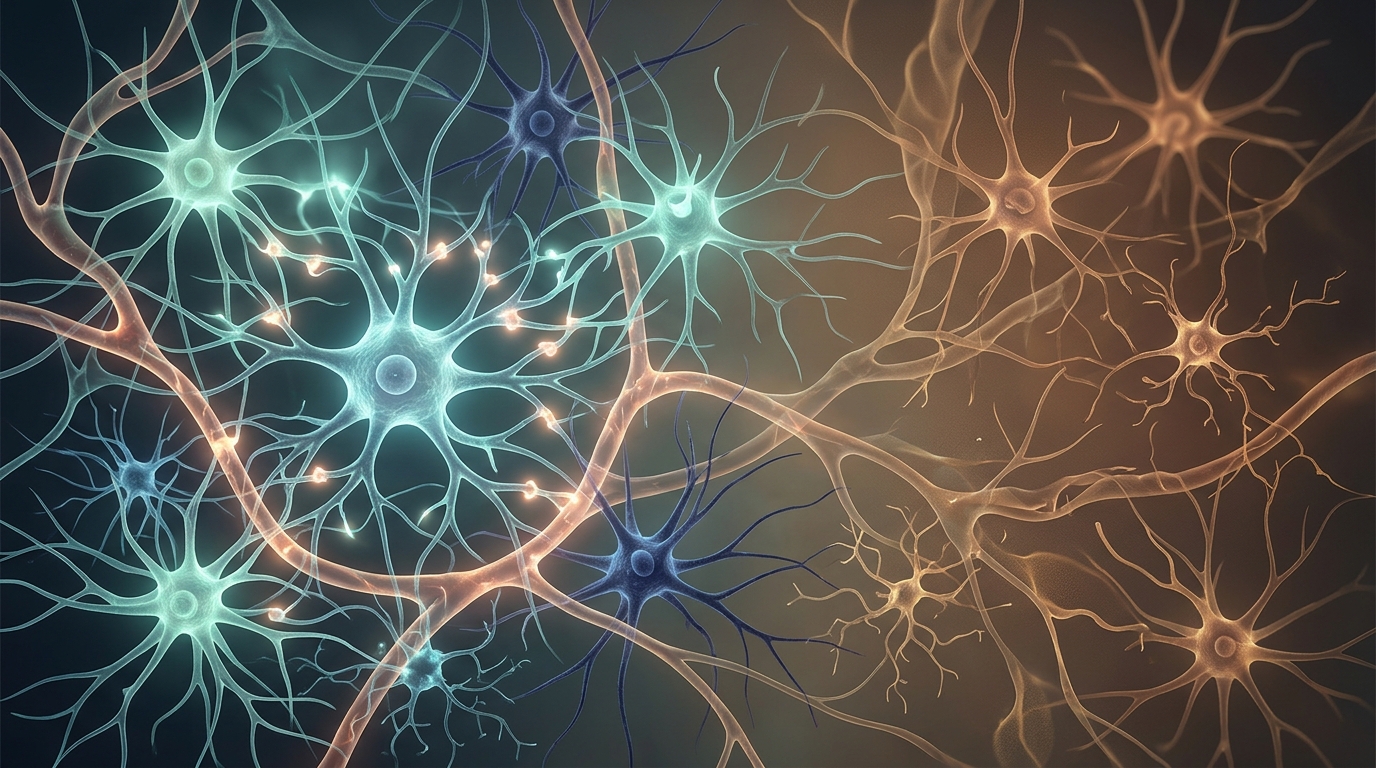
For decades, the central question in neurodegenerative disease research has been deceptively simple: why do neurons die? A new Editorial published in PLOS Biology argues that this framing has quietly narrowed the entire field, and that the answers to some of its most stubborn problems may lie outside the neuron altogether. Writing ahead of a new article collection, editors Joanna Clarke and Sarah Jäkel contend that neurodegeneration should be understood as a process unfolding within a living tissue environment, shaped by glial cells, blood vessels, immune signaling, metabolism and aging, rather than as the failure of isolated nerve cells.
The neuron-centered view has deep roots. It has defined how researchers build disease models, how they search for drug targets and how they interpret experimental results. Yet the Editorial points to a striking counterexample from amyotrophic lateral sclerosis, also known as motor neuron disease. In experimental models of ALS, genetic blockade of motor neuron death can preserve neuronal cell bodies while denervation and motor dysfunction still emerge. In other words, keeping the neuron alive does not keep the disease away, a finding that suggests neuronal death alone cannot explain how disease progresses.
The authors stress that moving beyond a purely neuron-centered perspective does not make neurons less important. Instead, they describe neuronal vulnerability as something that emerges from the interplay between the neuron itself and the broader systems that sustain its function. Placing neurodegeneration in its physiological context means asking not only why neurons die, but how changes in the surrounding tissue environment influence whether neurons remain resilient, become dysfunctional or degenerate. Neurons, they note, are embedded in one of the body’s most complex and dynamic tissue environments, and that environment shapes how disease begins, spreads and progresses.
A central puzzle driving the new collection is why some neurons are affected by neurodegenerative disease while others are spared. Each neurodegenerative disease strikes a distinct area of the nervous system and a distinct type of neuron, which suggests that neuronal subtypes carry specific vulnerabilities to disease. Two Essays in the collection approach this question from sharply different angles. Wakatsuki and Araki ask why neurodegeneration affects cells in the central nervous system to a greater degree than those in the peripheral nervous system, and use oxidative stress as a pathogenic mechanism to examine how multilayered signaling thresholds could shape neuronal vulnerability.
Dong Won Kim takes an even more contrarian angle in his Essay, asking how neurons survive in neurodegenerative disease rather than how they die. His proposed answer relates to how well neurons are able to maintain their cellular subtype identity under stress. The idea reframes resilience as a matter of cellular identity: a neuron that loses its defining molecular character under pressure may become dysfunctional even if it does not immediately die, offering a different lens on why some cells persist while others fail.
The collection also pushes these ideas toward clinical application. Gupta and colleagues examine the challenge of delivering therapeutic drugs to the right cells to treat neurodegenerative disease, highlighting the neurovascular unit and how its phenotype changes as disease progresses. They call for drug screening models that more accurately reflect the aged and diseased status of the brains that therapies are being designed to treat. That sentiment is echoed by Liu and Ng, who call for organoid models of neurodegenerative disease to better represent the tissue microenvironment, specifically urging that microglia and vascular cells be included as standard components.
The role of non-neuronal cells recurs throughout the collection. Charles ffrench-Constant suggests a potential role for gray-matter oligodendrocytes, a less well-studied type of neuronal support cell, in the cognitive dysfunction seen in Alzheimer’s disease. Lewis and colleagues urge researchers to consider both the molecular and physiological phenotypes of blood vessels when investigating vascular dysfunction as part of disease, echoing the calls to remember the vasculature in disease models. In the online collection content, Cheng and Ho ask whether disease-associated microglia are protective or harmful in neurodegenerative disease, while Danzer and Sparrer examine data linking vaccinations to reduced dementia risk and ask whether targeting viruses could offer a new avenue for treating neurodegenerative disease.
According to the Editorial, the collection demonstrates that the field has made significant progress by moving beyond a purely neuron-centered view, but it also identifies the next challenge: avoiding a fragmented picture in which each component of the tissue environment is studied in isolation. Fully understanding neurodegeneration in its physiological context, the authors argue, will require moving from identifying affected cell types and systems to defining the relationships between them. The questions they propose are pointed: how vascular dysfunction alters glial states, how glial responses influence synapses and myelin, how aging reshapes cellular resilience, and how stressed neurons feed back into their environment. Disease progression, they conclude, is likely to depend not only on changes within individual cell types, but on how their relationships are rewired over time.
The same logic applies across disease boundaries. Alzheimer’s disease, Parkinson’s disease, ALS and other disorders are usually studied within disease-specific frameworks, but the physiological systems that fail during neurodegeneration do not necessarily respect those boundaries. The Editorial suggests these disorders may share underlying failures in the systems that maintain tissue homeostasis, even if those failures unfold differently across affected cells, circuits and brain regions. A more integrated view should therefore ask not only what distinguishes one disease from another, but what common failures of tissue physiology connect them.
Achieving that integration, the authors acknowledge, will demand a new generation of models and methods. Many current approaches remain optimized to examine one cell type, pathway or disease feature at a time, whereas neurodegeneration unfolds in aged, multicellular and spatially organized tissue environments. Better models, combined with single-cell, spatial and longitudinal approaches, will be needed to link molecular and cellular changes to tissue architecture, circuit function and clinical progression. The payoff, they argue, could be substantial: understanding disease as the breakdown of relationships across cells, tissues and time, rather than the failure of isolated cells, may reveal new points of intervention and potentially open the way to therapeutic approaches that preserve resilience before degeneration becomes irreversible.
Subject of Research: The physiological tissue context of neurodegenerative disease
Article Title: Rethinking neurodegeneration: Placing disease in its physiological context
Article References: Clarke, J., & Jäkel, S. (2026). Rethinking neurodegeneration: Placing disease in its physiological context. PLOS Biology, 24(10), e3004087. https://doi.org/10.1371/journal.pbio.3004087
Image Credits: AI Generated
DOI: 10.1371/journal.pbio.3004087
Keywords: neurodegeneration, ALS, Alzheimer's disease, Parkinson's disease, glia, microglia, neurovascular unit, organoid models, neuronal vulnerability, oxidative stress, aging, PLOS Biology
News Source: Diana Fleming. (November 4, 2026). Neurons Do Not Die Alone: Why Neurodegeneration Is a Disease of the Tissue Around Them. Scienmag.