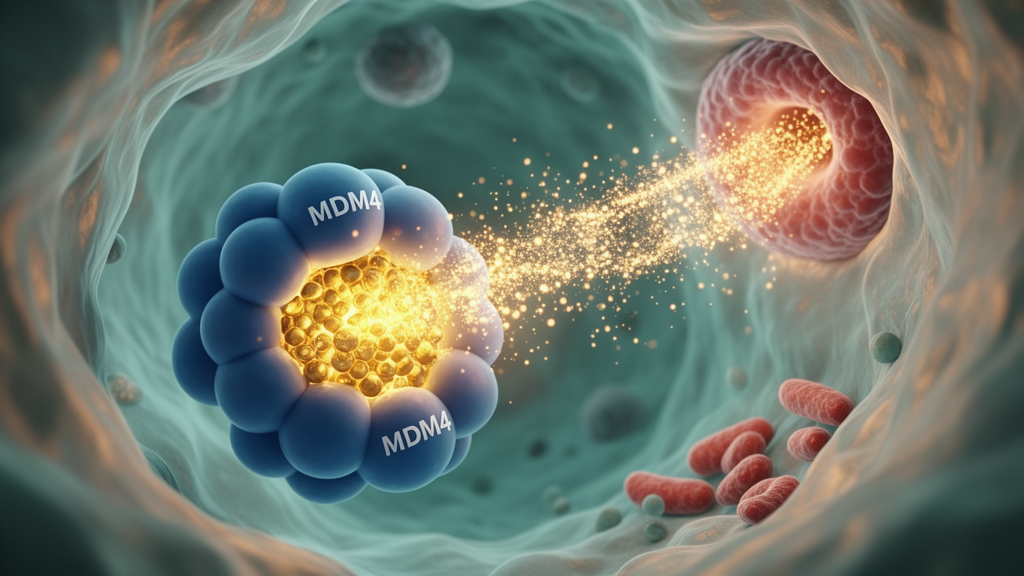
Mouse double minute 4 (MDM4) has long been known as a regulator of the tumor suppressor p53, but a new study published in Cellular and Molecular Life Sciences reports that the protein also plays a p53-independent role in oral squamous cell carcinoma (OSCC). According to the researchers, MDM4 enhances tumor cell proliferation and glycolytic activity specifically in TP53-mutant OSCC, where the classical p53 pathway is disabled. The work, released as a peer-reviewed accepted article with a permanent DOI, identifies what the authors describe as a novel metabolic regulatory function of MDM4 and positions the protein as a candidate therapeutic target.
The study used a combination of bioinformatic analysis, qRT-PCR, western blotting, metabolomics, and Seahorse assays to characterize how MDM4 shapes metabolism in TP53-mutant OSCC cells. To probe the underlying mechanism, the team carried out co-immunoprecipitation, site-directed mutagenesis, and ubiquitination assays focused on 6-phosphofructo-2-kinase/fructose-2,6-bisphosphatase 2 (PFKFB2), a glycolytic enzyme. In vitro and in vivo experiments were then used to evaluate the antitumor effects of inhibiting both MDM4 and PFKFB2 together.
The central finding is that MDM4 stabilizes PFKFB2 by promoting its interaction with the adaptor protein YWHAG, also known as 14-3-3γ, and by inhibiting K48-linked ubiquitination of the enzyme. According to the results, this interaction protects PFKFB2 that is phosphorylated at serine residues 466 and 483 from ubiquitin-mediated degradation and promotes the binding of YWHAG to PFKFB2, thereby preventing ubiquitination at lysine 490. In other words, MDM4 appears to coordinate a phosphorylation-ubiquitination crosstalk in which phosphorylation events recruit a protective adaptor while ubiquitination marks the enzyme for destruction.
Stabilized PFKFB2 has a direct downstream metabolic consequence. As described in the study’s graphical abstract, increased levels of the enzyme raise the abundance of fructose-2,6-bisphosphate, which activates phosphofructokinase-1 and promotes glycolytic flux. The enhanced glycolysis further increases ATP production, ultimately supporting tumor cell growth and proliferation in TP53-mutant OSCC. This chain of events links a protein-regulatory interaction to the energetic demands of rapidly dividing cancer cells.
The functional importance of PFKFB2 in this pathway was tested directly. Silencing PFKFB2 significantly reduced the glycolysis-promoting effects of MDM4, indicating that the enzyme is a key mediator of MDM4’s metabolic activity. When both MDM4 and PFKFB2 were inhibited together, the researchers observed a synergistic suppression of tumor growth both in vitro and in vivo, suggesting that the two proteins act along a convergent axis rather than in parallel pathways.
Because MDM4’s role here is independent of p53, the findings are particularly relevant for tumors carrying TP53 mutations, a context in which MDM4’s better-known tumor-suppressor regulation is not the operative mechanism. The authors conclude that the MDM4-YWHAG-PFKFB2 axis represents a potential therapeutic vulnerability and that targeting this pathway may provide a promising therapeutic strategy for TP53-mutant OSCC. The study’s highlights summarize the three main claims: MDM4 promotes glycolytic reprogramming and tumor progression in TP53-mutant OSCC, MDM4 stabilizes PFKFB2 through YWHAG-dependent inhibition of K48-linked ubiquitination, and co-targeting MDM4 and PFKFB2 exerts synergistic antitumor effects in OSCC.
It is worth noting the scope of the evidence. The mechanistic conclusions rest on cell-based assays, metabolomics and Seahorse measurements of glycolytic activity, and in vivo tumor models, as described in the study’s methods section. The reported synergistic suppression of tumor growth is a preclinical experimental result, not a clinical outcome, and the article is an early-release version that remains subject to further editorial edits before the final version of record. The authors frame the pathway as a candidate vulnerability that may support MDM4 as a therapeutic target, language that reflects the exploratory stage of the work rather than an established treatment option.
Within those limits, the study adds a defined molecular circuit to the map of cancer metabolism in oral squamous cell carcinoma: MDM4 reinforces the interaction between YWHAG and PFKFB2 phosphorylated at S466 and S483, protects PFKFB2 from ubiquitination at K490 and subsequent degradation, and thereby sustains fructose-2,6-bisphosphate production, PFK1 activation, glycolytic flux, ATP generation, and tumor cell proliferation. Whether pharmacological disruption of this axis can be translated into a viable therapy for patients with TP53-mutant OSCC will require further research beyond the models reported here.
Subject of Research: The role of MDM4 in regulating glycolysis and proliferation in TP53-mutant oral squamous cell carcinoma
Article Title: MDM4 coordinates YWHAG-mediated phosphorylation-ubiquitination crosstalk to stabilize PFKFB2 and drive glycolysis and proliferation in oral squamous cell carcinoma
Article References: Yan, Y., Lin, S., Chen, H., Chen, X., Lan, T., Lu, Y., Huang, Q., & Zheng, D. (2026). MDM4 coordinates YWHAG-mediated phosphorylation-ubiquitination crosstalk to stabilize PFKFB2 and drive glycolysis and proliferation in oral squamous cell carcinoma. Cellular and Molecular Life Sciences. https://doi.org/10.1007/s00018-026-06436-2
Image Credits: AI Generated
DOI: 10.1007/s00018-026-06436-2
Keywords: MDM4, PFKFB2, YWHAG, glycolysis, oral squamous cell carcinoma, TP53 mutation, ubiquitination, phosphorylation, metabolic reprogramming, cancer metabolism, therapeutic target, fructose-2,6-bisphosphate
News Source: Nathaniel Bowman. (October 29, 2026). MDM4 stabilizes a glycolytic enzyme to fuel growth in TP53-mutant oral cancer. Scienmag.