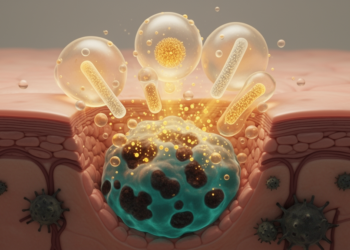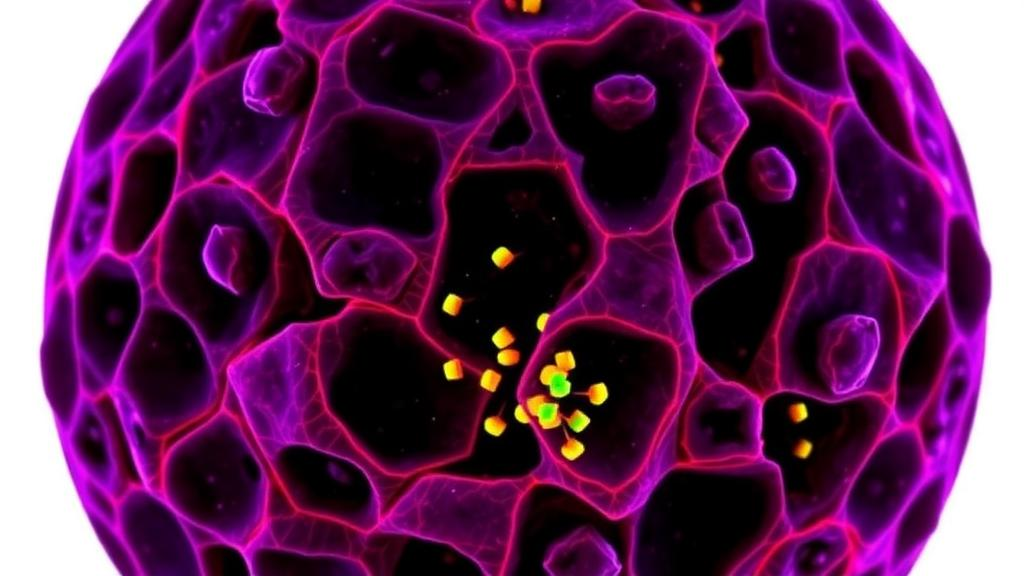
The researchers built what they call IL6-CD147 CAR-M, a synthetic macrophage construct that couples an IL-6-binding single-chain variable fragment to a module containing CD147. When stimulated with IL-6, the engineered macrophages increased production of matrix metalloproteinases—MMP-2, MMP-9, MMP-11, and MMP-13—at both transcript and protein levels. These enzymes can degrade extracellular matrix components, potentially easing immune-cell access to tumor tissue. Control experiments supported the design’s specificity: a CD147-deletion construct failed to reproduce the enhanced MMP transcriptional response, and the broad-spectrum metalloproteinase inhibitor GM6001 reduced CAR-T cell migration through Matrigel toward conditioned medium from the engineered macrophages.
In defined mixed-antigen tumor models with an 80:20 antigen composition, the combination of IL6-CD147 CAR-M and CAR-T cells increased tumor killing and raised inflammatory and cytotoxic mediators, while detectable extracellular IL-6 declined. The authors note that the mechanism underlying this reduction in extracellular IL-6 remains unresolved, as do the details of proximal receptor signaling in the engineered cells.
In mouse models, the combined therapy reduced tumor burden and prolonged survival. The treated animals showed increased immune-cell infiltration into tumors and an altered immune composition within the tumor microenvironment. Examination of major organs at the assessed time points found no overt histopathological abnormalities, although the authors frame this cautiously as an observation limited to the examined tissues and time points rather than a full safety profile.
The study builds on the team’s previous in vitro work, which had observed increased IL-6 in CAR-T and CAR-M combination settings—a signal that could theoretically fuel inflammation but which this construct instead converts into a matrix-remodeling program. The authors position the findings as support for further evaluation of the IL-6-responsive, CD147-containing CAR-M strategy rather than as an established therapy. All results to date come from preclinical cell and animal models, and translating the strategy to patients will require addressing the unresolved signaling questions and confirming safety over longer observation periods.
Subject of Research: An engineered IL-6-responsive CAR macrophage construct that enhances CAR-T cell antitumor activity in solid tumor models.
Article Title: IL-6/CD147-augmented CAR macrophages enhance the antitumor activity of CAR-T cells in solid tumor models
Article References: Salisu, M. D., Saliu, M. A., Liang, W., Suleiman, R. B., Ibrahim, A., Adeshakin, A. O., Adeshakin, F. O., Liu, M., & Wan, X. (2026). IL-6/CD147-augmented CAR macrophages enhance the antitumor activity of CAR-T cells in solid tumor models. Biomarker Research, 14(1), Article 150. https://doi.org/10.1186/s40364-026-01025-8
Image Credits: AI Generated
DOI: 10.1186/s40364-026-01025-8
Keywords: CAR-T cells, CAR macrophages, solid tumors, interleukin-6, CD147, matrix metalloproteinases, immunotherapy, tumor microenvironment, preclinical models, cellular therapy, IL-6, CD147-augmented
News Source: Nathaniel Bowman. (October 29, 2026). Engineered IL-6-Responsive CAR Macrophages Boost CAR-T Cell Activity Against Solid Tumors. Scienmag.