De novo lipogenesis—the process by which cells build fatty acids from scratch—has long been recognized as a hallmark of aggressive cancers, making it an attractive therapeutic target. Yet while the molecular regulation of fat synthesis has been studied extensively, quantitative measurements of lipogenic flux inside living organisms during tumor development have remained scarce. A new study addresses this gap by measuring fat-building activity directly in tumors and in the metabolic tissues of the animals carrying them.
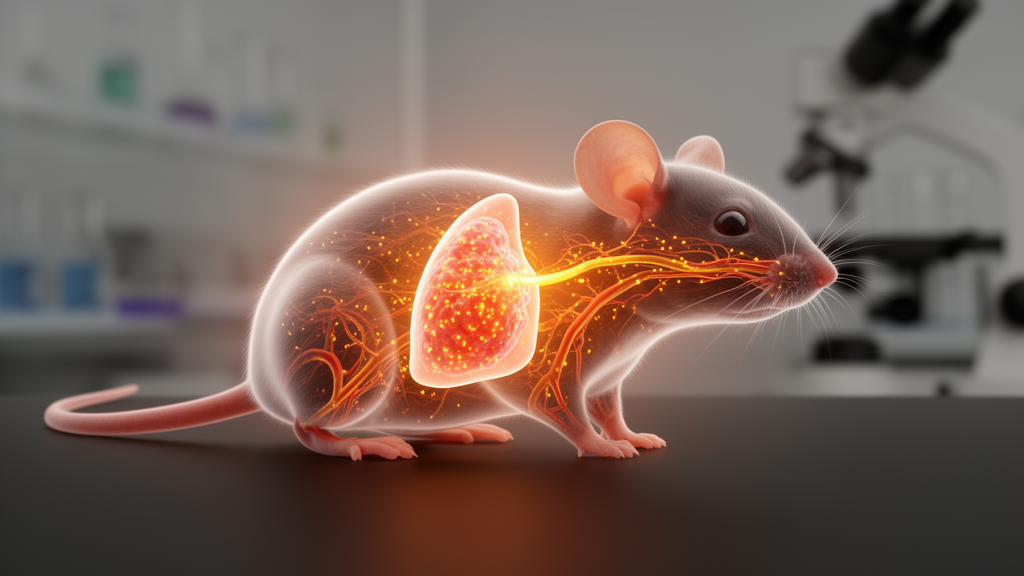
The researchers used in vivo isotope tracing in genetically engineered mouse models of KRAS-driven non-small cell lung cancer. By introducing labeled substrates into the animals, they could quantitatively track how much de novo lipogenesis occurs in lung tumors and how that activity compares with fat synthesis in host tissues such as the liver and brown adipose tissue.
The measurements showed that the increase in lipogenic flux within tumors depends on the specific oncogenic alterations present and on where in the body the tumor is located. Anatomical site, in other words, is not a passive backdrop but a factor that shapes how actively a tumor manufactures its own fat.
A striking comparison emerged between tumor types. Allograft tumors, which are transplanted into host animals, displayed lower de novo lipogenesis than primary lung tumors arising naturally in the genetically engineered models. This suggests that standard transplant models may not fully reproduce the lipogenic behavior of tumors that develop in their native tissue environment, a consideration for researchers using such models to study cancer metabolism.
The team then probed the direct carbon and hydride sources feeding the elevated fat synthesis in tumors. Among the substrates tested, lactate and acetate stood out as the predominant direct carbon contributors to tumor fatty acid synthesis.
On the reducing-power side, the data suggest that the oxidative pentose phosphate pathway and one-carbon metabolism make only limited contributions to the reducing equivalents that support de novo fatty acid synthesis under the experimental conditions examined. This narrows the set of pathways that plausibly supply the NADPH needed for fat production in these tumors, although the authors note this conclusion is specific to the conditions tested.
The study’s most unexpected dimension concerns the host. Across the different tumor models examined, the researchers observed substantial impairment of hepatic de novo lipogenesis in tumor-bearing mice. The liver, a major site of fat synthesis in the body, markedly dialed down its own lipogenic activity, and brown adipose tissue lipogenesis was also remodeled. Cancer, it appears, does not merely reprogram its own metabolism; it reshapes the metabolic behavior of the organism hosting it.
Taken together, these findings portray lipogenic remodeling as a coordinated phenomenon spanning tumor and host. Tumors ramp up fat synthesis using lactate and acetate as carbon sources, while the host's liver shows substantially impaired lipogenesis and brown adipose tissue lipogenesis is remodeled. The authors argue that this coordinated metabolic adaptation offers new insights into cancer lipogenesis and may inform potential therapeutic approaches aimed at disrupting tumor fat production. Because the work was carried out in mouse models with isotope tracing under defined experimental conditions, extending these quantitative flux measurements to other tumor contexts will be an important next step for the field.
Subject of Research: Quantitative in vivo measurement of de novo lipogenesis in KRAS-driven lung tumors and host metabolic tissues
Article Title: Quantitative in vivo flux analysis reveals tumor and host lipogenic remodeling in KRAS-driven lung cancer
Article References: Zhang, Z., Bhatt, V., Wang, W., Alogaili, F., Hu, Z., Dobrescu, I., Lee, J., Xu, X., White, E. P., Rabinowitz, J. D., & Guo, J. Y. (2026). Quantitative in vivo flux analysis reveals tumor and host lipogenic remodeling in KRAS-driven lung cancer. Cancer & Metabolism. https://doi.org/10.1186/s40170-026-00456-z
Image Credits: AI Generated
DOI: 10.1186/s40170-026-00456-z
Keywords: KRAS, lung cancer, de novo lipogenesis, isotope tracing, lactate, acetate, liver metabolism, brown adipose tissue, tumor metabolism, genetically engineered mouse models, fatty acid synthesis, cancer metabolism
News Source: Nathaniel Bowman. (October 29, 2026). In vivo isotope tracing maps fat-making flux in KRAS lung tumors and host tissues. Scienmag.