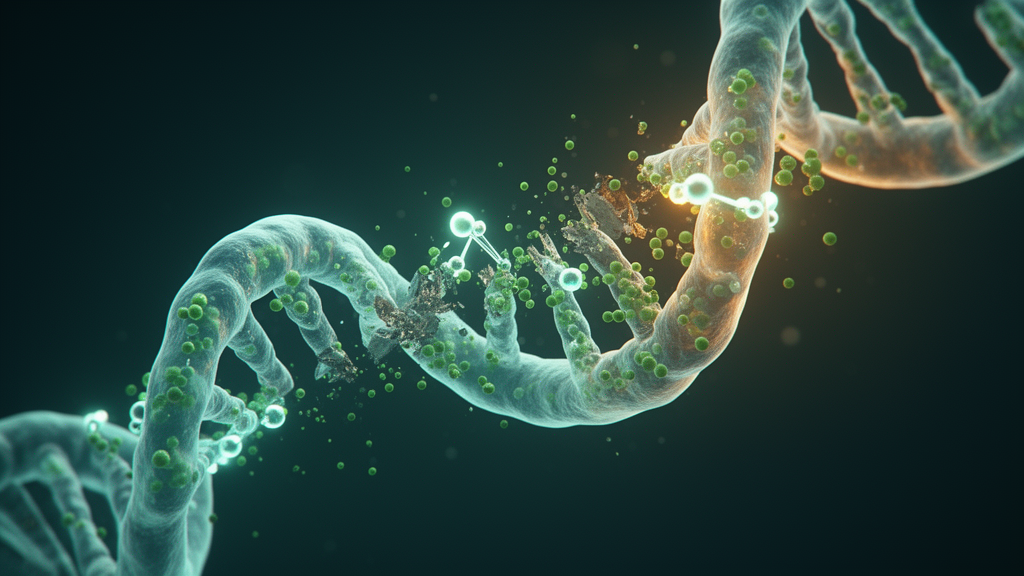
A traditional Chinese medicine herb pair made from Astragali Radix (Huangqi) and Curcumae Rhizoma (Ezhu) can make the common chemotherapy drug 5-fluorouracil work better against colorectal cancer, according to a new study published in the journal Chinese Medicine. The research, led by Shasha Wang, Kexuan Huang and Yuhan Cheng with senior author Xiying Tan, shows that the combination, abbreviated AC, disrupts the coordination between DNA repair and cell-cycle control that colorectal cancer cells rely on to survive chemotherapy-induced damage.
Colorectal cancer remains one of the world’s most serious health problems. Global Cancer Statistics 2022 estimates recorded roughly 1.9 million new cases and 904,000 deaths worldwide, making it the third most commonly diagnosed cancer and the second leading cause of cancer-related death. Fluoropyrimidine chemotherapy, with 5-fluorouracil at its core, is a backbone of treatment both alone and in regimens such as FOLFOX and FOLFIRI, particularly for patients with microsatellite-stable or mismatch repair-proficient advanced disease. Yet resistance to 5-fluorouracil continues to limit durable benefit, which is why strategies that sensitize tumors to the drug attract intense research attention.
The team tested the herb pair in a HCT116 xenograft mouse model and in colorectal cancer cell lines with different genetic backgrounds, including HCT116, CT26 and HCT15. In the mouse experiment, 24 tumor-bearing nude mice were divided into four groups receiving saline, 5-fluorouracil at 30 milligrams per kilogram every other day, the AC extract at 3.9 grams per kilogram daily by oral gavage, or both treatments together. The combination produced significantly lower final tumor weight and smaller tumor size than either drug alone. Using an excess-over-Bliss calculation, the authors found the observed combined effect exceeded the expected additive effect, indicating genuine synergy rather than simple addition.
Safety signals were cautiously reassuring within the limits of the experiment. Serum biochemical markers of liver and kidney function, including ALT, AST, BUN and creatinine, showed no significant differences between the combination group and the 5-fluorouracil-only group, suggesting the herb pair did not exacerbate the drug’s hepatic or renal biochemical toxicity under the tested conditions. The authors stress that more comprehensive safety evaluation, including long-term monitoring, organ histology, hematological toxicity and pharmacokinetic interaction studies, will be needed before any clinical translation.
To understand the mechanism, the researchers treated HCT116 cells with serum extracts from mice that had received the AC extract, an approach that captures the bioavailable constituents actually circulating after oral administration. These serum extracts inhibited cell viability in a dose- and time-dependent manner. Flow cytometry revealed a striking pattern: at 24 hours, the treatment induced clear G2/M-phase arrest but only minimal apoptosis. Apoptosis increased over time at 48 and 72 hours but remained relatively low even at high doses, and the G2/M arrest proved largely reversible after drug withdrawal. The authors interpret this as evidence that the herb pair primarily imposes a transient cell-cycle blockade rather than acting as an immediate cytotoxic agent, with cell death emerging later as a secondary consequence.
RNA sequencing of treated cells showed 1,827 genes significantly upregulated and 1,148 significantly downregulated. The downregulated genes clustered in biological processes central to cancer cell proliferation: nuclear division, chromosome segregation, DNA replication, mismatch repair and cell-cycle progression. Gene set enrichment analysis confirmed suppression of ribosome biogenesis, the spliceosome and related pathways. When the researchers compared their data with gene expression profiles from colorectal cancer patients in four public Gene Expression Omnibus datasets, they found that 355 genes upregulated in patient tumors and 217 genes downregulated in tumors were reversed by AC treatment, and these overlapping genes were enriched in cell cycle, DNA replication and mismatch repair pathways.
Protein-level validation by Western blotting confirmed dose-dependent reductions in a coordinated set of regulators: PLK1, CDK1, CCNB1, CDC25A, the stress-responsive transcription factor c-JUN, the mismatch repair protein MSH2 and the homologous recombination protein BRCA1. The p-AKT/AKT ratio also fell. When the serum extracts were combined with 5-fluorouracil, the accumulation of γ-H2AX, a molecular marker of DNA double-strand breaks, increased markedly, and phosphorylated ATM and CHK2 rose, indicating activation of DNA damage response signaling. The same pattern appeared in tumor tissue from the xenograft mice, where immunofluorescence showed the combination produced the strongest suppression of CCNB1, CDK1, CDC25A and PLK1. Notably, the effect extended to HCT15 cells, which carry both p53 and KRAS mutations and showed low sensitivity to 5-fluorouracil alone but significant viability loss and elevated DNA damage markers when combined with AC.
Functional tests supported the involvement of two signaling nodes. Overexpressing c-JUN partially attenuated the sensitizing effect of the herb pair, suggesting that its downregulation contributes to the enhanced drug response, while pharmacological inhibition of AKT partially mimicked the sensitizing effect. The authors are careful to frame these as supportive rather than definitive proof of a linear causal pathway, noting that rescue experiments such as constitutively active AKT expression and pathway epistasis analyses will be needed to define the precise relationships among c-JUN, AKT, DNA repair and cell-cycle networks.
To identify which of the herb pair’s many constituents might be responsible, the team profiled AC-derived components in rat serum, urine and feces after oral administration using UPLC-QTOF-MS, detecting 14 prototype components in serum, dominated by sesquiterpenes alongside organic acids and flavonoids, with most serum metabolites peaking at 1.5 hours. Network pharmacology intersected predicted compound targets with the transcriptomic data, yielding 93 overlapping targets and ten candidate compounds. Functional screening narrowed this to two bioavailable actives: Demethoxycurcumin and Kumatakenin. Both compounds inhibited HCT116 cell viability, induced dose-dependent G2/M arrest without significant apoptosis, and synergized with 5-fluorouracil in SynergyFinder analyses using the zero interaction potency model. Molecular docking and 100-nanosecond molecular dynamics simulations suggested stable interactions with CCNB1 and CDK1, and cellular thermal shift assays, including experiments with purified recombinant proteins, supported direct target engagement, although the authors note that quantitative binding measurements remain to be done.
The study’s limitations are clearly stated. Direct functional assays of DNA repair capacity were not performed, the two identified compounds only partially recapitulate the full extract’s activity, and the relationship between in vitro concentrations and actual serum exposure requires pharmacokinetic clarification. The authors emphasize that the complete extract likely acts through multi-component, multi-target mechanisms and should not be equated with any single pair of molecules. They also acknowledge that colorectal cancer is highly heterogeneous, so validation across broader cell line panels, patient-derived organoids and patient-derived xenografts will be necessary to determine whether the AC-5-fluorouracil interaction applies broadly or only to specific molecular subtypes. Within those boundaries, the work provides a mechanistic rationale for a herb pair long used as a chemotherapy adjuvant, mapping its chemosensitizing effect onto the network of DNA repair, checkpoint control and stress-survival signaling that colorectal tumors use to tolerate fluoropyrimidine treatment.
Subject of Research: How the Astragali Radix–Curcumae Rhizoma herb pair potentiates 5-fluorouracil chemotherapy in colorectal cancer
Article Title: Astragali Radix–Curcumae Rhizoma synergistically potentiates 5-fluorouracil antitumor efficacy in colorectal cancer by disrupting DNA repair-cell cycle coordination
Article References: Wang, S., Huang, K., Cheng, Y., Sun, C., Wang, K., He, Q., Yin, G., Tang, D., Zhang, Y., & Tan, X. (2026). Astragali Radix–Curcumae Rhizoma synergistically potentiates 5-fluorouracil antitumor efficacy in colorectal cancer by disrupting DNA repair-cell cycle coordination. Chinese Medicine, 21(1), Article 230. https://doi.org/10.1186/s13020-026-01449-2
Image Credits: AI Generated
DOI: 10.1186/s13020-026-01449-2
Keywords: colorectal cancer, 5-fluorouracil, Astragali Radix, Curcumae Rhizoma, DNA repair, cell cycle, chemosensitization, network pharmacology, G2/M arrest, Demethoxycurcumin, Kumatakenin, traditional Chinese medicine
News Source: Nathaniel Bowman. (October 27, 2026). Herbal pair weakens DNA repair and boosts 5-FU against colorectal cancer. Scienmag.