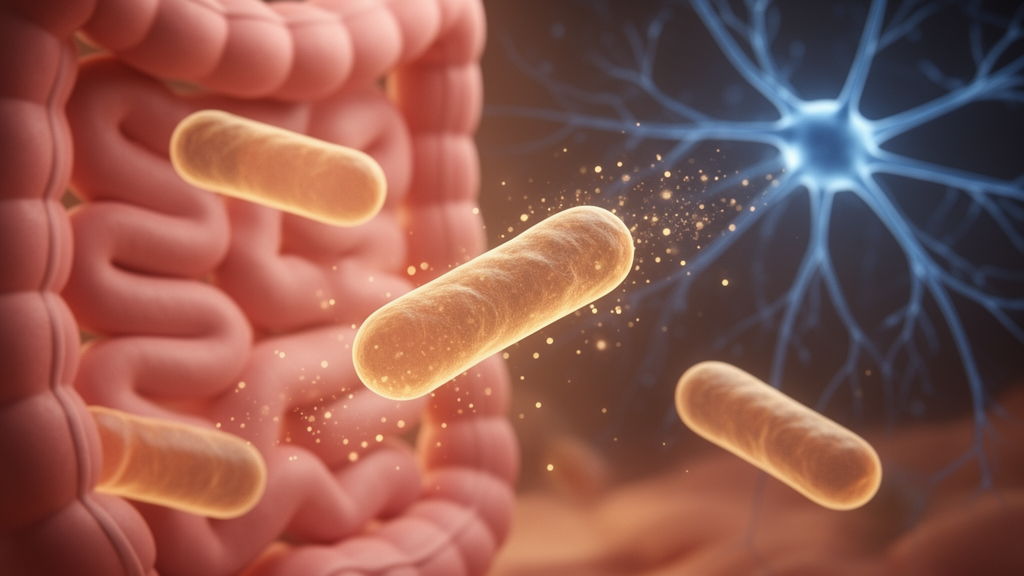
A single gut bacterium is drawing attention as one of the most intriguing leads in the search for therapies that work through the microbiota–gut–brain axis. Faecalibacterium prausnitzii, a butyrate-producing microbe that ranks among the most abundant species in the healthy human colon, is consistently depleted in people with several major neurological conditions, from Alzheimer’s disease and Parkinson’s disease to multiple sclerosis, stroke, amyotrophic lateral sclerosis, and attention-deficit/hyperactivity disorder. A comprehensive narrative review published in Frontiers in Microbiology by researchers at Nanchang University and affiliated institutions now assembles the human observational data, preclinical intervention studies, and proposed molecular mechanisms surrounding this organism, while carefully flagging how far the evidence still falls short of proof that the bacterium can treat disease in people.
The scale of the clinical problem gives the search urgency. According to the Global Burden of Disease 2021 study cited in the review, 37 conditions affecting the nervous system collectively rank as the leading cause of disability-adjusted life years worldwide, affecting an estimated 3.40 billion individuals. Conventional central nervous system drugs face persistent bottlenecks, including poor penetration of the blood–brain barrier, systemic toxicity, and adverse effects during long-term use. Because gut dysbiosis is widely observed in patients with neurodevelopmental and neurodegenerative disorders, and because dysbiosis can trigger systemic inflammation, alter neurotransmitter synthesis, and impair intestinal barrier permeability, restoring microbial homeostasis has become an appealing alternative strategy. Interventions such as fecal microbiota transplantation, prebiotics, and probiotics are already under investigation, but the review’s authors argue that a species-level focus on F. prausnitzii offers a way to separate genuinely species-linked effects from the noise of broad microbiome shifts.
The organism itself is biologically distinctive. Formerly classified as Fusobacterium prausnitzii, it is a rod-shaped, non-spore-forming, non-motile, Gram-positive obligate anaerobe of the phylum Firmicutes, with a circular chromosome of roughly 2.93 to 3.32 megabases predicted to encode about 3,000 proteins. Its extreme oxygen sensitivity makes it notoriously difficult to culture outside specialized anaerobic conditions, a trait that reflects its adaptation to the colonic niche but also complicates any future therapeutic formulation. In healthy adults it typically accounts for more than 5 percent of total gut bacteria, reaching up to 15 percent in some individuals, and it is the second most abundant species identified in human fecal samples. Sequencing studies have revealed considerable intra-species diversity, historically divided into two phylogroups, with recent genomic work identifying additional clades such as the globally prevalent UT1 strain, which carries a unique repertoire of carbohydrate-active enzymes and, in animal studies, enriched intestinal Lactobacillus and Bifidobacterium populations.
Mechanistically, the review organizes the proposed pathways into several tiers of evidence quality. The most species-linked candidates are the microbial anti-inflammatory molecule, a 15-kilodalton protein that assembles into an ordered lattice on the bacterial surface and suppresses NF-κB signaling in host intestinal epithelial cells; extracellular vesicles that cross the mucus layer and upregulate tight junction genes including ZO1 and OCLN; and phenolic compounds such as shikimic acid and salicylic acid produced via the shikimate pathway. In a diabetic mouse model, recombinant MAM supplementation restored intestinal barrier function and upregulated the tight junction protein ZO-1, with co-immunoprecipitation suggesting direct interactions between MAM and tight junction proteins. Shikimic acid suppressed inflammatory mediator overproduction in BV-2 microglial cells by activating the AKT/Nrf2 pathway while inhibiting NF-κB, and salicylic acid upregulated GAD1 expression in the rat ventral hippocampus, producing anxiolytic, sedative, and hypnotic effects in that experimental setting.
Butyrate, the bacterium’s primary metabolic product, occupies a more ambiguous position. F. prausnitzii displays strong ecological cross-feeding, converting acetate generated by primary degraders such as Bifidobacterium into butyrate, which supplies roughly 70 percent of the energy consumed by colonocytes and can cross the blood–brain barrier. Once in the central nervous system, butyrate acts as a potent histone deacetylase inhibitor: in an APP/PS1-21 mouse model of Alzheimer’s disease it restored hippocampal histone acetylation and alleviated cognitive deficits, and in Parkinson’s disease models it elevated histone H3 acetylation in striatal tissue, protecting dopaminergic neurons against toxin-induced motor impairment. Butyrate also suppresses NF-κB-driven cytokines such as IL-18, IL-6, and TNF-α, promotes microglial maturation, shifts the Bcl-2/Bax ratio against neuronal apoptosis, and stimulates intestinal L-cells to secrete the gut–brain hormones GLP-1 and PYY. The review’s authors are explicit, however, that because butyrate is produced by multiple anaerobic bacteria, these effects constitute biologically plausible but indirect support rather than evidence unique to F. prausnitzii.
On the human side, the observational record is broad but uneven. In Alzheimer’s disease, multiple studies report declining F. prausnitzii abundance with worsening cognition, and in a cross-sectional metagenomic study the bacterium’s abundance correlated with cerebral amyloid-beta deposition even in cognitively unimpaired individuals. In Parkinson’s disease, reduced abundance appears across cohorts from Iran, China, India, Ireland, and Japan, including a constraint-based metabolic modeling analysis of 435 patients and 219 controls that linked depletion to impaired host capacity to synthesize butyrate, myristate, and pantothenate. In multiple sclerosis, the International MS Microbiome Study, spanning 576 patients and 1,152 controls, found markedly lower F. prausnitzii in untreated patients, more pronounced in progressive than relapsing–remitting disease, and notably persistent despite patients reporting higher diet quality, suggesting the depletion tracks the disease state rather than dietary confounders. A case–control study of 59 acute ischemic stroke patients found abundance negatively correlated with stroke severity and inflammatory markers.
Two conditions complicate the picture. In amyotrophic lateral sclerosis, reduced abundance recurs across cohorts, and a small case report described two patients with respiratory failure improving after fecal microbiota transplantation with rising F. prausnitzii levels, yet a larger randomized controlled trial of FMT reshaped gut microbiota without significantly slowing decline on the ALS Functional Rating Scale, implying that microbial interventions may ease comorbid symptoms rather than reverse neurodegeneration. In autism spectrum disorder, the direction of association is frankly discordant: studies in the United States and Uruguay reported reduced abundance in children with ASD, while a cohort in Guangxi, China, and a study of young children in Naples found enrichment, with the Italian group linking higher abundance to increased fecal butyrate. The review attributes these contradictions to heterogeneity in age, diet, geography, sample size, and sequencing methods, and concludes that the bacterium’s utility as an ASD biomarker remains uncertain.
Preclinical intervention studies supply the most direct, if still limited, evidence of benefit. In an amyloid-beta-induced Alzheimer’s mouse model, the effects of specific strains diverged strikingly: pasteurized strain Fp14 improved cognition while its live form showed little effect, whereas strain Fp360 required live administration to mitigate spatial and long-term memory deficits, demonstrating that neurological outcomes are strain- and viability-dependent and that species-level abundance alone cannot predict therapeutic effect. In α-synuclein-overexpressing Thy1-ASO mice, oral F. prausnitzii corrected dysbiosis, reduced brain α-synuclein aggregation, and improved motor and gastrointestinal deficits. In middle cerebral artery occlusion models of stroke, transplanting SCFA-producing strains including F. prausnitzii raised short-chain fatty acid levels in gut, blood, and brain tissue and attenuated neurological deficits, though multistrain formulations make the species-specific contribution difficult to isolate.
The review’s bottom line is deliberately restrained. No clinical intervention trial has yet directly administered live F. prausnitzii to people with neurological disorders, so the human evidence supports associations rather than causation, and improvements seen after yoga, dietary changes, prebiotics, synbiotics, or fecal transplantation cannot be attributed specifically to this one microbe because such interventions reshape the entire ecosystem. Beneficial outcomes can even occur without any rise in F. prausnitzii, meaning abundance changes should not be treated as a universal surrogate of therapeutic response. Before clinical translation, the authors identify substantial barriers: extreme oxygen sensitivity complicates formulation, storage, viable dosing, and colonization, and marked strain specificity demands rigorous strain-by-strain characterization. They call for longitudinal human cohorts with standardized microbiome profiling, integrated metabolite and dietary tracking, and ultimately large, multicenter, strain-specific randomized controlled trials to establish safety, colonization efficiency, and efficacy. For now, F. prausnitzii stands as a biologically plausible and translationally intriguing candidate along the microbiota–gut–brain axis, one whose clinical value remains an open question rather than a settled fact.
Subject of Research: The role of the gut bacterium Faecalibacterium prausnitzii in neurological disorders along the microbiota–gut–brain axis
Article Title: Faecalibacterium prausnitzii in neurological disorders: mechanistic links and therapeutic potential along the microbiota–gut–brain axis
Article References: Liu, Y., Yang, G., Su, L., Wang, H., Zhou, Q., Yao, P., Jing, C., Bai, Y., & Feng, Z. (2026). Faecalibacterium prausnitzii in neurological disorders: mechanistic links and therapeutic potential along the microbiota–gut–brain axis. Frontiers in Microbiology, 17, Article 1962324. https://doi.org/10.3389/fmicb.2026.1962324
Image Credits: AI Generated
DOI: 10.3389/fmicb.2026.1962324
Keywords: Faecalibacterium prausnitzii, microbiota–gut–brain axis, butyrate, next-generation probiotics, Alzheimer's disease, Parkinson's disease, multiple sclerosis, stroke, gut dysbiosis, neuroinflammation, histone deacetylase inhibition, microbial anti-inflammatory molecule
News Source: Morgan Morrow. (October 23, 2026). Gut bacterium Faecalibacterium prausnitzii emerges as candidate probiotic for neurological disorders. Scienmag.