Plastic pollution has become one of the defining environmental problems of the modern era, and a newly published open-access review in the journal Discover Polymers offers a sweeping synthesis of how biomass and biowaste could replace petroleum-based plastics. The review, published on 8 September 2026, compiles evidence on how polymers can be made from agricultural residues, food scraps, forestry waste, marine byproducts, and municipal refuse, and then evaluates which feedstocks, synthesis routes, and applications are most likely to succeed at industrial scale.
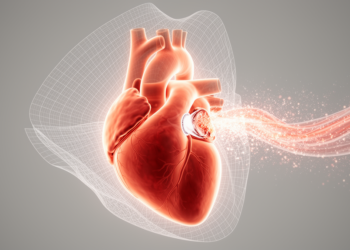
The authors, Lovepreet Singh, Gurpreet Singh, Balak Das Kurmi, and Preeti Patel, frame their analysis against a stark backdrop. Global plastic waste generation reached approximately 353 million tonnes in 2019, yet only 9 percent was ultimately recycled. Roughly 19 percent was incinerated and nearly 50 percent ended up in sanitary landfills, while the remaining 22 percent was mismanaged through uncontrolled dumping, open burning, or leakage into the environment. The review also notes that microplastics and nanoplastics have been detected in several human tissues and biological fluids, and that recent observational evidence has reported an association between their presence in atherosclerotic plaques and an increased risk of cardiovascular events, although the long-term health consequences and causal relationships remain under investigation.
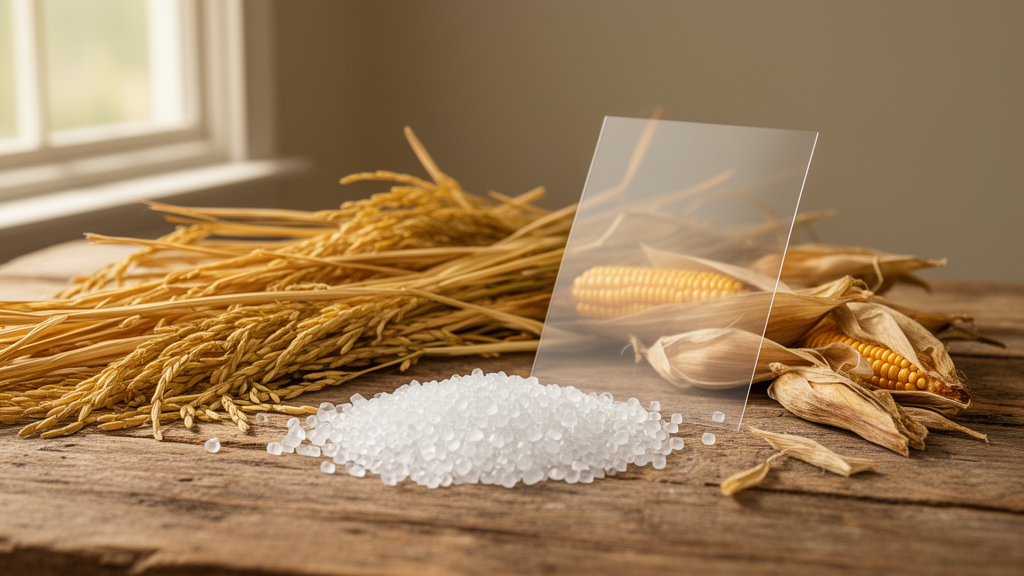
At the heart of the review is a comparative assessment of feedstocks. Lignocellulosic biomass, the complex mixture of cellulose, hemicellulose, and lignin found in agricultural and forestry waste, emerges as the most suitable option for large-scale polymer production because of its abundance, low cost, and compatibility with existing biorefinery systems. Typical lignocellulosic material contains roughly 25 to 57 percent cellulose, 8 to 36 percent hemicellulose, and 15 to 33 percent lignin. The catch is structural: this tough, interwoven matrix demands energy-intensive and costly pretreatments such as acid or alkaline hydrolysis, steam explosion, and solvent fractionation before the constituent polymers can be extracted and used.
Food and kitchen waste occupies a different niche. Because it is rich in readily biodegradable carbohydrates, proteins, and lipids, it requires milder pretreatment and supports faster microbial fermentation, making it an efficient substrate for producing polyhydroxyalkanoates (PHA) and polylactic acid (PLA), the two most widely studied biodegradable polymers. The review notes that effective separation and supply chain management remain crucial for scaling food-waste conversion, since the composition of kitchen waste varies by region and season. Marine biowaste, including fish skin, scales, bones, crustacean shells, and seaweed, accounts for 50 to 75 percent of total marine organism biomass and is best reserved for high-value applications. Shell waste yields chitin and chitosan, while fish-processing waste supplies collagen and other biomolecules suited to biomedical and specialty uses rather than bulk plastics, with salt contamination and seasonal availability limiting broader deployment.
The synthesis routes themselves are evaluated with equal care. Microbial fermentation offers favorable environmental performance: in one highlighted study, the bacterium Cupriavidus necator outperformed Bacillus cereus in PHA yield and metabolic efficiency, and a related effort showed that C. necator H16 could produce P(3HB)/PLA copolymers from lactate-rich industrial effluent, with the lactate fraction reaching roughly 20 to 90 mol percent and improving thermal and mechanical properties relative to pure PHB. Notably, the organism’s natural PHA synthase polymerised lactyl-CoA without genetic modification. Typical production yields under optimised conditions range from 30 to 80 percent for PHA and 70 to 90 percent for PLA. Emerging strategies such as non-sterile fermentation, mixed microbial consortia, and halophilic systems are gaining attention because they reduce sterilization requirements and contamination risks, lowering operational costs.
Chemical polymerization, by contrast, provides greater molecular control and industrial scalability at the cost of higher energy use and expensive catalysts. The review contrasts ring-opening polymerization of lactic acid, which delivers fast kinetics and precise chain-length control suited to biomedical applications, with direct polycondensation, which avoids the expensive lactide intermediate and is more economical for short-chain biodegradable polymers. Other routes profiled include biphasic acid fractionation of wheat straw with p-toluenesulfonic acid and 2-methyltetrahydrofuran, degradative solvent extraction, pyrolysis of date pits that yielded levoglucosan at roughly 71 percent after dilute sulfuric acid pretreatment at 300 degrees Celsius, and sulfonated solid acid catalysts made from pine needles that esterified levulinic acid in 46 to 93 percent yields across ten reuse cycles.
Modification techniques extend the property space further. Alkali-treated banana peel fillers improved the mechanical strength, hardness, and thermal stability of epoxy composites, with optimal performance at approximately 5 weight percent filler and maximum thermal stability at 7.5 weight percent, though loadings of 10 percent or more caused agglomeration and reduced performance. Nanocellulose reinforced polypropylene made from waste cotton fabrics raised tensile modulus from 1.6 to around 4.6 gigapascals and nearly doubled impact strength at 30 weight percent denim cotton addition. Lignin-silica hybrid nanoparticles from rice husk black liquor replaced 10 parts of carbon black in natural rubber while matching the mechanical performance of conventional 50-part carbon black formulations. The review cautions, however, that crosslinking and blending can reduce biodegradability and recyclability, creating a genuine trade-off between performance and end-of-life sustainability.
On performance, the review draws a clear contrast: PLA exhibits comparatively high mechanical strength, with tensile strength between 50 and 70 megapascals comparable to traditional plastics, whereas PHA generally ranges from 20 to 40 megapascals but biodegrades faster, on the scale of weeks to months. Both polymers show reduced global warming potential compared with PET according to life cycle assessment studies, although overall environmental performance depends heavily on feedstock processing, land use, and end-of-life management. A cradle-to-gate analysis using sugar beet pulp as feedstock estimated minimum selling prices of approximately 1.14 dollars per kilogram for PLA and 1.37 dollars per kilogram for PBS, lower than fossil polymers such as BOPP and GPPS once environmental externality costs are accounted for.
Applications span an unusually broad range. In packaging, chitosan-based 3D-printed composites, PLA biocomposites reinforced with wood flour or hazelnut shell waste, tea waste and maize starch films with antibacterial activity against Escherichia coli, Staphylococcus aureus, and Aspergillus flavus, and bioplastic films from fruit and vegetable peels all show promise, though inferior moisture and gas barrier performance remains a hurdle. In biomedicine, biomass-derived carbon dots serve as bioimaging and biosensing agents, Kraft lignin nanoparticles loaded with curcumin demonstrated strong drug-loading efficiency and considerable anticancer activity, and cellulose nanoparticles from sugarcane bagasse showed biocompatibility and antioxidant activity. Environmental remediation relies on biochar and nano-adsorbents that remove heavy metals, dyes, pharmaceuticals, and PFAS from water and soil, while agriculture benefits from hydrochar soil amendments and biochar production.
The obstacles are formidable. PHA production costs are approximately 3 to 12 times higher than conventional petroleum-based plastics, with fermentation substrate alone accounting for nearly half of total cost, and techno-economic analysis puts PHA at 3 to 4 times the cost of petroleum resins, with feedstock exceeding 40 percent of annual operating expenses. Solvent-based PHA recovery uses halogenated solvents that contribute 20 to 25 percent of production costs. Most PHA technologies remain confined to the laboratory, and only PLA and starch-based polymers have achieved commercial viability, while lignin-based materials are advancing toward industrial scale. End-of-life infrastructure compounds the problem: industrial composting at roughly 58 degrees Celsius is the most reliable disposal route, home composting is unreliable for materials like PLA, and biodegradable plastics contaminating PET or PP recycling streams degrade the quality of recovered materials. The review concludes that future progress must prioritize process optimization, techno-economic feasibility, harmonized biodegradability standards, and polymer-specific recycling and composting pathways if biomass-derived polymers are to deliver genuine environmental benefits at scale.
Subject of Research: A comparative review of biomass and biowaste-derived polymers, their synthesis routes, characterization, applications, and barriers to industrial commercialization.
Article Title: Comprehensive exploration of biomass and biowaste based polymers covering synthesis characterization and applications
Article References: Singh, L., Singh, G., Kurmi, B. D., & Patel, P. (2026). Comprehensive exploration of biomass and biowaste based polymers covering synthesis characterization and applications. Discover Polymers, 3(1), Article 23. https://doi.org/10.1007/s44347-026-00065-5
Image Credits: AI Generated
DOI: 10.1007/s44347-026-00065-5
Keywords: biomass polymers, biowaste, PHA, PLA, biodegradable plastics, lignocellulosic biomass, microbial fermentation, life cycle assessment, biorefinery, packaging, biomedical applications, circular bioeconomy
News Source: Alan Morgan. (October 29, 2026). From Farm Waste to Bioplastics: New Review Maps the Path to Sustainable Polymers. Scienmag.